Get Full Government Meeting Transcripts, Videos, & Alerts Forever!
Get email alerts on the School Safety Concealed Carry topic
No spam. Unsubscribe anytime.
Board begins drafting concealed-carry policy after review of House Bill 172; sets April work session for security discussion
Summary
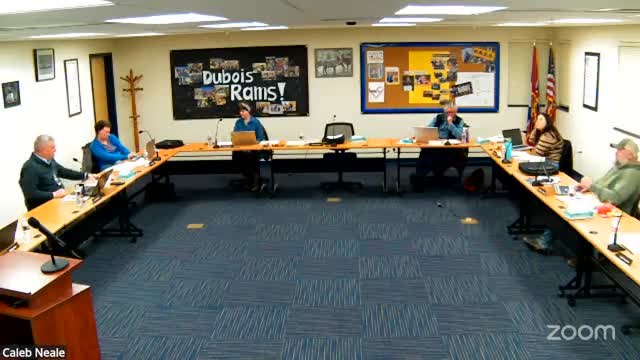
The Fremont County School District #2 Board discussed House Bill 172 and the steps the district would need to take to adopt rules governing employees and volunteers who wish to carry concealed firearms on school property.
The Fremont County School District #2 Board discussed House Bill 172 and the steps the district would need to take to adopt rules governing employees and volunteers who wish to carry concealed firearms on school property.
At the meeting the board reviewed key provisions of HB172: the law allows persons lawfully carrying concealed weapons under Wyoming law, with a valid Wyoming permit, to carry on public elementary and secondary school property; it makes it a misdemeanor for a person to knowingly prohibit entry to a lawfully permitted concealed carrier in a place authorized by the statute; and it gives local boards authority to adopt rules that apply to employees and volunteers but not to the general public.
District staff provided examples of a model policy from another Wyoming district (Lander/FCSD 1) covering application procedures, training requirements, holster and lockbox standards, drug and alcohol testing, psychological evaluations, confidentiality of approved carriers, and suspension or revocation of privileges. The sample policy includes a detailed training framework: the example lists an initial course of roughly 56 hours (40 hours of handgun live-fire training and 16 hours scenario-based), recurrent training schedules, instructor qualifications, and mandatory post-incident, reasonable-suspicion and random drug/alcohol testing for carriers.
Board members discussed implementation questions: who qualifies (employees, substitutes, volunteers), cost responsibilities (training, psych evaluations, lockboxes, ammunition), confidentiality of approved carriers, ammunition and holster standards, and how to phase implementation given the July 1 effective date in the law. Trustee discussion also flagged potential legal and insurance implications and the need to consult counsel before adopting final language.
Trustees asked staff to collect example policies, hold public meetings or targeted staff meetings to gather questions and feedback, and to return to the board's April 1 work session for a focused security and policy discussion. Several trustees expressed a preference to have some policy in place before the start of the school year even if details will be refined over time; the board asked staff to draft an implementation timeline and cost estimate for future review.
No formal policy vote was taken at the meeting; trustees agreed to begin drafting and public engagement steps and to concentrate policy work through committee and staff groups ahead of the April 1 work session.