Get Full Government Meeting Transcripts, Videos, & Alerts Forever!
Get email alerts on the Blight Elimination topic
No spam. Unsubscribe anytime.
Enterprise officials report progress on blight elimination; 21 demolitions queued
Summary
City staff updated the council on the blight elimination program, reporting 23 properties mitigated so far in 2025, demolition and renovation outcomes, a $450,000 CDBG demolition grant and an asbestos-testing phase for 21 structures scheduled for summer removal.
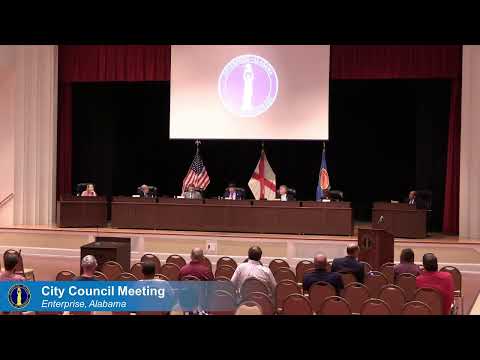
Barry Mott, city engineer and public works director, briefed the Enterprise City Council on the city’s blight elimination program during a March work session, saying the initiative has produced both demolitions and renovations so far this year.
Mott said the city has “gotten 23 properties mitigated so far this year.” He described a mix of outcomes: “Of those, 18 are remodeling — six of those in process and 12 of them have been completed already — and five of those in demo,” and he pointed to before-and-after photos presented to the council.
The update explained the program’s dual goals: remove dangerous buildings and encourage renovation to add housing stock. Mott said Phase 1 of the city’s demolition program includes 21 structures that have been approved; crews are completing required asbestos and lead testing before demolition and the city expects to have those structures removed “somewhere [in] summer of this year.” He said Phase 2 has identified 31 additional structures whose owners have been notified, and that, if the current scope continues, “74 nuisance structures should be mitigated” after Phase 2 is complete.
Mott also reported recent court activity involving Village Heights Apartments, off Apache Drive. City staff said a court ordered the property owner to repair the complex’s ingress and egress because the drive was unsafe for vehicles; city staff and the attorney said the judge—identified in the update as Judge Kelly—has set a court date in May and can impose sanctions, including fines or contempt, if repairs are not made.
City staff described program benefits that motivated the ordinances enacted last year, including reducing hiding places for criminal activity, lowering wildfire risk by controlling vegetation and shrinking habitat for rodents and other pests. Mott told the council the program has yielded rehabilitation results in addition to demolitions; examples shown included houses renovated back to code and residences taken down to grade and regraded after demolition.
On funding and tools, Mott noted the city recently received a Community Development Block Grant demolition award of $450,000 to remove abandoned residential dwellings, and said the city has invested in case-management software to replace spreadsheets. He told the council the software (approved in last year’s budget) will let staff track complaints, allow council members read-only access to case status and provide a public portal for citizens to submit complaints.
Mott summarized enforcement activity for 2024, saying the city completed 1,366 code-enforcement inspections. He closed by saying the program is “working” and that staff will return with a second-quarter update.
Questions from council members focused on timelines for the Village Heights court order and on the balance between demolition and renovation; Ashley (identified in the meeting as the city attorney) said the court date is set for May and that the judge has a range of remedies if the owner does not comply.
The council received the update; no formal vote was taken during the presentation.