Get Full Government Meeting Transcripts, Videos, & Alerts Forever!
Get email alerts on the Dyslexia Screening And Intervention topic
No spam. Unsubscribe anytime.
Parent advisory committee urges expanded dyslexia screening, LETRS training and clearer family information
Summary
The Parent/Guardian Advisory Committee presented a detailed set of recommendations asking the district to expand screening, require LETRS professional development for teachers, post dyslexia resources online and improve triage and intervention for students at risk of dyslexia and other specific learning disabilities.
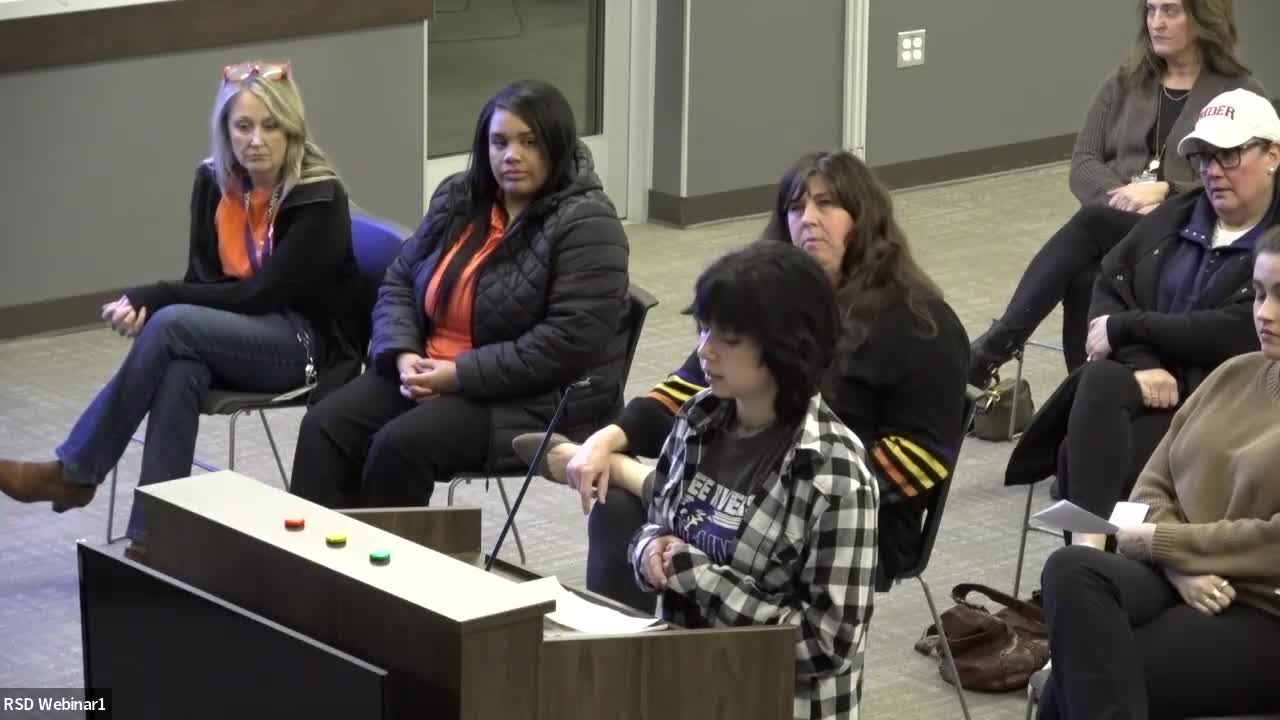
Isaac Stanfield, co‑facilitator of the Parent/Guardian Advisory Committee, told the board the committee met Jan. 13 and focused on screening, identification and supports for dyslexia and other specific learning disabilities (SLDs). He read a set of recommendations the committee will forward to the board.
The committee recommended universal screening in kindergarten through second grade for indicators tied to dyslexia — including phonological awareness, phonics and rapid automatized naming — and said the district should list which screeners are used and when on the district website. The committee also asked the district to consider extending phonological screening through fifth grade and to ensure students who enroll midyear are assessed within four weeks.
On interventions and instruction, the committee urged implementation of multisensory structured literacy interventions delivered by trained educators, use of an MTSS (multi‑tiered system of supports) framework and fidelity monitoring. The committee recommended that, beginning with new hires in the 2025‑26 school year, incoming teachers be required to take LETRS (Language Essentials for Teachers of Reading and Spelling) training, and that by 2025‑26 the district identify at least one LETRS‑trained teacher at every grade level in each secondary building.
Committee members asked for improved communication with families: timely screening results, clear steps for requesting evaluation, links to evidence‑based interventions, and culturally responsive materials. The committee also recommended monthly newsletters and a district web page explaining dyslexia and SLDs, resources, screening steps and contacts.
District staff on the meeting panel said the district currently uses the RAN/RAS and i‑Ready measures in early grades and triangulates data with oral reading fluency in second grade; they said kindergarten and first grade students receive the universal screener and new second graders are assessed on entry. Staff confirmed the district does not itself diagnose dyslexia but uses screening results to guide interventions and referrals for special education evaluations where indicated.
The committee also raised implementation questions for Amplify CKLA (the adopted core literacy program) and asked the district to confirm training requirements and whether the curriculum aligns with International Dyslexia Association standards.
Parent advisory recommendations referenced state law and used the meeting to ask the board for district action on training, screening and communication. Board members and staff said the district will follow up with additional detail and next steps.