Get Full Government Meeting Transcripts, Videos, & Alerts Forever!
Get email alerts on the Student Mental Health topic
No spam. Unsubscribe anytime.
Richland students, instructors describe life‑saving impact of Teen Mental Health First Aid
Summary
Students and instructors from Richland High, Hanford High and 3 Rivers HomeLink described classroom training that helped classmates identify crises, connect peers to 988 and local counseling and prompted district commitment to sustain the program despite one‑year grant funding.
Richland School District students and staff told the school board that Teen Mental Health First Aid training has helped students spot signs of crisis, reach out and connect peers to resources.
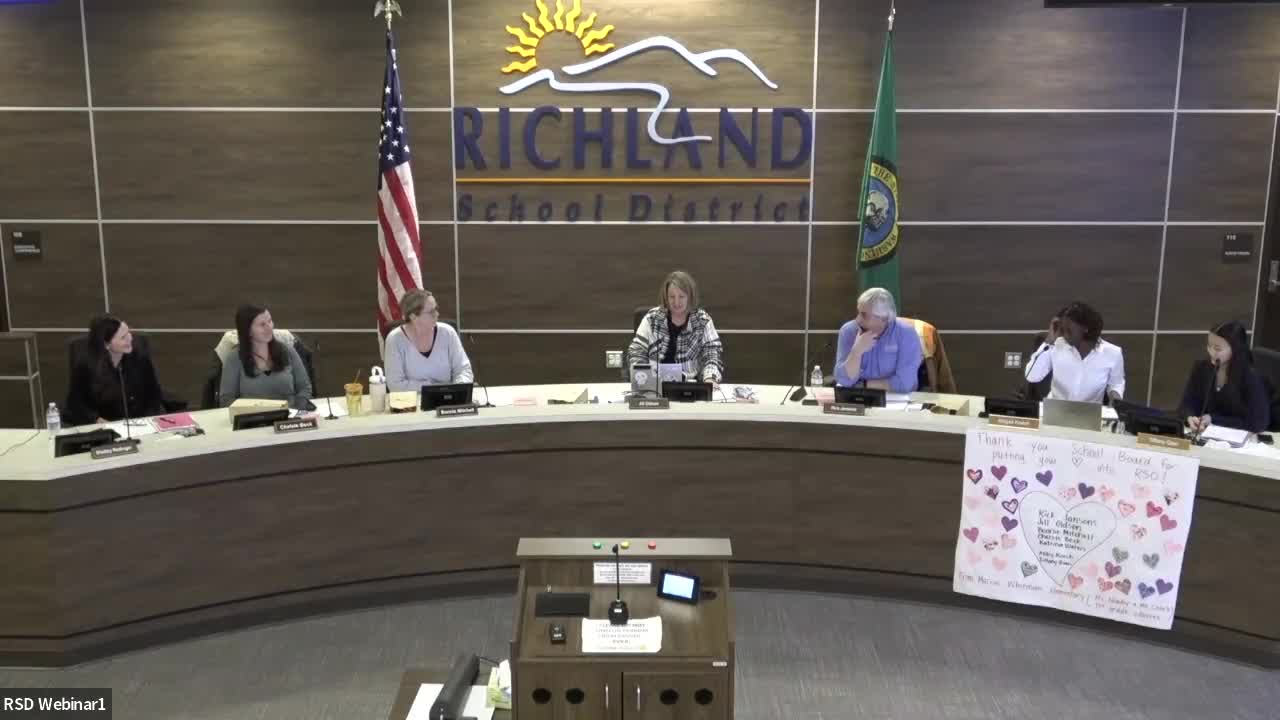
At a school board meeting, district staff introduced students and instructors from Richland High, Hanford High and 3 Rivers HomeLink who described how the seven‑session curriculum taught classmates to recognize warning signs, use an action plan and bring peers to a trusted adult. Chandra Markell, a district staff member leading the effort, said the three sites have “collectively certified 761 sophomores” so far and that other schools are still completing certification.
The students gave concrete examples. Lila Gardner, a Richland High sophomore, said teens often understand one another in ways adults do not and that trained peers can “bring a safe space to others, but save lives.” Sydney Ashley told the board that Teen Mental Health First Aid helped her learn how to find trusted adults, call 988 and navigate obstacles when the crisis line was overloaded; she said a district instructor advocated with the state 988 service and students later received follow‑up calls and short‑term support.
Kirsten Afinority, district mental health case manager, described the curriculum as teaching students “the difference between a mental health challenge and a mental health crisis” and providing a simple blueprint for when to involve adults and which resources to use. Maisha Medina, a HomeLink counselor, and several students from HomeLink and Hanford said the course strengthened students’ confidence to redirect peers to adults and to use grounding techniques and breathing exercises.
Board members asked about funding. District presenters said the program was supported last year by a one‑year Educational Service District (ESD) grant of $500,000; the grant covered instructor training and materials and “would cover, like, a hundred and twenty‑five thousand” of program costs in the grant year, according to a district staff speaker. Presenters told the board that the district budget contains allocations for instructor training and manuals this year and that they are pursuing additional grants to sustain the curriculum; one staff member said they are “committed to sustaining that” and have used other grant funding to continue the program into the next school year but that longer‑term funding is not guaranteed.
Board members and the superintendent thanked the students and instructors and encouraged continued pursuit of funding and integration with school counseling and community partners.
The program examples and student testimony were presented during the agenda item on teen mental health; the board did not take a formal vote on the program during the meeting.