Get Full Government Meeting Transcripts, Videos, & Alerts Forever!
Get email alerts on the Graduation Readiness topic
No spam. Unsubscribe anytime.
Board hears data on graduation rates and expanded academic supports at Star Valley High
Summary
District leaders reported graduation‑rate data and described tutoring, Friday school and concurrent/dual enrollment programs that district administrators say are improving postsecondary readiness.
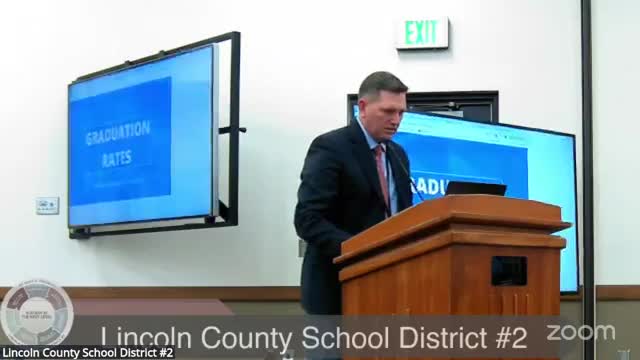
Lincoln County School District No. 2 trustees heard an informational report Thursday that combined district graduation‑rate statistics with a multi‑part description of in‑school academic support programs at Star Valley High School.
The takeaway: administrators say increased tutoring, Tuesday morning academic support, Friday school sessions and expanded concurrent/dual enrollment have boosted opportunities for students to meet college, career and military readiness standards, though the district continues to press to raise some readiness indicators.
Why it matters: Wyoming accountability rules require students be college ready, career ready or military ready to meet postsecondary readiness measures. The board heard both how the district checks these boxes — Hathaway curriculum, ACT/AP/college courses and vocational concentrator credentials — and how local programs aim to help more students attain them.
What administrators presented
- Graduation rates: Assistant superintendent Jason Horsley reported the district’s four‑year graduation rate at 85.66% for 2023‑24 and said the five‑year rate rises to about 90% when late completers are added. He noted life‑skills certificate students and some transfers are counted as dropouts under federal reporting rules discussed with the state education office.
- Academic support structure at Star Valley High: Principal Farron Hatterley described three main programs — a weekly academic support block Tuesday mornings (8:00–8:30) averaged about 200 student visits, a Friday school program (nine days per year) that allows students to make up work, and tutoring provided by teachers before school, during lunch and after school. Hatterley said teachers have logged over 1,200 combined hours across those three supports ("over 600 hours on academic support, just over 200 hours on our Friday school, and for our tutoring, we're approaching 400 hours").
- Concurrent and dual enrollment and ACT vouchers: Hatterley said 42 students had enrolled in concurrent/dual enrollment courses during the 2024‑25 school year and that district grant funding will cover college course credits at no cost to students. He said the district also distributed ACT vouchers at no cost; in his remarks he referenced both a smaller number and later a larger total when speaking — the transcript records both “22 ACT vouchers” and later “those hundred and 22 vouchers were handed out.” The district said it would provide a clarified number in follow up.
- Postsecondary readiness criteria: Horsley reviewed the Hathaway curriculum and explained typical pathways to be declared college ready (Hathaway completion plus ACT score of 19 or AP/IB/dual‑credit thresholds), career ready (concentrator in vocational pathway plus credential or industry exam) or military ready (ASVAB threshold).
Questions and next steps
Board members asked about how students qualify for ACT vouchers and how the district identifies students who are missing readiness indicators. Hatterley said registrars and counselors coordinate voucher distribution and that the district had worked with the Wyoming Department of Education to find and correct reporting errors that had been suppressing the district’s readiness score.
Officials said they would continue to track attendance at academic supports, provide clarified counts for ACT vouchers and report back on progress toward the state indicators.
Ending note
Board members praised staff for targeted counseling and outreach and asked for follow‑up data to verify the effect of supports on graduation and readiness.