Get Full Government Meeting Transcripts, Videos, & Alerts Forever!
Get email alerts on the Emergency Dispatch 911 topic
No spam. Unsubscribe anytime.
Vigo County 9-1-1 staff outline rising call volumes, new tech and training needs
Summary
Vigo County Central Dispatch presented call-volume data, training requirements and new tools such as RapidSOS and smart911, and described staffing and certification expectations for dispatchers.
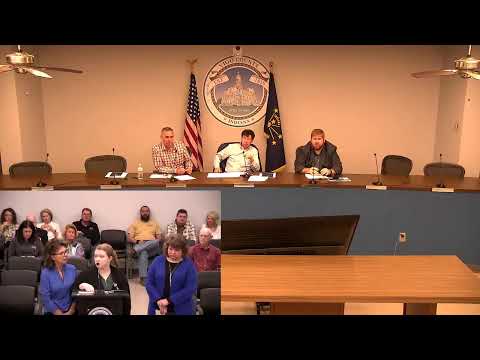
Vigo County 9-1-1 staff on March 18, 2025, briefed the Board of Commissioners on rising call volumes, staffing and training, and new location and messaging technologies the center has implemented.
Macy Evans, training coordinator for Vigo County 9-1-1, told the board the center answered 60,815 9-1-1 emergency calls and 78,536 administrative-line calls in 2023, and 71,393 9-1-1 calls and 1,398 administrative-line calls in 2024, figures she provided to illustrate increasing demand. Central Dispatch operates for the entire county and serves Terre Haute Police Department, the Vigo County Sheriff’s Office, West Terre Haute Police Department, Seelyville, Terre Haute Fire Department and volunteer fire departments.
Evans described staffing and certifications: the center had 21 dispatchers at the time of her presentation and a minimum staffing level of three on duty. She said all dispatchers maintain certifications in Emergency Medical Dispatch and Emergency Fire Dispatch from the International Academy of Emergency Dispatch, complete APCO telecommunicator training and maintain NIMS and NCIC access. “Dispatch is a vital resource,” Evans said, noting dispatchers also provide pre‑arrival medical instructions such as CPR guidance when EMS response times are longer.
Evans highlighted technology the center uses: smart911 (a user opt-in messaging and profile system), RapidSOS (which provides continuously updating caller location and a live-chat/video feature), and text-to-911 services. She said RapidSOS’s live-chat/video function is new and has been tested internally but not yet used in a real public incident; she and commissioners discussed potential benefits for locating injured callers in park and trail areas.
Commissioners asked why call volumes are rising. Evans attributed the long-term increase in part to changes since the COVID-19 period and said dispatch increasingly functions as a county “catchall” for public inquiries that previously routed elsewhere. She also said summer months typically produce more calls because of outdoor events and increased traffic.
Ending: Commissioners thanked dispatch staff for the presentation and the county leadership expressed appreciation for the department’s work.