Get Full Government Meeting Transcripts, Videos, & Alerts Forever!
Get email alerts on the Specific Performance Delay Damages topic
No spam. Unsubscribe anytime.
Texas Supreme Court asked to allow delay damages alongside specific performance in property dispute
Summary
In White Knight Development v. Simmons the court heard argument on whether courts may award incidental or consequential delay costs in addition to ordering specific performance in equitable actions involving real property; counsel disputed whether such damages are categorically available and whether trial findings met the necessary standards.
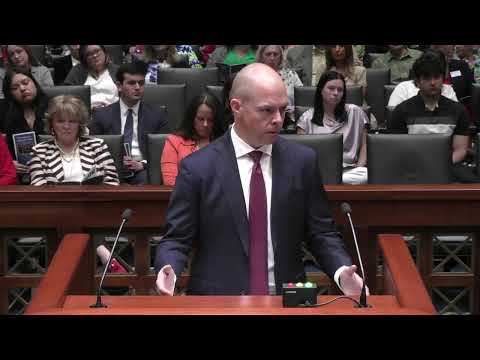
The Supreme Court of Texas heard argument in White Knight Development v. Simmons over whether, and on what proof, courts may award monetary damages for delay in addition to ordering specific performance in real‑property cases.
Petitioner’s counsel told the court that the central question is whether Texas law allows “the concurrent recovery of both some specific performance and incidental delay costs.” Respondent’s counsel characterized the dispute differently: “This case is not a breach of contract case. This is a quasi estoppel case,” and argued that the trial court’s findings awarding roughly $309,000 (the figure contested below) should be set aside as an improper double recovery or as unsupported by the record.
Argument centered on three possible resolutions: (1) the district court’s findings were sufficient, even if not phrased in magic words; (2) implied findings under court rule 299 supply the necessary factual bases; and (3) if necessary, remand to the court of appeals to evaluate evidentiary sufficiency. Petitioner urged the court to hold categorically that courts may award delay‑related consequential damages when specific performance remedies cannot fully restore the claimant to the expected timing and economic position.
Justices tested where limiting principles would come from: foreseeability at contract formation, proximate cause, mitigation, and the need to avoid double recovery were repeatedly raised as constraints. Counsel discussed examples the trial court used, including property taxes assessed and other holding costs, and the parties disputed whether some items (credit card interest, certain assessed taxes) were supported by trial evidence. Respondent’s counsel argued that awarding both specific performance and overlapping monetary items risks abuse and double counting where the remedy duplicates the relief afforded by specific performance.
Petitioner’s counsel asked the court to correct what he described as a categorical error in the court of appeals’ approach and to remit remaining issues about the sufficiency of particular awards to the lower courts. Respondent’s counsel emphasized quasi‑estoppel precedent, the uniqueness of equitable remedies, and that the record in this case contained deficiencies on several awarded items.
The court asked practical questions about when delay damages should begin to run (trial judgment date, mandate, or some other event) and how courts should define the boundary between allowable delay‑related items and nonrecoverable, attenuated economic losses. Counsel suggested that existing common‑law measures for consequential damages (foreseeability and reasonable certainty) and Rule 299 implied findings doctrine could answer procedural and substantive disputes.
After extended argument, the court submitted the case for decision. The parties did not obtain an opinion at argument; the outcome will depend on how the court resolves the categorical availability question and any remand or fact‑finding directives it imposes.