Get Full Government Meeting Transcripts, Videos, & Alerts Forever!
Get email alerts on the Parenting Plans Domestic Violence topic
No spam. Unsubscribe anytime.
Heated testimony as committee considers rewritten parenting-plan law; advocates, judges and survivors clash over House amendments
Summary
A comprehensive rewrite of Washington's parenting-plan law, Engrossed Substitute House Bill 1620, produced hours of divided testimony as judges, domestic-violence advocates, survivors and legal-service providers disagreed over protections for children and limits on judicial discretion.
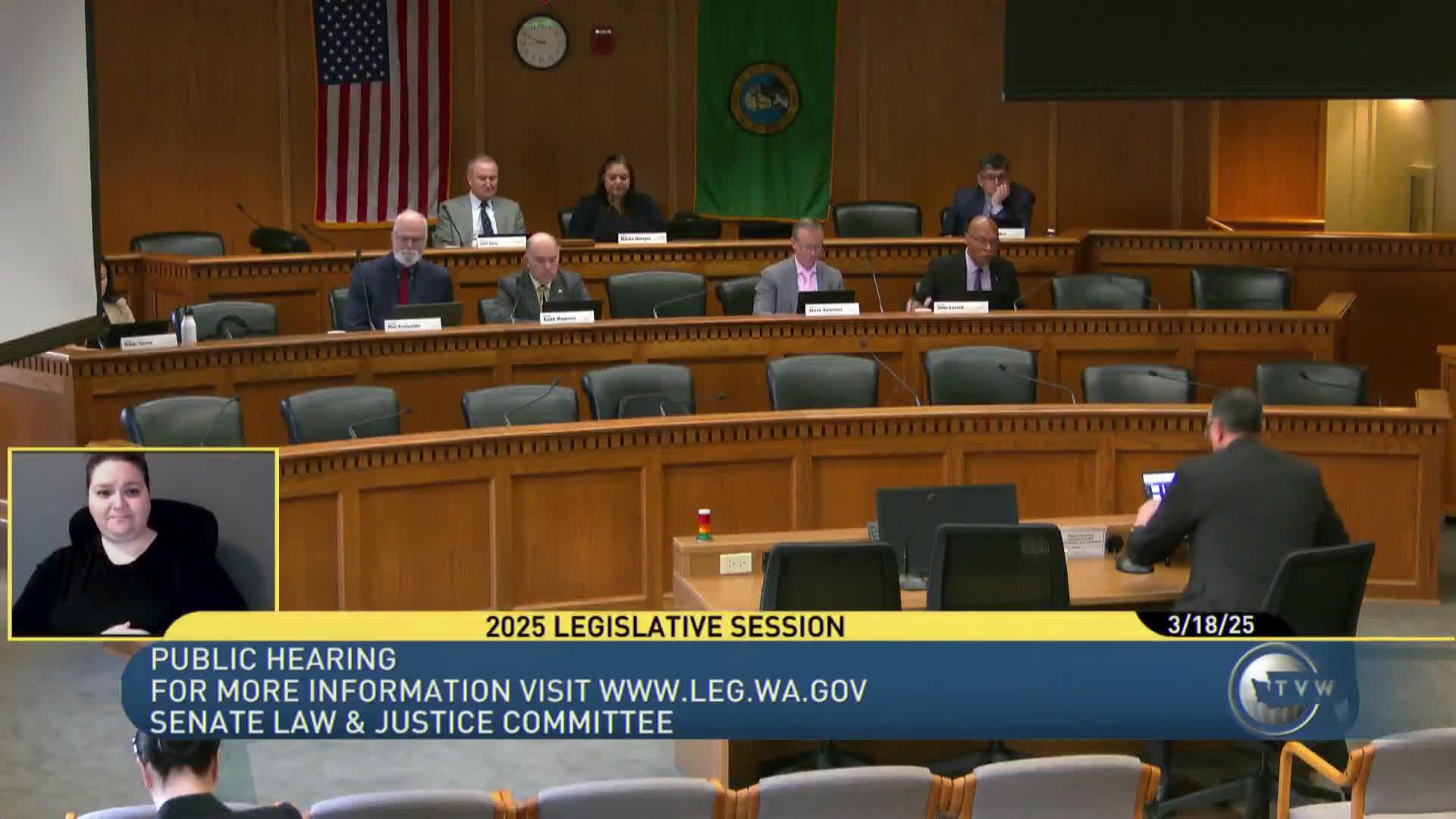
Engrossed Substitute House Bill 1620, a major rewrite of the law governing parenting plans in dissolution and legal-separation cases, drew extensive testimony and sharply divergent views at the Senate Law & Justice Committee public hearing.
Staff counsel Patrick Moore summarized the bill as reorganizing and revising when courts may impose limitations on parenting time and decision-making because of a parent's conduct, adding new definitions and establishing procedures for cases involving allegations of child abuse and domestic violence (the bill uses the term "domestic abuse"). The statutory structure would also restrict courts from ordering certain dispute-resolution processes when a parent has engaged in specified abusive conduct, and would require written findings in some circumstances.
Judges and judicial associations told the committee they support the original bill that committee members had previously reviewed but opposed an amended version that passed the House. King County Superior Court Judge Janet Helson and Trial Court Judge Monica Carey urged rejection of the House striker and restoration of the original text, saying the original offered clearer guidance and required findings that produce consistent results and an appealable record. Judge Kristin Ferreira, president of the Superior Court Judges Association, said judicial education and the original bill's required findings would reduce inconsistent outcomes.
Domestic-violence survivors, advocates and nonprofit legal-service providers asked the committee to retain the original bill's protections. Karen White of the Washington State Coalition Against Domestic Violence and Mary Welch of Northwest Justice Project said the House amendments removed important safeguards, including the definition and use of "abusive use of conflict," and introduced new, undefined terms that will confuse unrepresented litigants. Several survivors described long patterns of post-separation litigation, repeated false reports, and cases in which custody was awarded to a parent with documented criminal arrests or founded child-protection findings.
Other witnesses who support the striker version argued it will prevent judges from "taking sides" and urged additional judicial discretion. Opponents said the House language could enable courts to label both parties as equally abusive without a careful analysis of coercive control and patterns of abuse; they warned that provisions approving so-called mutual-abuse findings risked punishing survivors and ignoring power dynamics. Witnesses on both sides described instances in which litigants believe the law or judges produced unjust results.
Several technical issues were raised: whether survivors should be allowed to opt into alternative dispute-resolution processes, how to treat allegations of abusive litigation, the role of municipal courts and the availability of attorney's fees, and whether required findings would create clearer appellate records or simply add complexity. Senator Fortunato, among others, asked about post-vest remedies and weaponization concerns cited by parents on both sides.
The hearing included dozens of individual stories from survivors describing alleged court decisions that placed children with parents they said were abusive, and from judges and legal professionals who said the original bill would create clearer standards and more consistent written findings. The record on whether the House-amended version or the original bill better protects children and survivors remains contested; committee members did not take a vote during the hearing.