Get Full Government Meeting Transcripts, Videos, & Alerts Forever!
Get email alerts on the Healthcare Entity Registry topic
No spam. Unsubscribe anytime.
Bill would direct Department of Health to plan a statewide healthcare entity registry
Summary
Engrossed substitute House Bill 1686 would require the Department of Health, in consultation with other agencies and stakeholders, to develop a plan and recommendations for creating an interactive registry of healthcare entities, including ownership and contractual relationships; supporters said a registry would improve transparency on system c
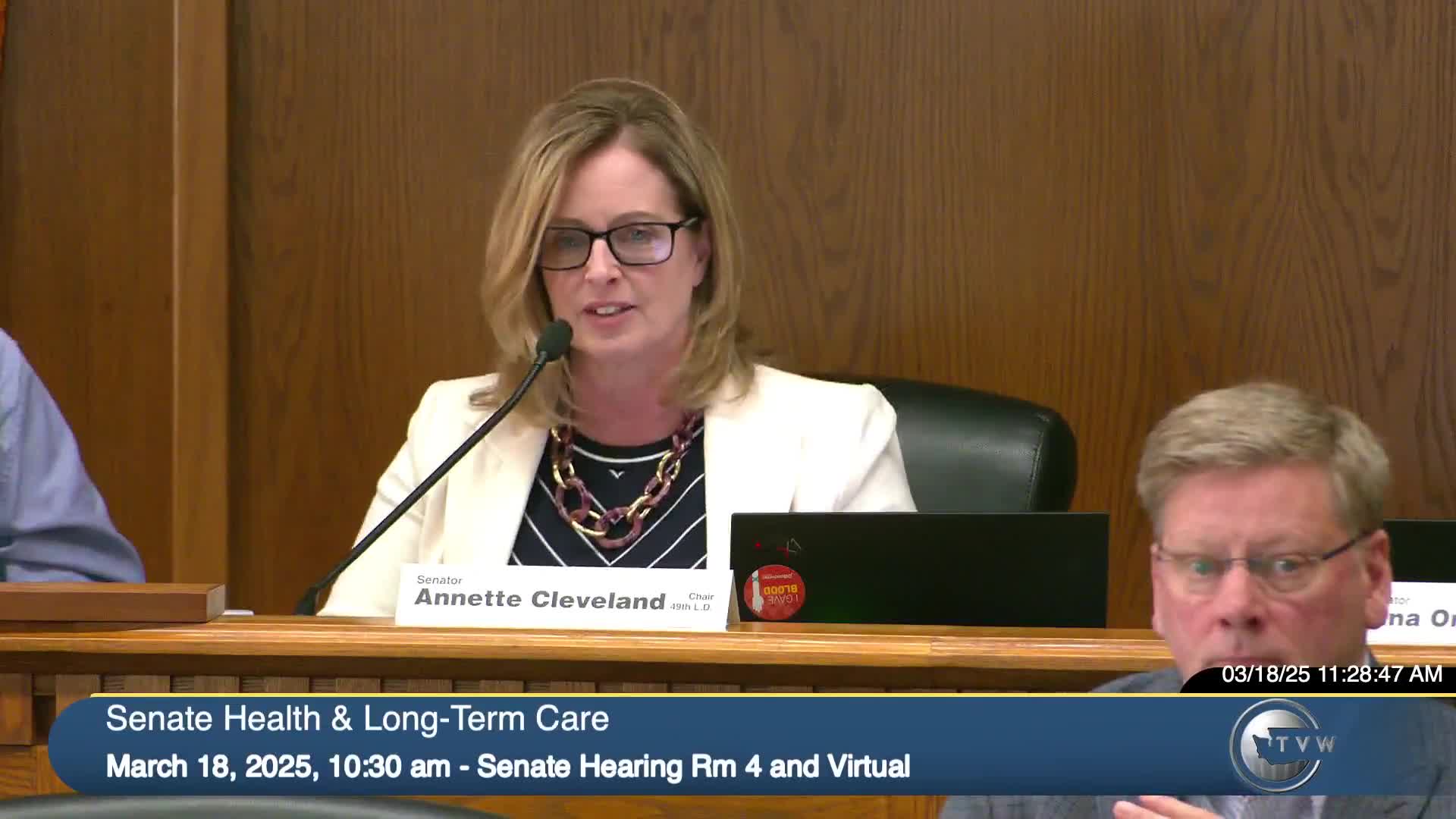
The Senate Health & Long Term Care Committee on March 18 heard Representative Dan Bernowski introduce Engrossed Second Substitute House Bill 1686, which would require the Department of Health to develop a plan and recommendations for creating a statewide, interactive registry of health-care entities.
Committee staff Greg Attanasio explained that the registry plan should identify which health-care entities would be required to participate, what information would be submitted and whether fees would apply. The Department of Health must consider opportunities to streamline reporting, allow data sharing with other agencies and employ strategies to understand business structure, funding and contractual relationships of health-care entities in Washington. Staff noted a progress report is due to the Legislature by Dec. 31, 2027, and a final report by Nov. 1, 2028.
Representative Dan Bernowski, sponsor of the House bill, told the committee he and stakeholders sought a scalable approach because Washington currently lacks a complete picture of private-equity involvement, affiliations and subsidiaries across its health system. Jane Beyer of the Office of the Insurance Commissioner said the OIC’s 2023 affordability report showed gaps in available data and that the registry would fill information shortfalls about ownership and affiliates similar to data insurers already report to OIC.
Pam McKeown of the Purchasers Business Group on Health and Emily Bryce of Northwest Health Law Advocates described how earlier state reports (including work by OFM and OIC) identified the absence of a comprehensive census of providers and facilities as a barrier to planning, understanding consolidation trends and evaluating cost drivers. They urged the committee to advance the bill, even in its pared-back form, so agencies can begin a coordinated planning process.
Witnesses said the bill was scaled back for fiscal reasons but asserted even a planning mandate would be valuable groundwork for improving transparency and future policy work. The committee closed public testimony and set the bill up for further committee review.