Get Full Government Meeting Transcripts, Videos, & Alerts Forever!
Get email alerts on the Workplace Violence Healthcare topic
No spam. Unsubscribe anytime.
Committee hears bill to strengthen investigations, annual updates of healthcare workplace-violence plans
Summary
Second Substitute House Bill 11 62 would require timely investigations of all workplace violence incidents in covered healthcare settings, annual plan reviews, and submission of investigation summaries to safety committees; bill supporters include nurses, hospitals and DSHS collaboration was reported.
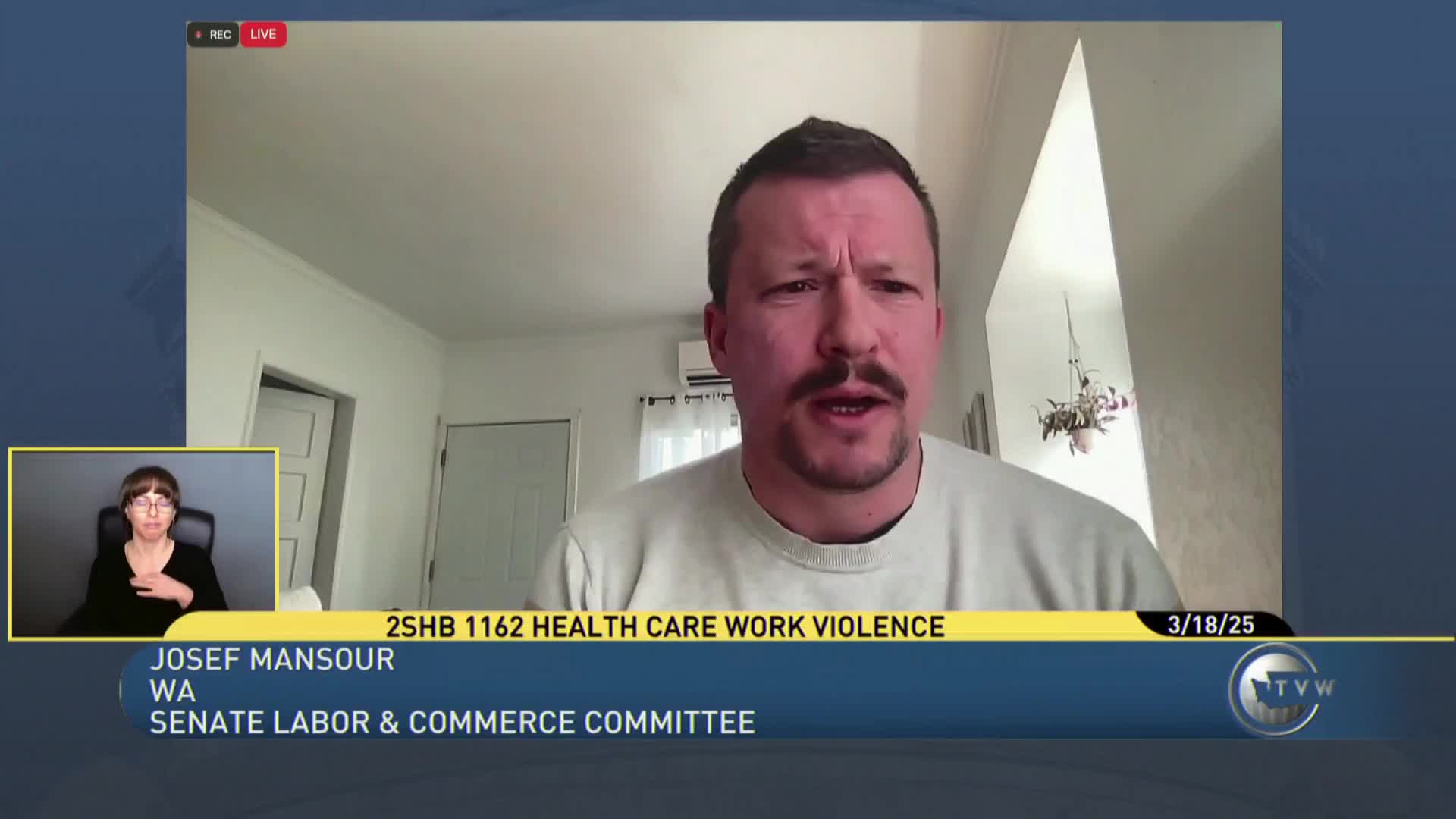
Second Substitute House Bill 11 62, which would tighten requirements for workplace-violence plans in certain health-care settings, was read and discussed before the Labor & Commerce Committee.
Staff explained that current law obliges covered healthcare settings to maintain workplace-violence plans and to review the frequency of violent incidents annually. The proposed bill would require a timely investigation of every workplace-violence incident, with summaries of the investigation (records collected, findings, systemic analysis and recommendations) submitted to the workplace-violence or safety committee. Healthcare settings would be required to conduct a comprehensive review and update their workplace-violence plans at least once per year. The bill takes effect Jan. 1, 2026, and contains a null-and-void clause.
Representative Marie Levitt, sponsor, said workplace violence has been increasing over the last three to five years and that hospitals and nurses’ associations supported the measure. Jessica Hoff, director of government affairs for the Washington State Nurses Association, testified in strong support and said nurses are assaulted at higher rates than other professions and that many incidents go unreported.
Hospitals said they worked with nurses’ groups and the sponsor to find workable language; Remi Kerr of the Washington State Hospital Association testified that the sponsor engaged stakeholders early and that the association supports the substitute. Staff noted the bill, as drafted, does not include long-term care/nursing home facilities; a senator asked for clarification and staff said the statutory definition of “healthcare setting” does not expressly include nursing homes.
No committee vote was recorded during the hearing. A fiscal note for the substitute was requested; an earlier fiscal estimate for the original bill showed costs to DSHS and indeterminate local-government impacts.