Get Full Government Meeting Transcripts, Videos, & Alerts Forever!
Get email alerts on the Respiratory Care Compact topic
No spam. Unsubscribe anytime.
Senate committee hears support for Respiratory Care Interstate Compact bill
Summary
Supporters and respiratory care professionals told the Senate Health & Long Term Care Committee that House Bill 114, which would enact the Respiratory Care Interstate Compact in Washington, would ease workforce shortages and allow licensed respiratory therapists to practice across state lines once the compact’s activation threshold is reached.
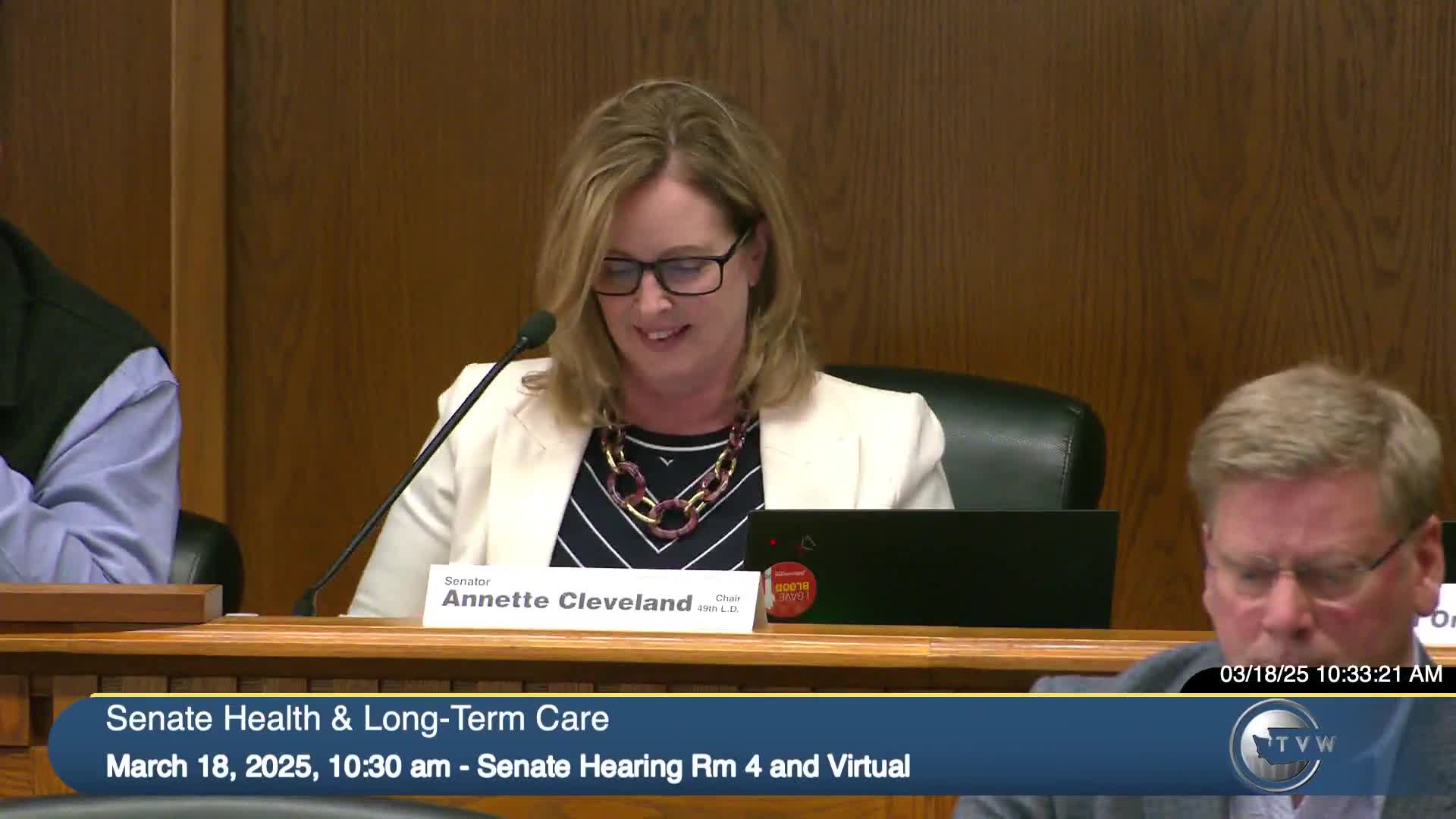
The Senate Health & Long Term Care Committee on March 18 heard testimony supporting House Bill 114, which would adopt the Respiratory Care Interstate Compact and allow licensed respiratory care practitioners in compact states to practice across state lines under a compact privilege.
Julie Tran, staff to the committee, told members the bill establishes the compact and a commission to administer it; the compact would take effect when a seventh state enacts it. Tran said participation requires meeting listed requirements including licensing, participation in a Commission data system and a mechanism to receive and investigate complaints. Tran noted the bill passed the House 97-0.
Representative Mari Levitt, the bill’s House sponsor, said the compact would help address workforce shortages and would benefit military families who move frequently. “These respiratory care therapists are so important to the community’s health beyond just our children,” Levitt said.
Witnesses representing the American Association for Respiratory Care, practicing respiratory therapists and the Council of State Governments described workforce and patient-care benefits. Mary Anne O’Dell, senior vice president for government affairs at the American Association for Respiratory Care, said the compact “is critical in addressing the growing shortage of respiratory therapists and ensuring access to high quality respiratory care across state lines.”
Carl Hinkson, a licensed respiratory therapist practicing in Washington, described how demand has grown since the COVID-19 pandemic and because of chronic lung disease. “The Respiratory Care Interstate Compact would create a streamlined licensure system allowing licensed respiratory therapists … to practice across state lines without administrative delays and costs of applying for multiple states’ licenses,” Hinkson said.
Carl Sims of the Council of State Governments said the compact follows the same technical model as other professional compacts adopted in Washington and noted the compact had been introduced in five states that year. Sims described a data system administered by the compact that would facilitate privileges and communications about disciplinary issues between states.
Proponents argued the compact would improve emergency response capacity, allow easier patient transport across state lines and reduce administrative burdens on practitioners and boards. No opponents spoke during the hearing. The committee temporarily set the bill aside for additional testimony and returned to it before closing the public testimony record.
The hearing included multiple speakers from professional associations and practicing respiratory therapists; staff noted that no state had yet enacted the compact and that the compact becomes effective when seven states adopt it.