Get Full Government Meeting Transcripts, Videos, & Alerts Forever!
Get email alerts on the Environment Marine Conservation topic
No spam. Unsubscribe anytime.
Lawmakers hear wide support for designating bull kelp as Washington's state marine forest
Summary
House Bill 1631 would designate bull kelp forests as the State Marine Forest of Washington; testifiers from tribes, aquariums, restoration organizations, students and scouts urged passage, citing steep declines in bull kelp and its ecological and cultural importance; committee recorded 335 pro, 0 con, 1 other sign-ins and closed the hearing.
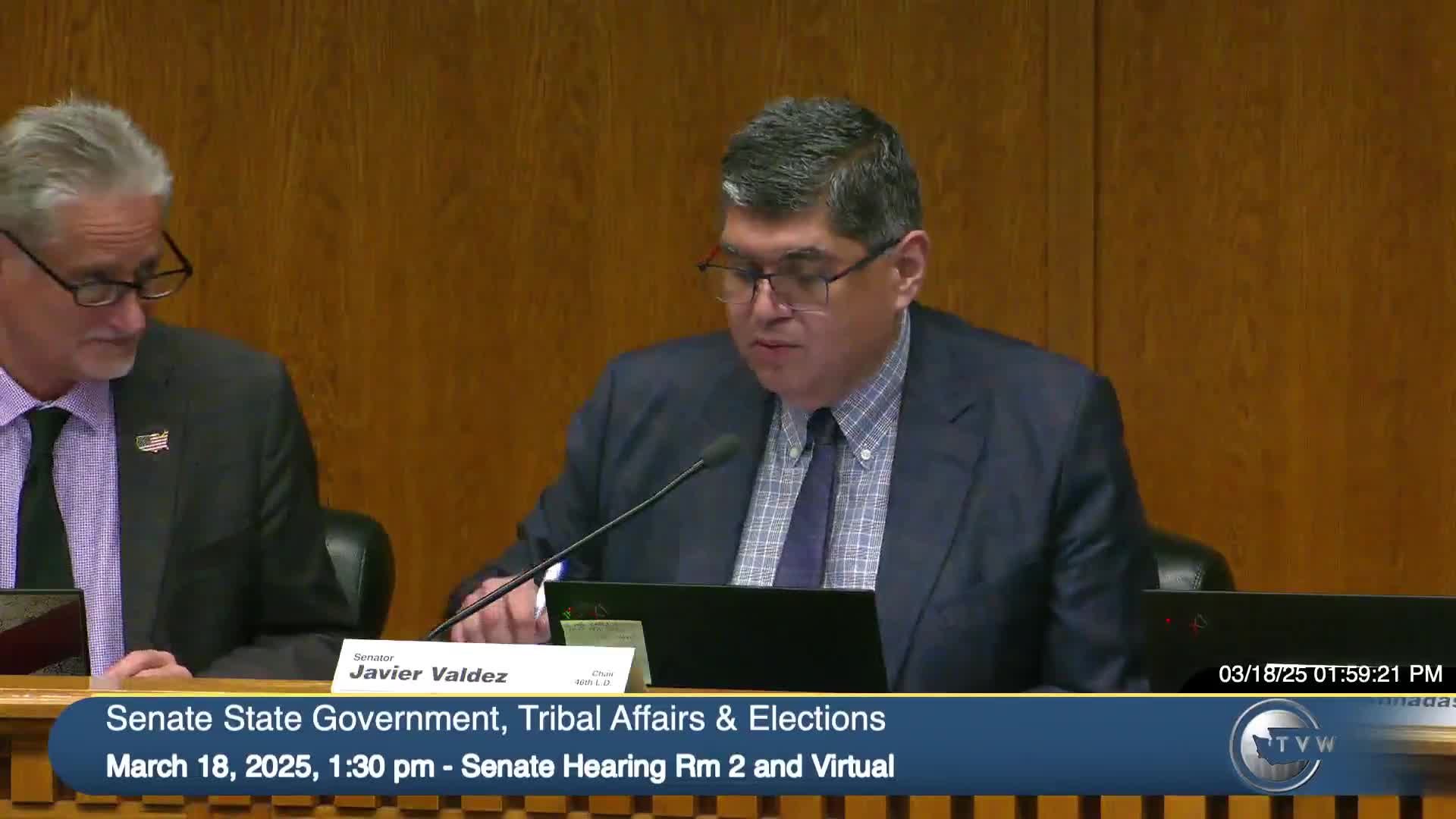
The Senate State Government, Tribal Affairs & Elections Committee heard House Bill 1631 on March 18, a bill sponsored by Representative Greg Nance to designate bull kelp forests as Washington's State Marine Forest.
Committee briefing materials summarized bull kelp as an annual macroalgae that can grow up to 100 feet, provides important habitat for fish and invertebrates, contributes to climate mitigation and has cultural significance for Indigenous peoples of the Salish Sea. The Department of Natural Resources, cited in committee materials, estimates that bull kelp in south and central Puget Sound regions has declined by more than 90% over the last 150 years.
Representative Greg Nance said designating bull kelp would accelerate restoration momentum, engage younger generations in stewardship and help protect salmon and endangered southern resident orcas. "There are three key elements here: accelerate on our 10,000‑acre goal for preservation, bring more young people into the fold, and protect Puget Sound," Nance said.
Witnesses spoke in strong support. A representative of the Seattle Aquarium said kelp loss "has devastating impacts on the nearshore habitat and the species who live and rest there," and noted a coalition of over 42 groups signed a letter backing the bill. Tribal speakers emphasized cultural ties: "Kukwang is the term for bull kelp in my Klallam language," Juliana Sullivan said, and tribal testimony called the designation a step toward protecting tribal economies and lifeways.
Marine restoration organizations described ecological functions: "These underwater forests build themselves by transforming nutrients and sunlight into food and habitat that are the foundation of our marine ecosystem," said Jody Toft, executive director of Puget Sound Restoration Fund. Testimony also included students and a Girl Scout who said the designation would raise public awareness and connect youth to conservation.
Committee staff recorded 335 proponents, 0 opponents and 1 other on the public sign-in sheet and closed the hearing on the bill. No committee vote was taken during the March 18 session.