Get Full Government Meeting Transcripts, Videos, & Alerts Forever!
Get email alerts on the Dnr Survey Notice topic
No spam. Unsubscribe anytime.
Bill would require DNR to notify adjoining landowners before boundary surveys, agency seeks clarifying language
Summary
Senate Bill 5170 would require the Department of Natural Resources to provide written notice and an opportunity to comment to adjoining landowners when conducting surveys intended to establish boundaries; DNR told the committee it already follows similar notice practices and asked for language that prevents a private right of action.
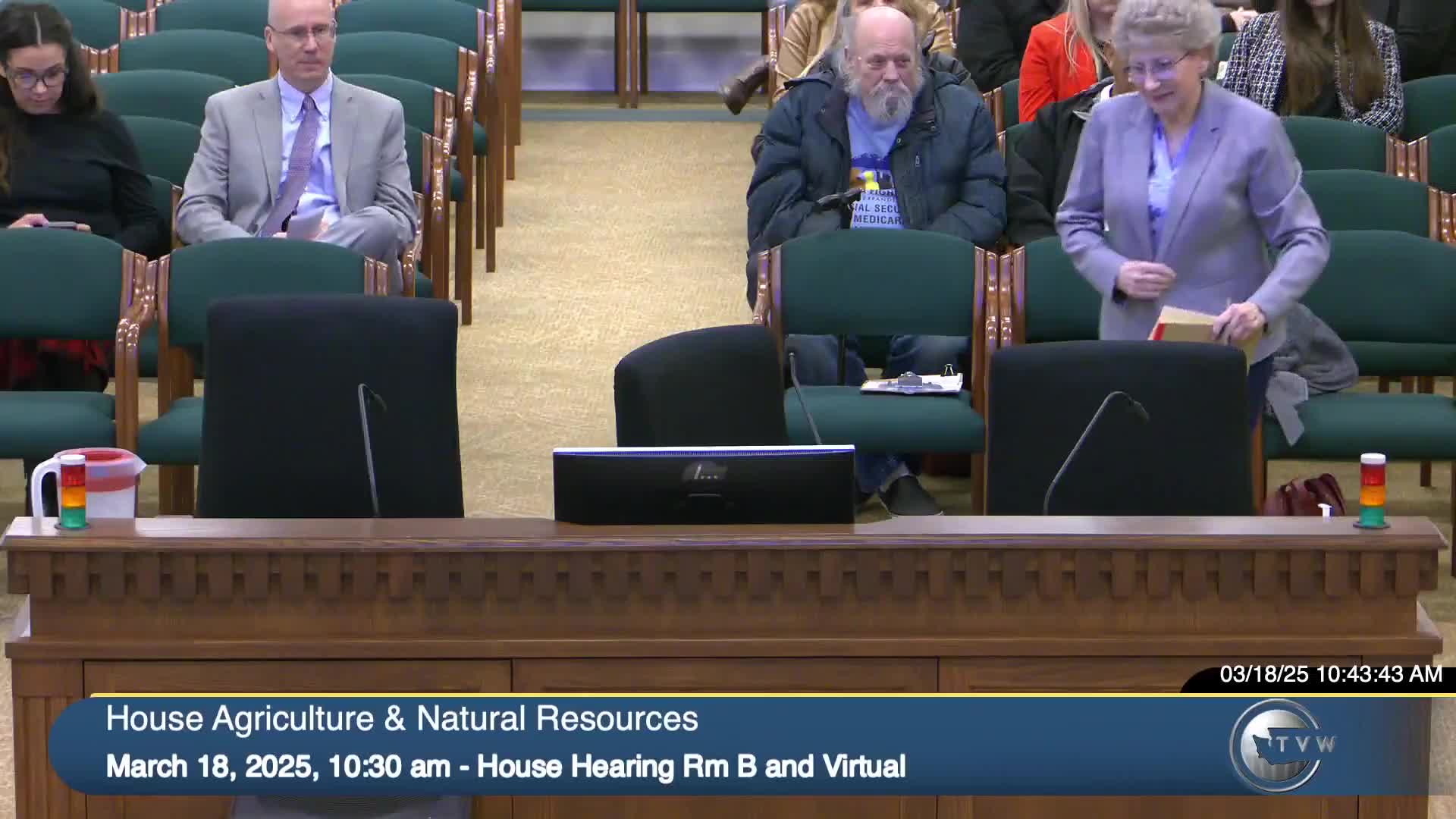
On Tuesday, March 18, the House Agriculture and Natural Resources Committee heard testimony on Substitute Senate Bill 5170, a proposal to require the Department of Natural Resources to notify adjoining landowners in writing within 30 days when conducting land surveys intended to establish boundaries, and to provide those landowners an opportunity to comment and submit evidence before DNR pursues a boundary-line determination suit.
Senate sponsor Shelley Short said the bill grew from constituent concerns that adjoining landowners lacked a formal participation process when survey work adjacent to state land might affect them. “If you’re those adjoining landowners, we want to make sure that there’s a formal participation process,” Short said, adding she and stakeholders would continue refining terminology to reflect surveying practices.
Lily Smith, committee staff, summarized the bill’s main provisions: notice and an opportunity to comment to adjoining owners for surveys with the intent of establishing boundaries; written notice of current and proposed locations within 30 days; and the requirement as a prerequisite for DNR to bring a suit for boundary-line determination.
Duane Emmons of DNR said the agency already follows longstanding practices—letters and door-hung notices—to alert adjoining owners and that the bill, as written, would apply specifically to DNR’s roughly eight in-house surveyors (and to contracts where the department uses contracted surveyors). Emmons warned the bill could be read to create a private right of action and asked the sponsor for an addition that would ensure no private right of action is created. “We just want to ensure that it doesn't,” Emmons said, noting the department faces multiple lawsuits on individual timber sales and aims to avoid opening new litigation avenues.
Emmons also told the committee that thousands of other surveyors and millions of private landowners exist across the state—this bill would apply to a narrow set of DNR work—and that most professional land surveyors already notify adjoining owners as a matter of practice.
Representative Orcutt asked whether the requirement would apply to in-house DNR surveyors or to contractors; Emmons replied it specifically requires DNR to perform the notice and that most surveys are done by in-house employees but that supplemental contracted work could also be affected.
Vice Chair read the sign-in summary into the record: 128 pro, 0 con, 0 other. No formal action or vote was taken during the hearing. DNR and the sponsor said they would continue stakeholder discussions and that the sponsor expected to present refined language and potential amendments to clarify terms and address DNR’s concerns about private rights of action.