Get Full Government Meeting Transcripts, Videos, & Alerts Forever!
Get email alerts on the Livestock Inspection Fees topic
No spam. Unsubscribe anytime.
Committee hears extension of livestock-inspection fees and advisory committee sunset
Summary
The House Agriculture and Natural Resources Committee heard testimony on Senate Bill 5485 to extend fee provisions, call-out-fee exemptions and the Livestock Identification Advisory Committee until 2030 so the Department of Agriculture’s livestock-inspection program can remain solvent and continue animal-disease traceability work.
On Tuesday, March 18, the House Agriculture and Natural Resources Committee held a staff briefing and public testimony on Senate Bill 5485, which would extend several expiration dates in the Livestock Inspection Program from July 1, 2026, to July 1, 2030.
Committee staff explained the program, administered by the Washington State Department of Agriculture, records brands, licenses feedlots and public livestock markets, and inspects livestock at time of sale and for out-of-state movement. The 2019 law established a $20 call-out fee for inspections; inspections performed by a certified veterinarian or field livestock inspector are exempt from that fee, and those fee changes were set to expire July 1, 2026.
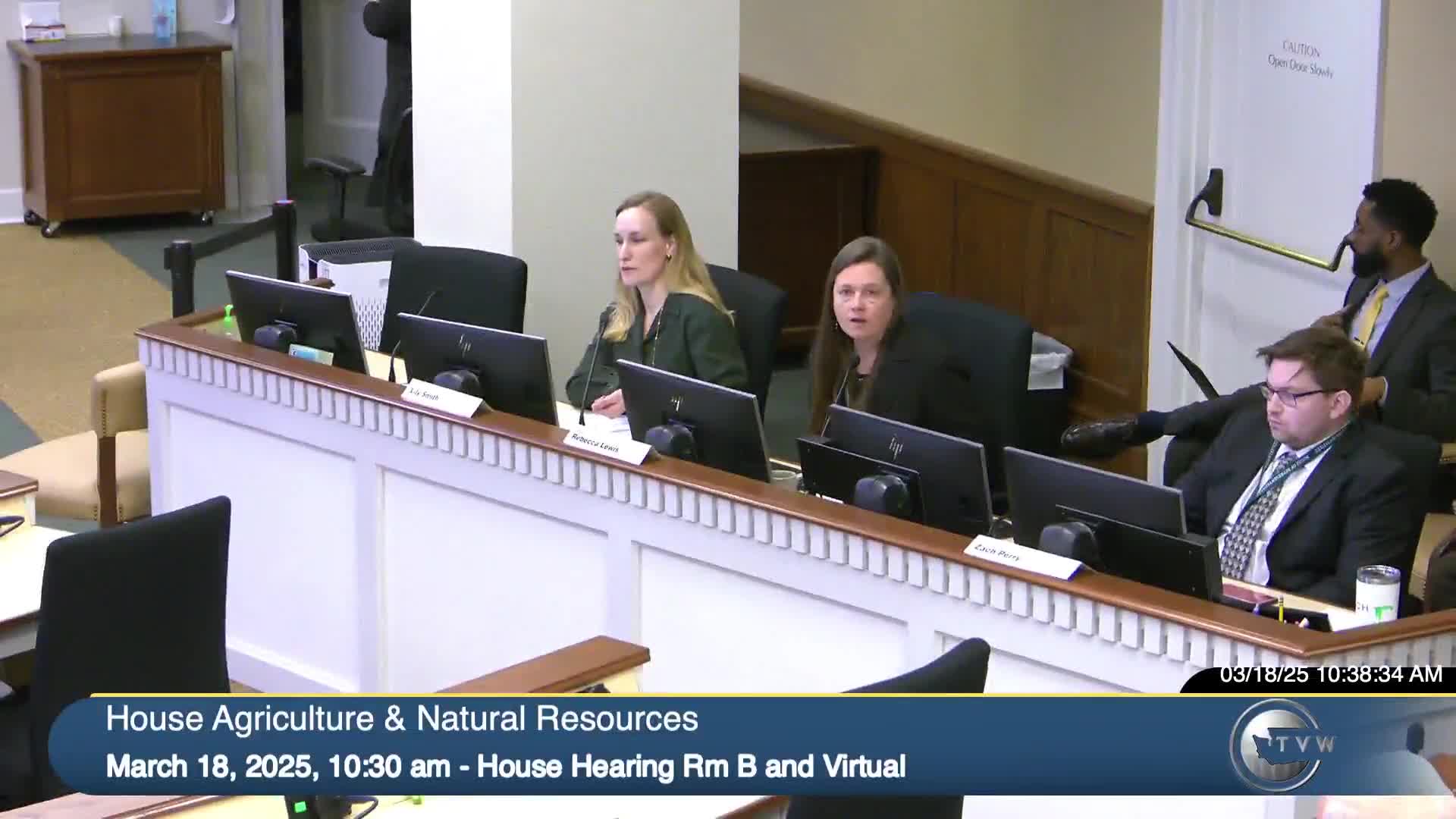
Rebecca Lewis, committee staff, summarized the bill: it extends the inspection-fee provisions, call-out-fee structure, the exemption for certified veterinarians and field livestock inspectors, the Livestock Identification Advisory Committee’s sunset, and the program’s annual reporting requirement to July 1, 2030.
Sen. Judy Warnec, sponsor, described the bill as a straightforward extension of a working program. “What I’m doing now is bringing a program that’s working. It’s financially solvent. And we want to keep it going,” Warnec said, adding that the program protects producers and the animals they raise.
Brennan Kimball, brand manager for the Livestock Identification Program at the Washington State Department of Agriculture, testified that program budget projections show solvency into 2029 under the current fee structure but that, without extending the sunset clause, the program’s projections show a deficit by May 2027. Kimball said the program’s primary purpose is “asset protection” to protect producers from theft and that the program also aids animal-disease traceability by verifying physical inspections where traceability data are incomplete.
Mark Strulley of the Washington Cattlemen’s Association testified in support of the bill, saying it provides confidence for buyers and sellers that livestock transactions are tracked and that the fee structure should remain in place.
Committee members asked how the program supports getting food to market and protecting animal health; Kimball answered that the inspection work protects producer assets and assists with disease traceability, which supports continued market access.
The committee recorded nine pro sign-ins and no opposition for testimony on SB 5485. No final action or vote was taken during the hearing. Committee staff noted a fiscal note is available in committee materials.