Get Full Government Meeting Transcripts, Videos, & Alerts Forever!
Get email alerts on the Veterans Advisory Committee topic
No spam. Unsubscribe anytime.
Bill would change membership rules for Veterans Affairs Advisory Committee; DVA signals support for inclusivity and remote participation
Summary
Senate Bill 5338 would require the Veterans Affairs Advisory Committee to appoint liaisons to all state veterans homes and change some appointed seats; the Department of Veterans Affairs told the committee the changes would improve representation and said it supports remote participation options.
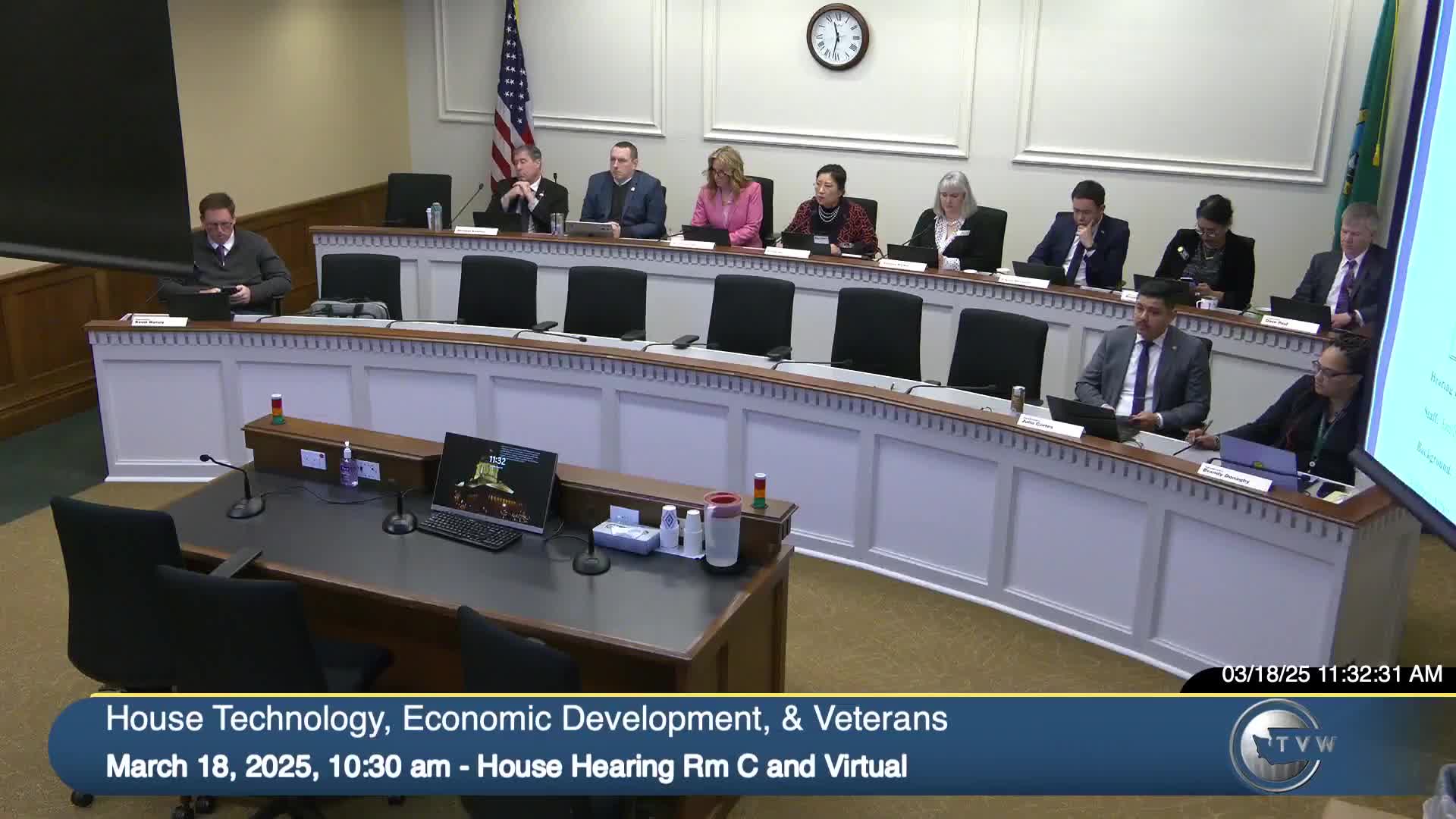
Staff told the Technology, Economic Development and Veterans Committee on March 18 that substitute Senate Bill 5338 modifies membership rules for the Governor’s Veterans Affairs Advisory Committee and clarifies liaison requirements with state veterans homes.
Emily Poole, staff to the committee, explained that the committee currently has 17 governor-appointed members, including representatives from veterans homes and veteran service organizations. Substitute SB 5338 would require the advisory committee to appoint liaisons to each state veterans home regardless of whether a veterans-home representative holds a committee seat, and it replaces two positions that represented veterans homes with two at-large veteran positions.
The bill also specifies that of the 10 members representing veteran service organizations (organizations with at least one active chapter in the state), one may be a veteran who is a member of a federally recognized tribe and one may be a current or former member of the National Guard. Staff told the committee that the House and Senate versions are structured slightly differently and that the Senate bill removes veterans-home representative seats while the House bill included them under certain nomination conditions.
David Puente, director of the Washington Department of Veterans Affairs, testified the department supports the bill because it would allow the advisory committee to better represent Washington’s veteran population. Puente said the department is testing virtual participation for members and will continue conversations about broadband and equipment to support participation from veterans in rural areas where connectivity may be limited.
Committee members asked whether veterans-home residents could participate; Puente said resident populations tend to be older (average age about 75), often with higher care needs and comorbidities, which can make in-person travel to meetings challenging. He said DVA assigns liaisons to the homes and holds resident councils to ensure voices from the homes are heard. The hearing closed with testimony from DVA and no recorded committee vote.