Get Full Government Meeting Transcripts, Videos, & Alerts Forever!
Get email alerts on the Common Interest Communities topic
No spam. Unsubscribe anytime.
Committee hears changes to common‑interest community law, including resale‑certificate waiver and reserve‑fund rules
Summary
A Civil Rights & Judiciary Committee hearing reviewed engrossed substitute Senate Bill 5,129, which would expand parts of the Washington Uniform Common Ownership Act to older and smaller common‑interest communities, revise reserve‑fund investment rules and allow resale‑certificate waivers under limited conditions.
The Civil Rights & Judiciary Committee on Tuesday heard staff and stakeholder testimony on engrossed substitute Senate Bill 5,129, which would make revisions to Washington’s law governing common‑interest communities, including condominiums and homeowners associations.
Yolanda Baker, staff to the committee, told members that the bill “relates to common interest communities” and would apply additional WOCIOA (the Washington Uniform Common Ownership Act) provisions next January to legacy communities now governed by older statutes. Baker said the bill expands the small‑community thresholds from 12 units and $300 average annual assessments to communities of up to 50 units and assessments not exceeding $1,000 per unit, per year.
The bill would also revise how boards may keep reserve funds and change resale‑certificate rules, Baker said. Under the proposal, the board may hold reserve funds in cash or money‑market accounts and, under conditions, in certificates of deposit or U.S. Treasury bills; boards could invest in securities only when the total reserve exceeds $250,000 and new investments would not reduce interest‑bearing reserves below 50% of the fund. On resale certificates, the bill would allow a buyer to waive receipt of the certificate “if the resale certificate is unavailable,” and it sets circumstances — for example, when the seller has made three good‑faith requests without a response — under which the certificate is considered unavailable.
Sen. Jamie Peterson, sponsor, described the measure as the product of a year of stakeholder negotiation and compromise. Peterson said the bill reflects three primary topics addressed over the summer: defining small communities to limit the burden on very small associations, crafting circumstances when a resale certificate can be waived, and adopting consumer‑protection and flexibility changes sought by homeowner advocates. “Only things that all of the folks there could agree on are included in the bill,” Peterson said.
Representatives of stakeholder groups offered largely supportive testimony while noting unresolved concerns. Bill Clark of Washington Realtors said the changes “clarify the availability of resale certificates” and help the industry in a period of statutory transition. Steve Horvath, speaking for Homeowners United, said the bill will move communities toward an “open meeting standard” and uniform rules, while acknowledging some stakeholders still seek additional changes. Hillary Bublitz of the Community Associations Institute Legislative Action Committee said CAI supported the bill as a reasonable compromise reached after months of review.
Several homeowners and management professionals said they want more homeowner representation in the negotiation process and asked for additional measures, including a state ombudsman and more plain‑language statutes. Michelle Haraney, president of the Evergreen Point HOA board, urged lawmakers to consider rolling back the requirement that pre‑2018 HOAs be subject to WOCIOA and to create an ombudsman in the attorney general’s office. Theresa Hammer, a management‑company representative, asked for more lead time for reserve requirements and said district thresholds should account for a community’s actual assets, not just lot count.
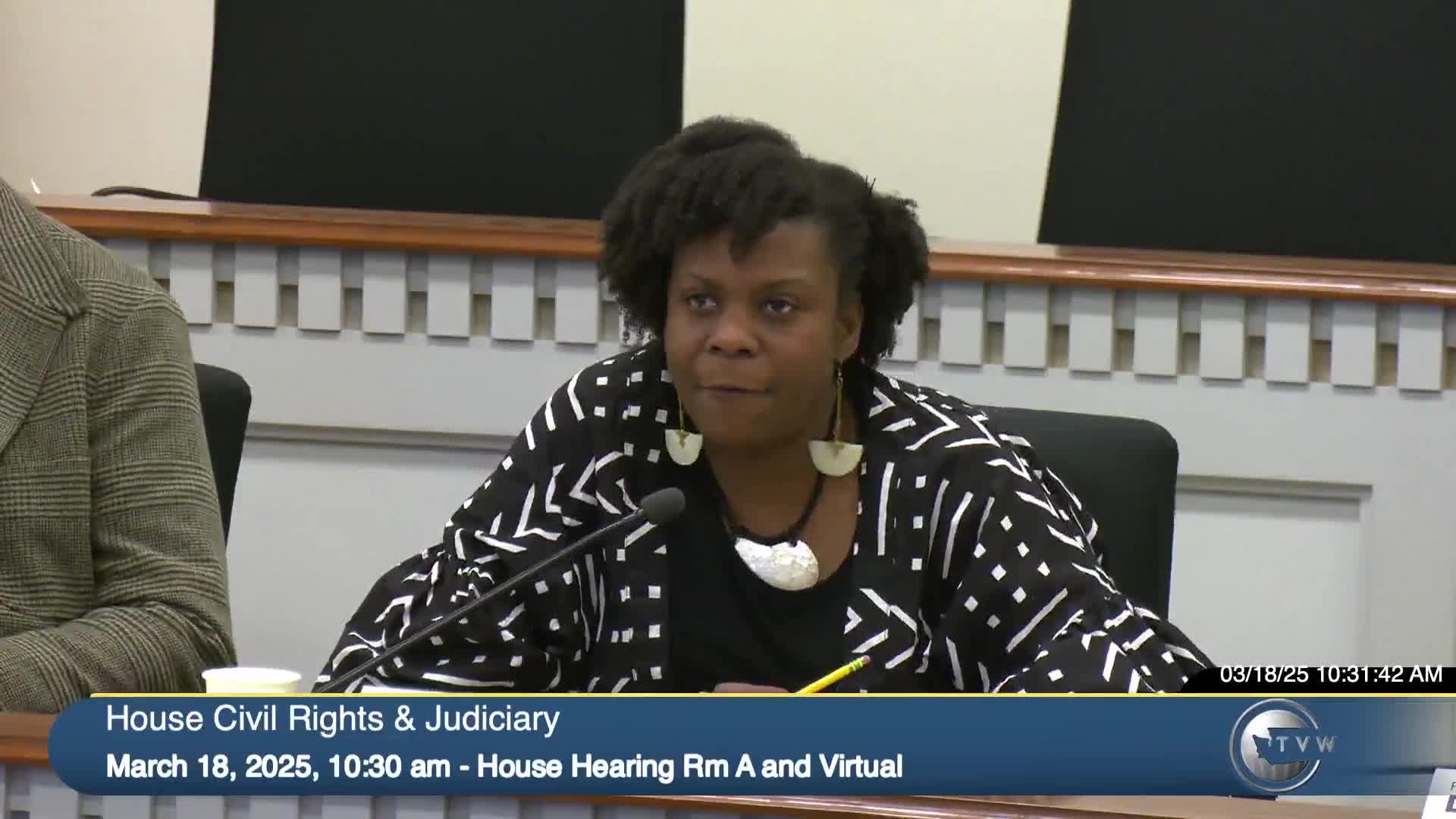
Committee members asked for clarifications about the makeup of stakeholder groups and the transition timeline; no formal action was taken at the hearing.
Why it matters: The bill would unify and extend parts of the Uniform Common Ownership Act to legacy associations across Washington and change rules that affect buyers, seller disclosures and how associations manage long‑term funds — areas that can affect property sales, homeowner assessments and board governance.
What’s next: The committee took testimony and did not record a vote at the hearing. Sponsors and stakeholders indicated continued negotiations and possible amendments ahead of any floor action.