Get Full Government Meeting Transcripts, Videos, & Alerts Forever!
Get email alerts on the Bail Bonds Immigration topic
No spam. Unsubscribe anytime.
Committee Hears Bill to Bar Bail Agents from Enforcing Civil Immigration Warrants
Summary
Substitute Senate Bill 5714 would make it unprofessional conduct for bail bond agents or recovery agents to use their position to enforce civil immigration warrants or to share defendants’ immigration status outside the agency; the Department of Licensing would have disciplinary authority. Supporters called the bill necessary to protect immigrant
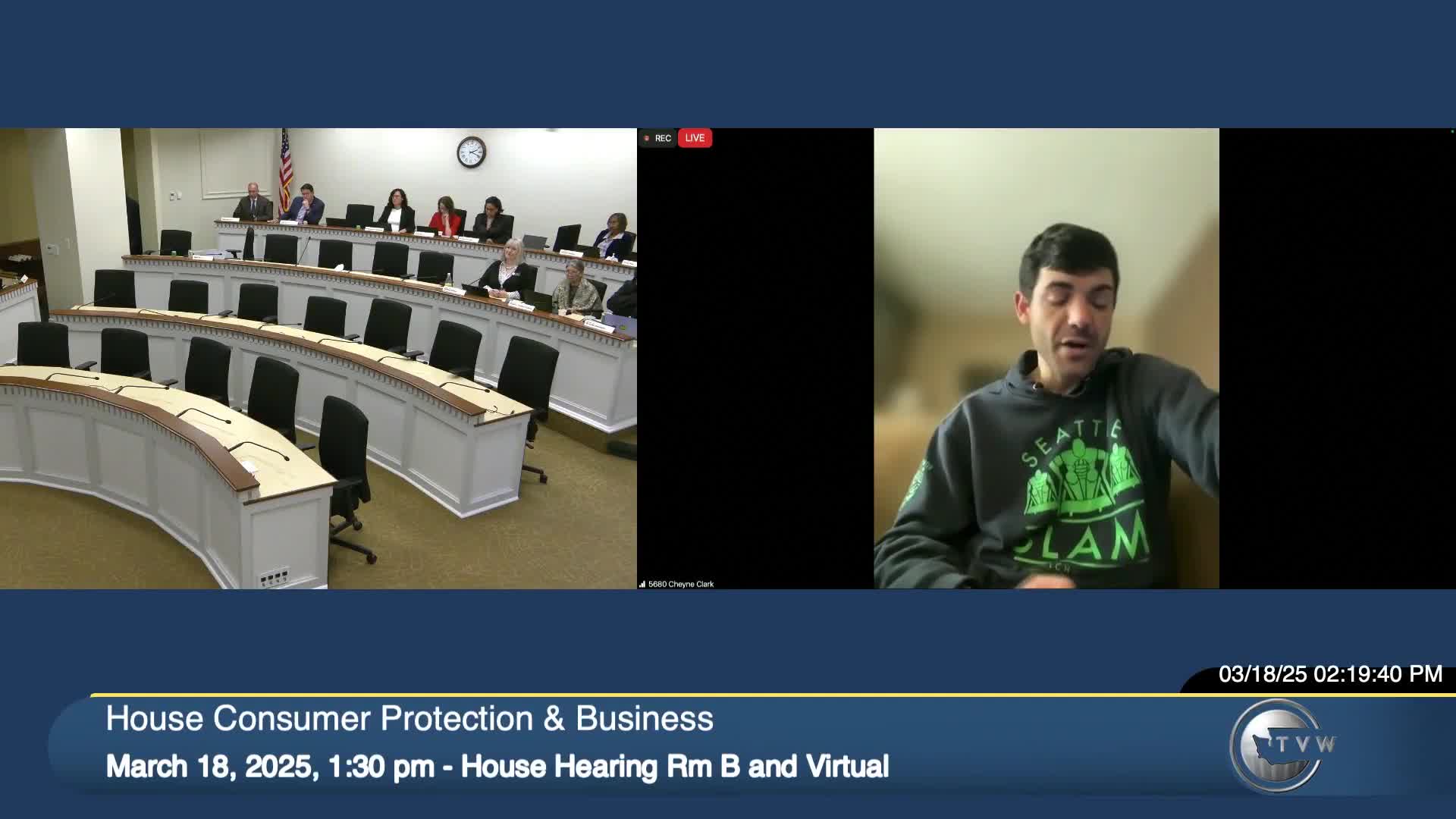
The Consumer Protection & Business Committee heard staff briefing and received public testimony March 18 on Substitute Senate Bill 5714, a measure that would declare certain immigration-enforcement actions by bail bond agencies and bail bond recovery agents to be unprofessional conduct under state law.
Peter Clodfelter, committee staff, said Washington licenses and regulates bail bond agencies, bail bond agents and bail bond recovery agents through the Department of Licensing. He summarized the bill’s principal provisions: it would make it unprofessional conduct for a bail bond recovery agent to use their position to enforce a federal civil immigration warrant, and it would bar bail bond licensees from sharing a defendant’s immigration status with people outside the bail bond agency. Failure to comply could subject a licensee to existing disciplinary processes administered by the Department of Licensing, including fines, suspension or revocation.
Shoma Lahiri Gupta, immigration-advocacy manager with OneAmerica, testified in support. “If bail bond agents have the freedom to share an individual's immigration status to anyone, that individual would be subject to a greater risk of family separation, immigration detention, or deportation,” Lahiri Gupta said. She urged the committee to advance the bill to protect immigrant and refugee communities.
Why it matters: supporters said the bill would protect people being processed through criminal courts from collateral immigration consequences and preserve trust between immigrant communities and the courts. Clodfelter's staff briefing noted that the Department of Licensing currently may discipline licensees for other categories of unprofessional conduct; SB 5714 would add these immigration-related acts to the regulated list.
Questions from committee members focused on scope and amendment possibilities. Representative Morgan asked whether members could propose technical amendments and whether the title’s scope could constrain amendments; staff said members could propose amendments but advised caution about title-scope rules. No committee vote was taken during the hearing.
Ending: public testimony was limited and committee staff requested written testimony for the record; the bill remains at the public hearing stage pending any amendments and further committee consideration.