Get Full Government Meeting Transcripts, Videos, & Alerts Forever!
Get email alerts on the Campus Safety Survivors topic
No spam. Unsubscribe anytime.
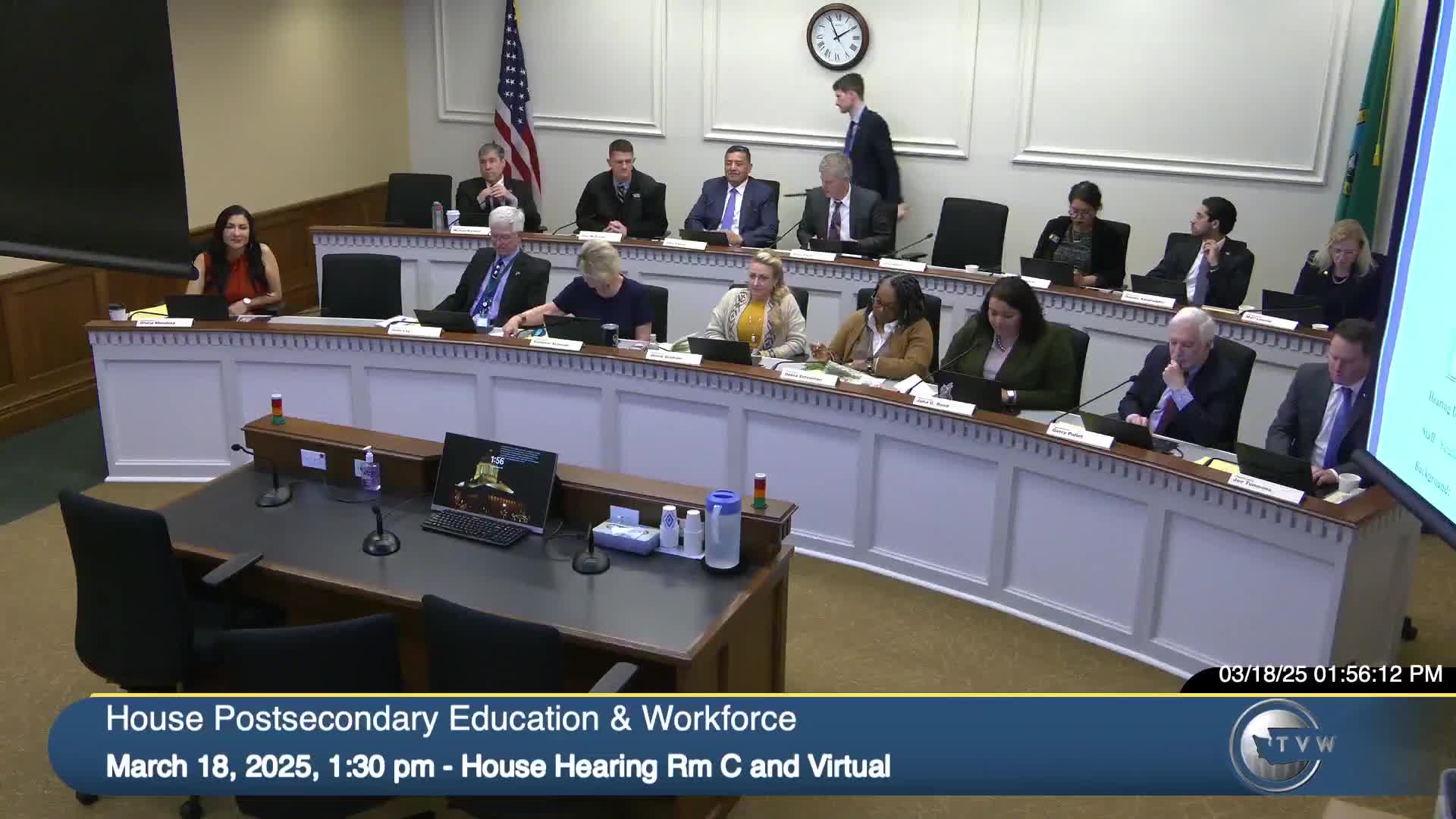
Committee hears bill to expand survivor supports, preserve assault kits and bar nondisclosure deals at colleges
Summary
Senate Bill 5,355 would expand survivor supports at public colleges by requiring regional survivor hotline contact information on ID cards, strengthening forensic evidence preservation rights, and banning pressure to sign nondisclosure agreements involving alleged campus sexual misconduct.
Senate Bill 5,355 would require public institutions of higher education that issue identification cards to include on new and replacement cards the phone number of a regional community‑based organization that provides 24/7 support to survivors of sexual assault, sexual harassment and related forms of interpersonal violence. The bill also adds survivor protections around forensic evidence and prohibits institutions from proposing, requesting or pressuring students reporting sexual misconduct to enter nondisclosure agreements related to the alleged misconduct.
Elizabeth Allison, committee staff, summarized the bill’s components, including existing ID card notice requirements for suicide prevention and the bill’s additions for survivor hotline information and systems for preservation of sexual assault kits. The bill would require written notice to survivors regarding the policies governing collection and preservation of kits and, upon written request, allow a survivor to preserve a kit or its probative contents without charge and receive written notice at least 60 days before the intended destruction of the kit.
Senator Tina Orwell, sponsor, said the bill “is really about supporting survivors” and described listening tours at several universities. She recounted a case in which a survivor seeking help got an appointment a week later and later dropped out of school. “With the number of the community based service centers on the cards, that's gonna allow someone to talk to a human being,” Orwell said.
Student survivors testified in support and described delays and gaps in services at their institutions. Rachel Medallia, a Central Washington University alumna, said she waited two months for an investigation and received no forensic exam; she urged lawmakers to support the bill so other students can access timely support. Meredith Massey, another former CWU student, described unclear Title IX processes and said she was discouraged from going to police and later felt forced to drop her case. Nayra Gonzales Aranda described lifelong physical and psychological effects and said the bill creates pathways for survivors to heal even if they do not pursue legal action.
Some witnesses urged a technical change to the bill’s language. Blair Daley and Kristen Lewis asked the committee to remove the phrase “gender‑based violence,” arguing the term is undefined in state law and could create confusion for survivors — in particular concerns were raised that the phrase might be perceived in ways that could discourage male survivors. Committee staff reported they did not find a statutory definition of “gender‑based violence.”
Supporters, including the Washington Student Association, emphasized the bill’s nondisclosure agreement prohibition and required referral information for survivors on ID cards. Faculty representatives also testified in support, describing high rates of harassment and workplace impacts for faculty and staff who are survivors.
The committee heard extensive survivor testimony and system perspectives and paused the bill for further consideration; no committee vote occurred at the hearing.