Get Full Government Meeting Transcripts, Videos, & Alerts Forever!
Get email alerts on the Childcare Siting topic
No spam. Unsubscribe anytime.
Bill would ease occupancy rules to help place childcare in existing community buildings
Summary
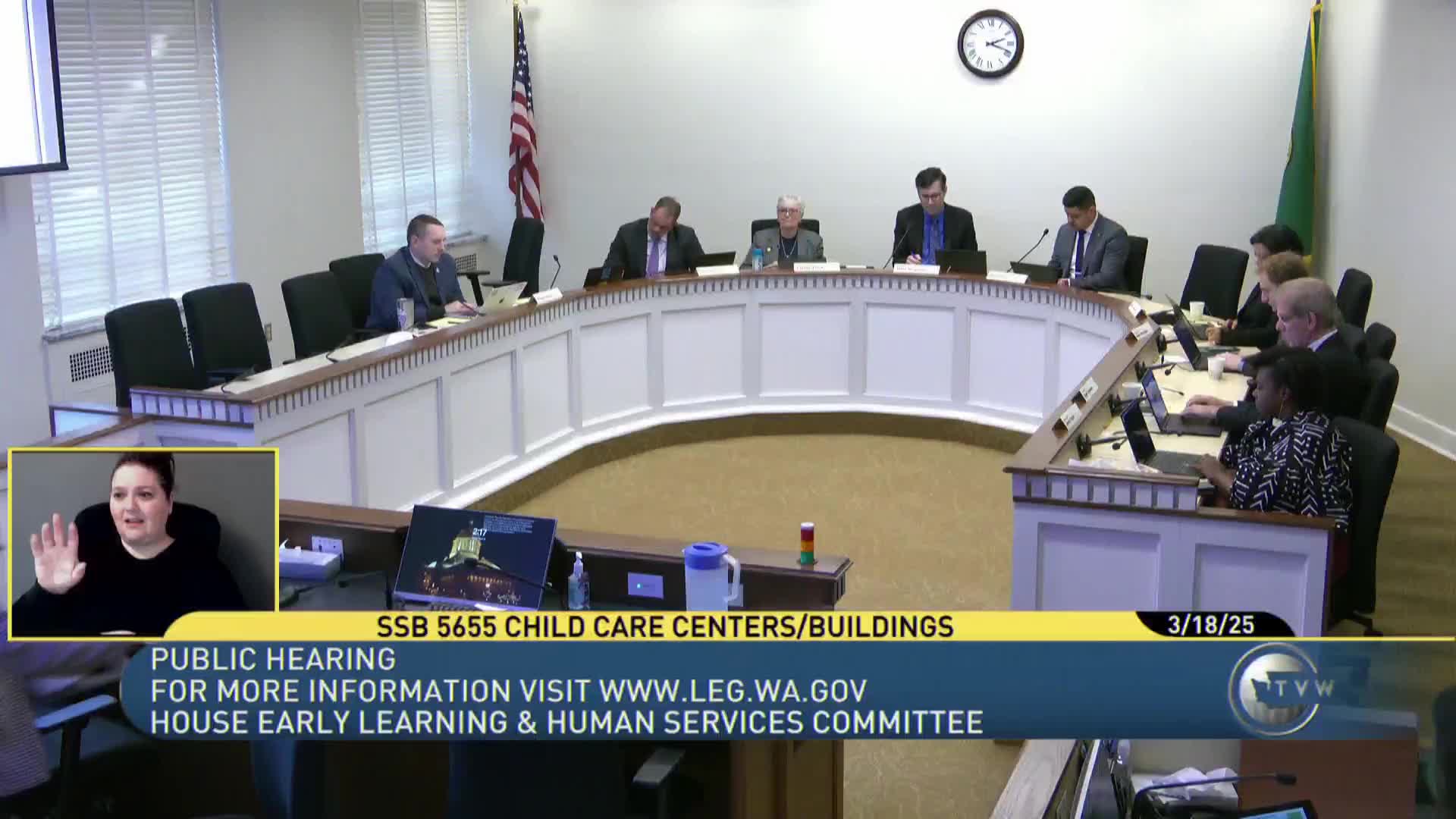
Substitute Senate Bill 56-55 would require building officials to calculate occupancy for childcare centers operating in a dedicated space within an existing multi-use building based only on the childcare area, aiming to reduce costs and open more rural childcare slots.
Substitute Senate Bill 56-55, heard June 25, would change how occupant load is calculated for childcare centers that operate inside a dedicated portion of an existing building with multiple uses. Under current code, occupant load calculations can treat a whole building as the relevant area; the bill would require local building officials to calculate occupancy for child-care licensing based only on the spaces where childcare services are provided.
Committee staff explained the background: the state building code references the International Building Code and International Fire Code, which set occupant-load guidance for egress and life safety; the childcare standard used for occupancy calculations is 35 square feet of net floor space per occupant. Sponsors and testifiers said the change would make it more feasible and affordable to site new childcare in trusted community spaces — churches, community centers and other existing buildings — especially in rural areas.
Sen. Debra (Deb) Krishadoss? (testimony used the name Deb Krishadossen in the hearing) described a provider on the Key Peninsula that cannot afford to retrofit a church building under current occupancy and sprinkler requirements; the building official from Pierce County, Ken Rice, said the bill provides a common-sense path and would not compromise life-safety systems. Christine Luna and Kimberly Shaw, operators of Key Peninsula programs, described a dire need for infant and toddler care and said small nonprofit programs cannot absorb the capital cost required under current interpretations (Shaw said retrofit costs could approach "almost a million dollars" for a sprinkler system in one case).
Supporters framed the bill as a narrow, safety-focused fix to help increase access to childcare in communities lacking indoor licensed space. The committee took no vote and indicated further legislative action would follow.