Get Full Government Meeting Transcripts, Videos, & Alerts Forever!
Get email alerts on the Medical Debt Credit Reporting topic
No spam. Unsubscribe anytime.
Committee Hears Bill to Bar Medical Debt from Credit Reports; Hospitals and Advocates Largely Support It
Summary
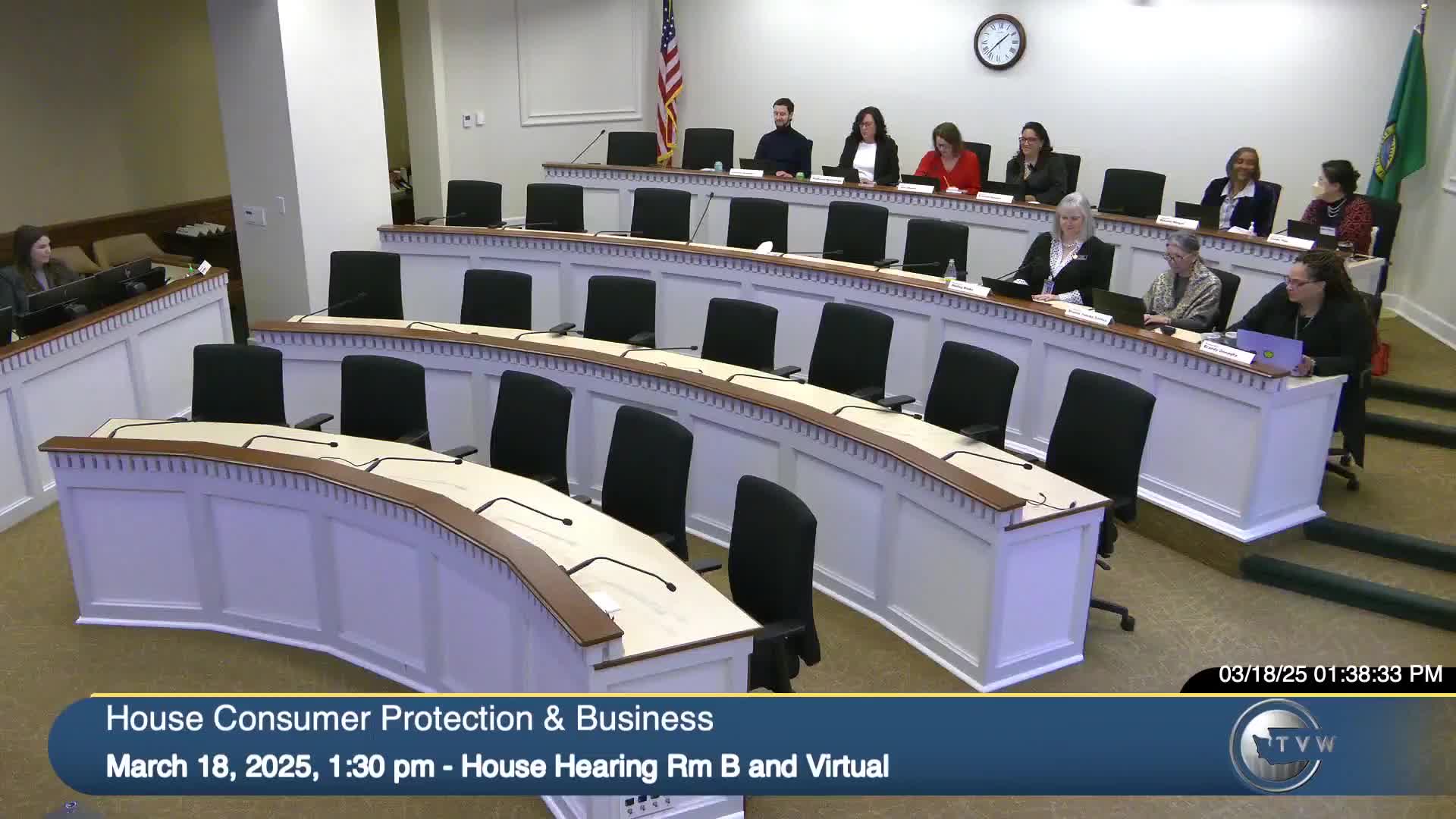
The Consumer Protection & Business Committee held a public hearing March 18 on ESSB 5480, which would prohibit hospitals, physician groups and collection agencies from reporting medical debt to consumer credit reporting agencies.
The Consumer Protection & Business Committee held a public hearing March 18 on Engrossed Substitute Senate Bill 5480, a proposal to prohibit hospitals, physician groups, professional partners and collection agencies from reporting medical debt to consumer credit reporting agencies and to bar credit reporting agencies from including medical debt on consumers’ credit reports.
Megan Mulvihill, staff to the committee, described current practice: health care entities may sell or assign unpaid medical debt to collections, collections agencies may report debt to credit reporting agencies after statutorily enumerated days, and credit reporting affects access to housing, loans and employment decisions. “Engrossed substitute Senate Bill 5,480 modifies the definition of medical debt to mean debt owed by a consumer to a person whose primary business is providing medical services, products, or devices,” Mulvihill said, adding the bill excludes cosmetic surgery and does not apply to consumer lending decisions.
Under the bill as presented, medical bills — even those not past due or already paid — would not appear on consumer credit reports, and any medical debt reported to a credit reporting agency would be void and unenforceable, the staff report said. Enforcement is provided under the Consumer Protection Act as a per se violation.
Why it matters: witnesses said medical debt can destabilize households and that removing medical debt from credit files will increase access to housing, credit and employment. Hospitals, patient advocates and cancer and consumer groups urged passage; credit industry representatives and some policy analysts warned of potential side effects on cost allocation and provider payment incentives.
Patient advocates and legal services described harms from medical-debt reporting. Julia Kellison of Northwest Justice Project described clients subject to wage garnishment or bank levies after hospital debt went to collections. “Many clients have insurance but are underinsured,” Kellison said. “They come to our debt clinic having been sued by debt collectors on hospital debt they don't even know about because they qualify for hospital charity care that the hospital has failed to screen them for.”
Cancer and patient advocates supported the bill. Adam Zarin of the Leukemia & Lymphoma Society described very high treatment costs and said medical debt should not determine a patient’s creditworthiness. Jeremy Griffin, a two-time cancer survivor, said he still carries tens of thousands of dollars in medical-related debt and supports removing medical debt from credit reports.
Hospitals and health systems told the committee many hospitals already prohibit reporting medical debt to credit bureaus and that Washington hospitals provide charity care. Teddy McGuire of Providence Health said Providence prohibits debt collectors it works with from reporting medical debt; Katrina LaMarche of the Washington State Hospital Association said hospitals provided $490 million in charity care in 2022 and supported the bill’s prohibition on medical-debt reporting.
Opposition and technical concerns: Chris Quigley of the Consumer Data Industry Association said the bill raises federal preemption concerns under the Fair Credit Reporting Act. Elizabeth New of the Washington Policy Center cautioned the legislation could increase default rates and shift costs, potentially increasing upfront payment requirements.
Committee members asked whether the bill would prevent lenders from considering evidence of paid medical bills when making lending decisions; staff said the bill addresses only what shows up on a consumer’s credit report and does not govern lending practices. Members also asked whether the bill would apply retrospectively to medical debt already on credit reports; staff said the bill contains the standard 90-day effective date and does not specify how current items would be handled.
Status: the bill received wide public testimony and a mix of stakeholder letters; committee members asked staff to follow up on definition issues raised by representatives about whether some independent providers are covered. No committee vote was taken at this meeting.
Ending: proponents urged the committee to adopt state-level protections to backstop a federal rule that is currently subject to litigation; staff encouraged interested parties to submit written comments and suggested the committee may consider technical amendments addressing definitions and enforcement.