Get Full Government Meeting Transcripts, Videos, & Alerts Forever!
Get email alerts on the Adult Education Fee Waiver topic
No spam. Unsubscribe anytime.
Committee hears bill to remove 19‑year age requirement for high school diploma fee waivers
Summary
Senate Bill 5,542 would eliminate the requirement that a student be 19 or older to qualify for fee waivers for high school diploma or equivalency courses at community and technical colleges. Sponsors and system officials said the change would broaden access and is expected to be revenue neutral in accounting terms.
Senate Bill 5,542 would remove the statutory requirement that a student be 19 years old to be eligible for a tuition or fee waiver for high school diploma and equivalency coursework at community and technical colleges.
Saranda Ross, counsel to the committee, said the bill narrows the age barrier so that residents younger than 19 who have a substantiated reason for leaving high school could receive the same fee waiver that older adult learners now receive. The waiver typically covers modest per‑quarter fees, which some colleges supplement with a small technology fee.
Senator Matt Boehnke, sponsor and a college professor, described the bill as another measure to reduce barriers and boost postsecondary enrollment. “It takes away that age piece,” Boehnke said, arguing waiver eligibility should focus on student need rather than age.
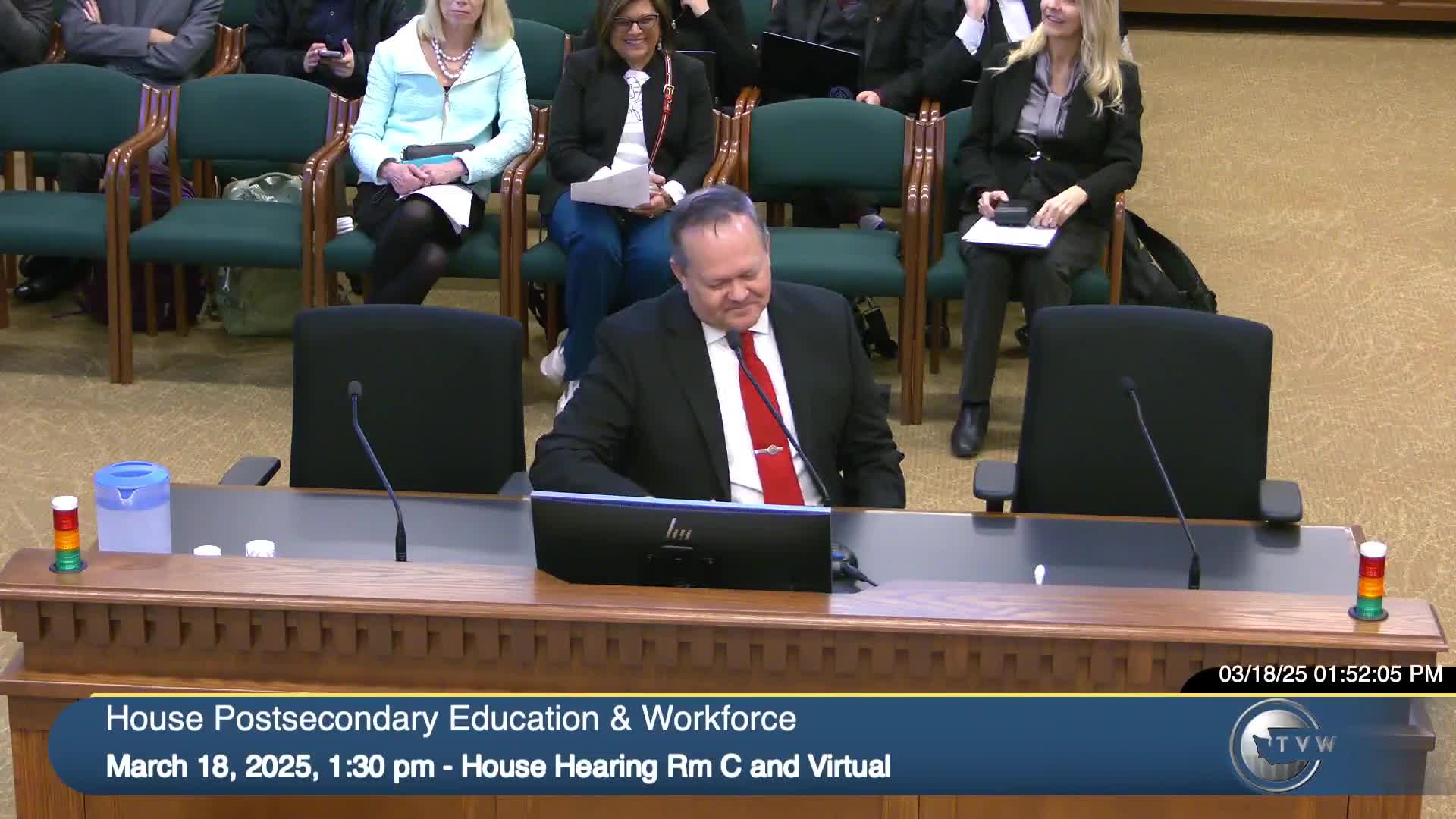
Troy Geraci of the State Board for Community and Technical Colleges testified in support and said the board expects the change to be revenue neutral given how enrollments are counted. Sarah Stifler, assistant dean at Spokane Community College, described outcomes after a local pilot: adult high school students who used a tuition waiver for up to 10 college credits saw their transition to postsecondary degree programs rise to 54 percent, up from about 10 percent prior to the waiver.
Committee members asked about whether fee waivers would change enrollment accounting or funding; system witnesses said the policy supports pathways to credentials and workforce entry without additional state costs. The committee paused the hearing for later consideration.
No committee vote was recorded at the session.