Get Full Government Meeting Transcripts, Videos, & Alerts Forever!
Get email alerts on the Automatic Voter Registration topic
No spam. Unsubscribe anytime.
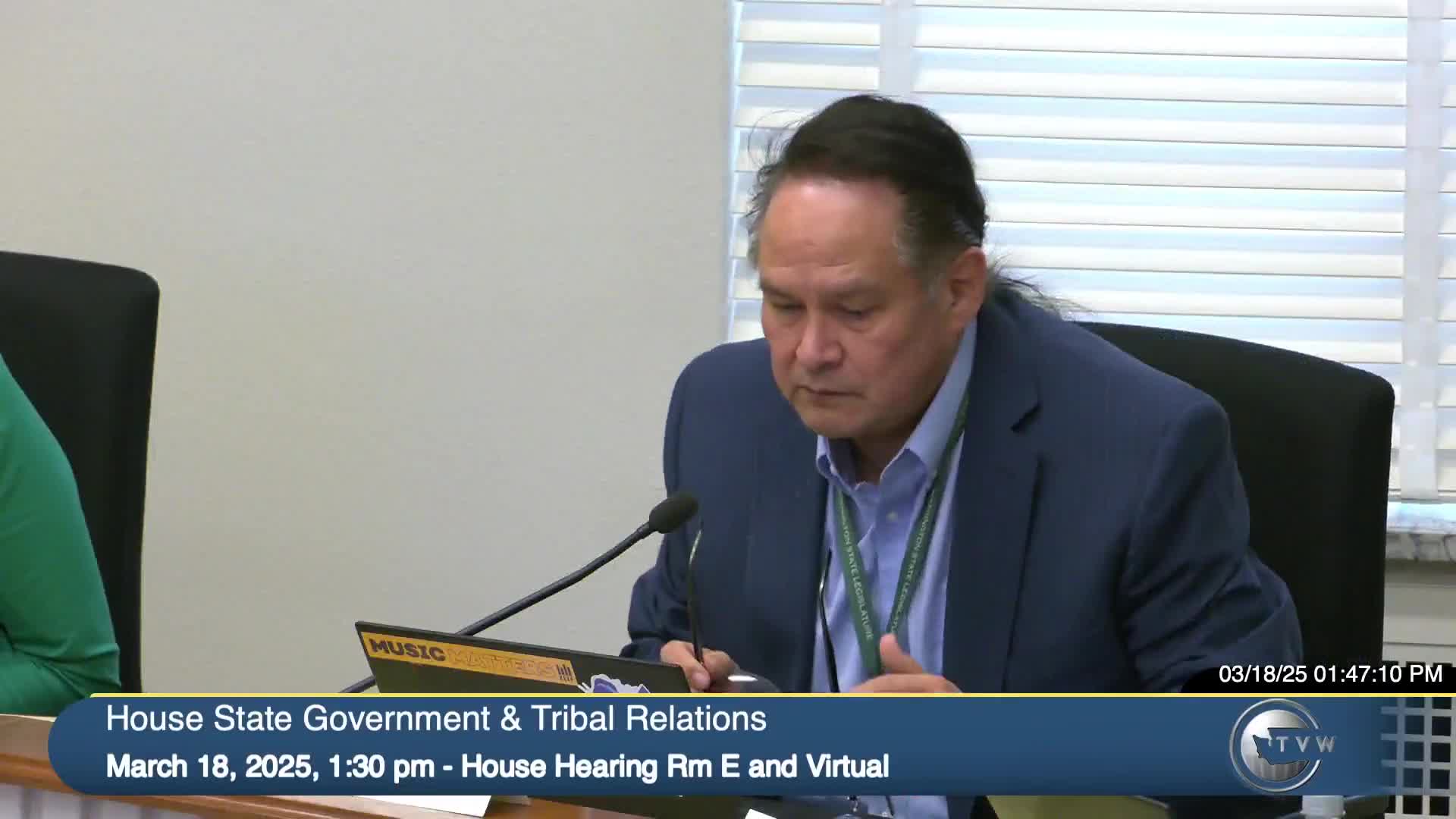
Lawmakers hear bill to expand automatic voter registration to Medicaid, naturalization and reentry processes
Summary
Senate Bill 5,077 would permit expanded automatic voter registration (AVR) through agencies that collect citizenship and identity data, including Medicaid enrollment and naturalization events; witnesses for and against the bill debated security, federal privacy rules and implementation logistics.
Senate Bill 5,077 would authorize state agencies and the Secretary of State to implement future expansions of automatic voter registration into additional government transactions, including Medicaid applications, naturalization ceremonies and reentry paperwork for returning citizens, proponents said at a House State Government & Tribal Relations Committee hearing.
Supporters said the bill is permissive and creates a pathway to register eligible citizens who are currently unregistered — particularly newly naturalized Americans, formerly incarcerated people and low-income residents — while opponents raised concerns about voter-roll accuracy and potential security gaps.
Shirley Presad, a representative of the Washington Health Benefit Exchange, described the exchange's current voter-registration workflow on Washington Health Plan Finder: a mandatory pop-up asking users whether they want to register to vote, followed by a citizenship verification step that uses federal databases. "If I click yes and my citizenship can be electronically verified through a federal database, then there is a real time data transfer that happens from Health Plan Finder to the secretary of state and I'm registered to vote that way," Presad said. She told the committee that from January through December 2024 "'80 '2 thousand people clicked yes on this" and were sent to the Secretary of State, and she said the agency has concerns about federal confidentiality rules governing Medicaid and qualified health-plan enrollment data.
Several civil-society and voting-rights witnesses urged passage. Anthony Blankenship of Free to Vote Washington said AVR would help reengage people leaving prison who face numerous barriers to reentry and civic participation. "Automatic voter registration...let[s] them know that we want them to be part of our community and that their voice and their vote matters," he said.
Alex Teyshenko, senior policy advisor at the Institute for Responsive Government Action, called the bill permissive and noted that only people with verified citizenship would be eligible for the automatic stream. He described the Federal Data Services Hub as the existing mechanism that connects federal databases for citizenship verification and said the bill's design is consistent with systems other states have used.
Opponents raised election-security concerns. Sharon Damoff testified in opposition, saying the state already struggles to maintain accurate voter rolls and that expanding registration opportunities could increase risks of improper registrations or ballot delivery errors. Jeff Pack, representing Washington Citizens Against Unfair Taxes, also opposed the bill and said he doubted the state verifies citizenship consistently during licensing transactions.
Several other organizations, including the Washington Voting Justice Coalition, Fix Democracy First and FairVote Washington, testified in support and described the bill as budget-neutral and as a way to reduce registration disparities among demographic groups.
Committee members asked technical questions about how citizenship verification would work and whether agencies would implement AVR only with federal approval where required. No committee vote was recorded in the transcript; the bill remains in committee for potential amendments or further work with affected agencies.
Clarifying details noted in testimony: the bill is permissive (does not compel agencies to implement AVR), the existing verification process uses the Federal Data Services Hub, and agencies such as the Health Benefit Exchange said federal privacy rules governing Medicaid and qualified health-plan data would constrain any changes without CMS and HHS approval.