Get Full Government Meeting Transcripts, Videos, & Alerts Forever!
Get email alerts on the Tuition Waiver Tribal Elders topic
No spam. Unsubscribe anytime.
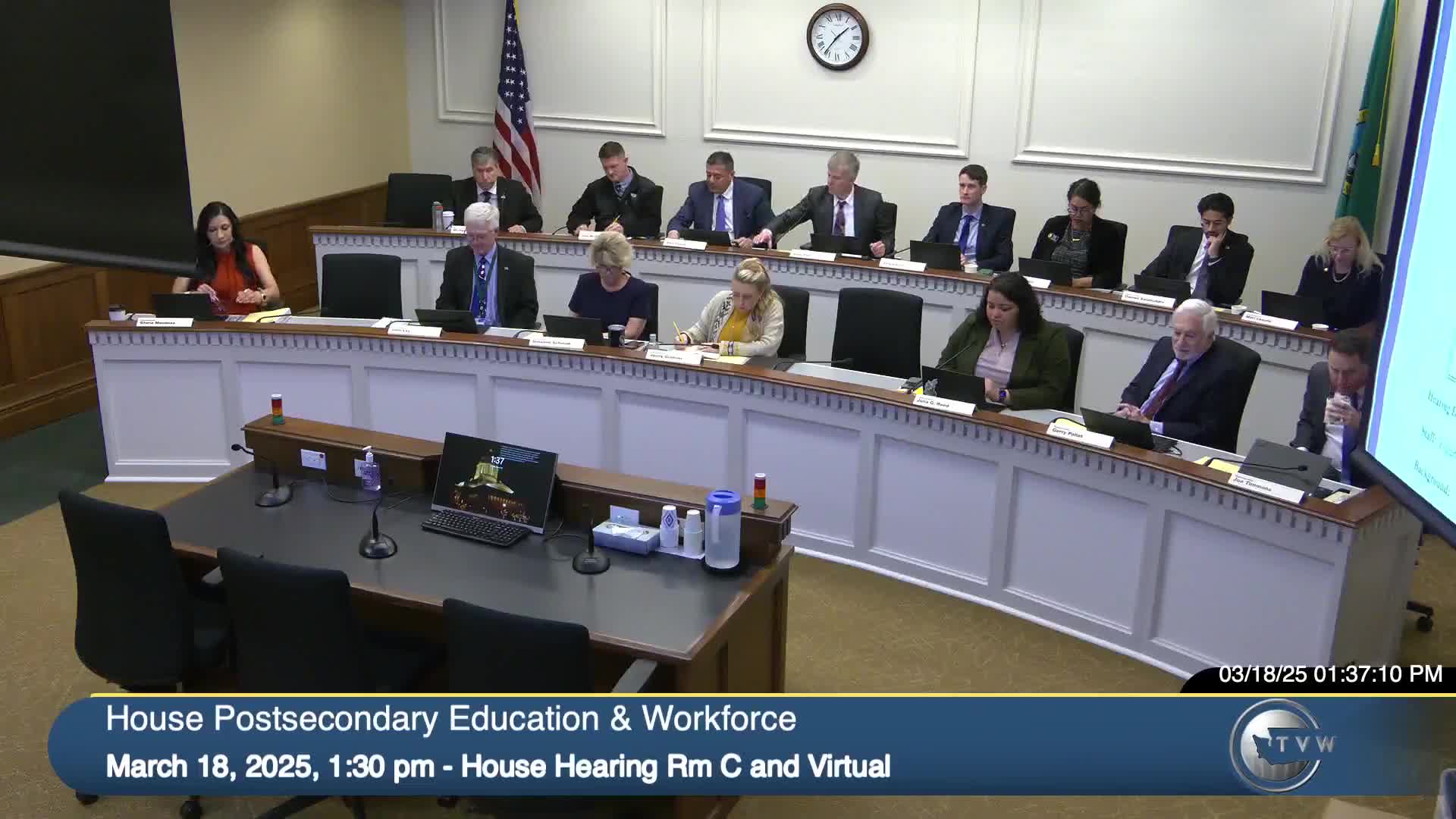
Committee hears bill to let community colleges waive tuition for tribal elders aged 55 and older
Summary
Senate Bill 5,110 would let Washington’s community and technical colleges waive tuition and fees for tribal elders age 55 and older who are members of eligible federally recognized tribes.
Senate Bill 5,110 would allow community and technical colleges to waive tuition and fees for tribal elders aged 55 and older from eligible federally recognized tribes whose traditional lands include parts of Washington.
Saranda Ross, counsel to the committee, explained that current law authorizes discretionary and mandatory tuition waivers for certain categories and that this bill authorizes waivers specifically for tribal elders at age 55, with rulemaking authority granted to the State Board for Community and Technical Colleges.
Senator Claudia Kaufman, sponsor, cited disparities in life expectancy and cultural practices around elders. “In the Tulalip tribe, they let me know that their life expectancy is 57,” Kaufman said during the hearing, arguing the lower eligibility age reflects tribal practices and unique needs. Kaufman emphasized elders’ role as cultural carriers and said the waiver would “influence generations.”
Committee members pressed staff on eligibility and fiscal impacts. Staff clarified the bill applies only to members of federally recognized tribes; nonfederally recognized tribes would not qualify under the draft language. The bill contains no statutory definition of “tribal elder,” and staff said the bill does not specify who should define that term, so that determination appears likely to rest with tribes or implementing rules.
Lawmakers also questioned the fiscal note. A staff speaker later explained that the parentheses in the fiscal note indicate a revenue loss. Maya Escobedo Strom of the State Board for Community and Technical Colleges testified in support and said the change is optional for local college districts and “should be neutral to the state operating budget.”
Supporters framed the bill as an equity measure that acknowledges shorter life expectancy and cultural norms around elder status in tribal communities and noted the State Board requested the change. The committee paused the hearing; no formal committee action or floor vote was recorded at the session.
Public testimony was limited at the committee hearing; the State Board representative and the sponsor provided the principal public remarks on record.