Get Full Government Meeting Transcripts, Videos, & Alerts Forever!
Get email alerts on the School Health Epinephrine topic
No spam. Unsubscribe anytime.
Nurses warn legal, ethical issues with bill allowing use of "any available" epinephrine on school property
Summary
Substitute Senate Bill 5,240 would expand use and acquisition rules for epinephrine in schools; school nurse organizations supported student safety but urged amendment to remove language permitting use of "any available" epinephrine on school property because of legal and liability conflicts.
Substitute Senate Bill 5,240 would broaden requirements and permissions for epinephrine (auto‑injector) use in schools, extend certain provisions to charter and state tribal education compact schools, and require training providers to issue a Department of Health‑approved certificate for staff who complete anaphylaxis response training.
Ethan Moreno, committee staff, summarized current law that allows school nurses and qualified health professionals to obtain epinephrine for school use under standing orders and explained the substitute bill would permit school nurses and in some cases designated trained school personnel to use a school district or school supply of epinephrine "or any available epinephrine on school property" to respond to an anaphylactic reaction—language that drew sustained concern from the School Nurse Organization of Washington.
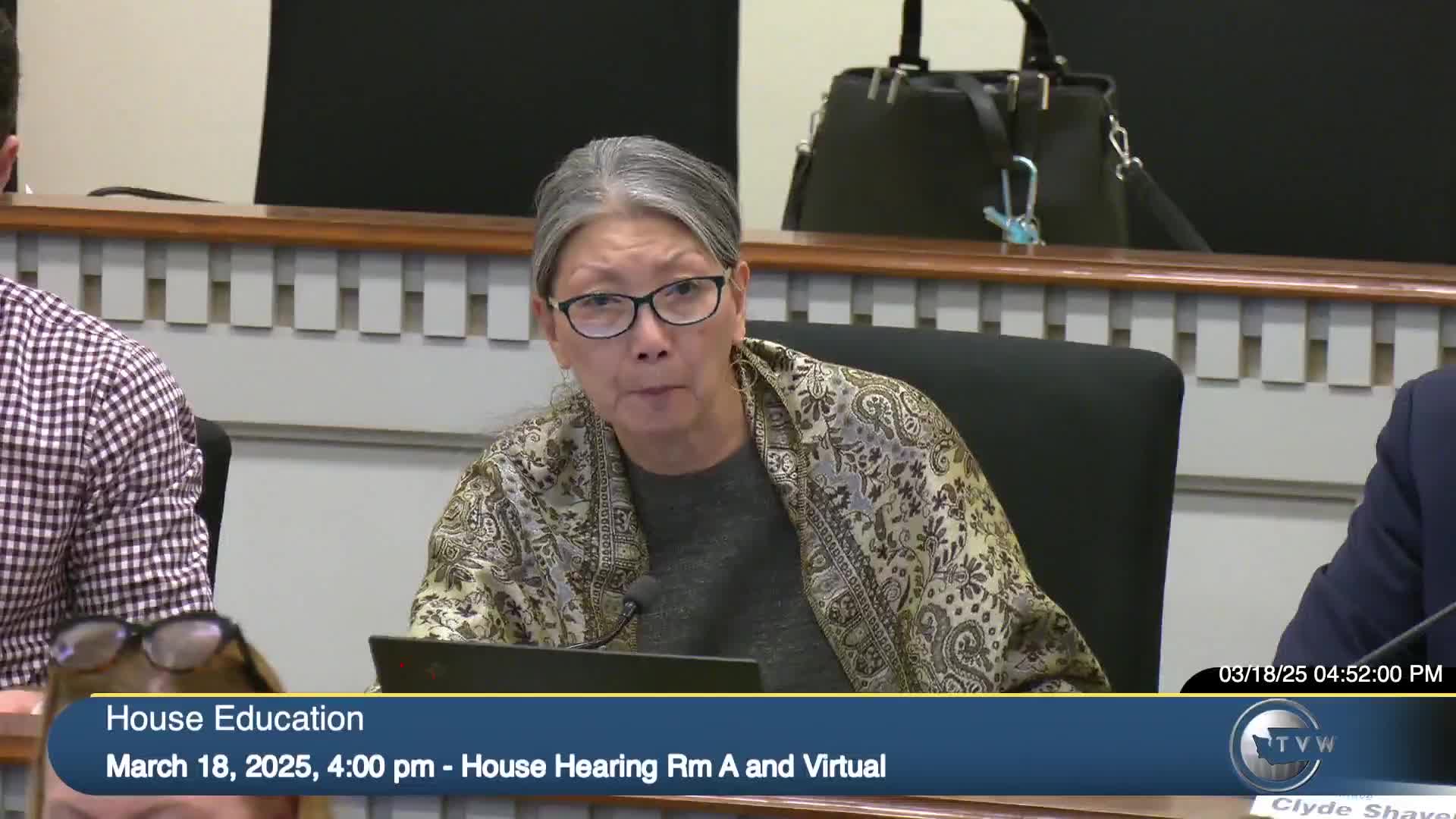
"This legislation calls for using one student's prescription for another," school nurse Liz Pray of Moses Lake said, explaining the Washington State Board of Nursing had advised that implementing the practice would violate statutes that prohibit dispensing prescription medication without a prescription and could put nurses in conflict with the Nurse Practice Act.
Erica Hellick of the School Nurse Organization urged lawmakers to retain the bill's life‑saving goals but to remove or revise the "any available epinephrine" language and to craft a clearer plan for state support of stocked epinephrine programs. School nurses described operational challenges: two common auto‑injector doses (0.15 mg and 0.3 mg) are weight based; administering the higher dose to a low‑weight child can cause tachycardia and other side effects, though nurses said giving epinephrine rather than withholding it is generally preferred in a suspected anaphylactic emergency.
Committee members asked about concentration and dosing, procurement mechanisms such as the Epi for Schools program, reimbursement for non‑school‑owned medication, and how the bill's immunity provisions would interact with existing statutes. Staff said some programs and standing orders already enable districts to obtain stock epinephrine; school nurses urged the committee to work on amendments that would preserve staff protection while avoiding conflicts with nursing and prescription laws.
The bill's substitute also clarifies that charter schools and state tribal education compact schools are eligible for the same acquisition and use rules, and that training course completion must be documented on a Department of Health form kept on file at the school. A fiscal note exists; no committee vote was taken at the hearing.