Get Full Government Meeting Transcripts, Videos, & Alerts Forever!
Get email alerts on the Housing Infrastructure Prioritization topic
No spam. Unsubscribe anytime.
Bill would require housing‑gap analysis and factor affordable housing into Public Works Board prioritization
Summary
Senate Bill 5,587 would require the Washington Center for Real Estate Research to prepare a biennial county‑level analysis of existing housing and estimated need by income band and direct the Public Works Board to consider whether projects encourage infill or increase affordable housing in counties with identified gaps.
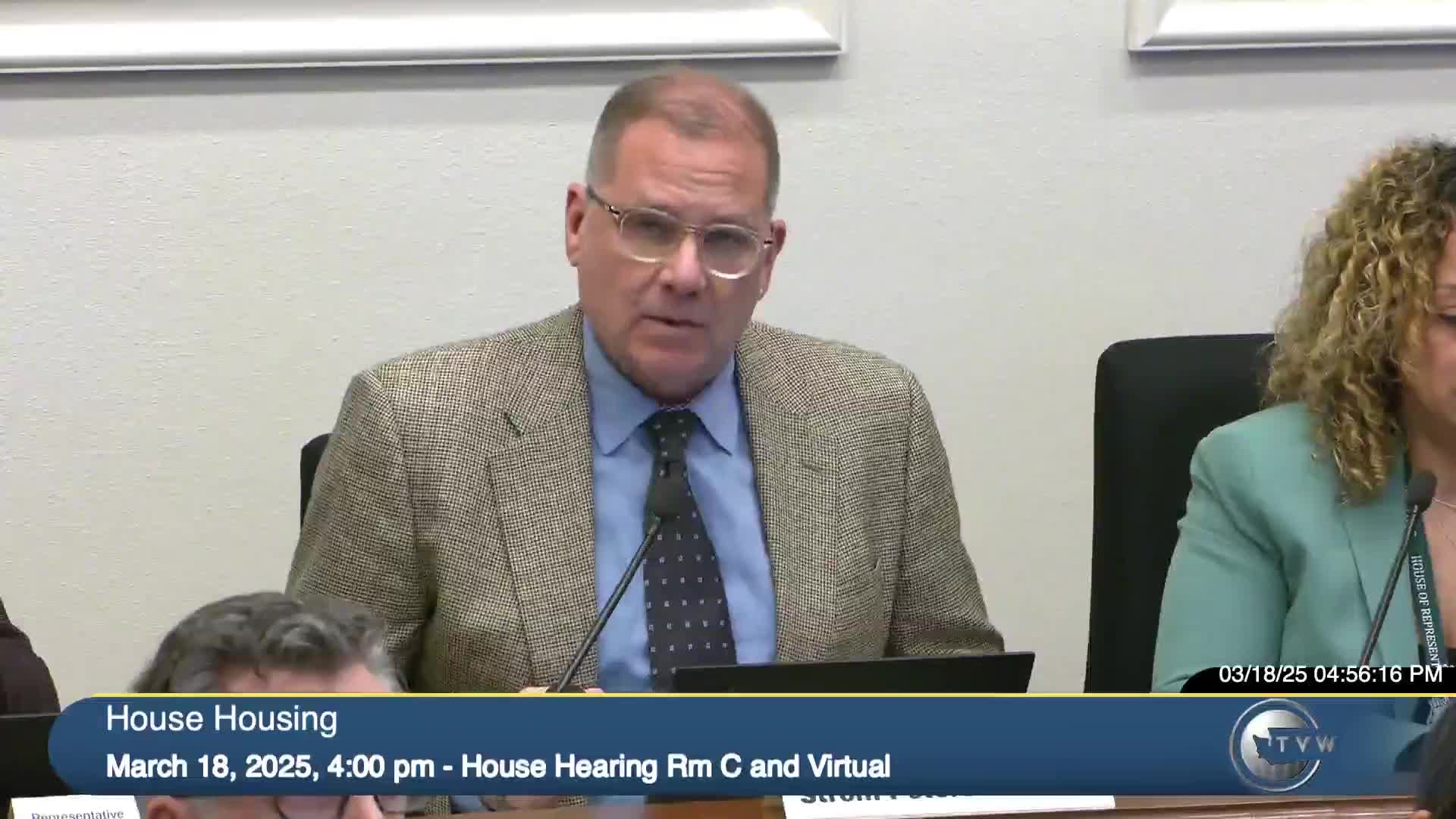
The House Housing Committee heard Senate Bill 5,587 on March 18, which would require the Washington Center for Real Estate Research at the University of Washington to produce a biennial county‑level analysis of existing housing and estimated needs across income levels, and would direct the Public Works Board to consider whether Public Works Assistance Account projects encourage infill or otherwise increase affordable housing when prioritizing funding for counties with a documented gap.
Serena Dolly, committee staff, summarized the bill and its data requirements for the committee. Patrick Quinton, director of economic prosperity and housing for the City of Vancouver, testified in support and told the committee Vancouver is among the most severely cost‑burdened communities in the state. He said the bill would fill a data gap by tracking production by income band and create accountability that helps prioritize infrastructure investments.
The bill would add published analytical information to the Public Works Board’s considerations when prioritizing loans and grants from the Public Works Assistance Account, including measures such as project readiness, sustainability, and ability to meet state policy objectives. No formal votes were taken in the March 18 hearing; proponents said the measure would provide planners and policymakers with better information to align infrastructure investments with affordable housing goals.
Ending: Witnesses urged the committee to advance the bill to provide consistent, comparable housing‑need data to inform local and state infrastructure prioritization.