Get Full Government Meeting Transcripts, Videos, & Alerts Forever!
Get email alerts on the Special Education topic
No spam. Unsubscribe anytime.
Committee hears bill to extend special education services through school year when students turn 22
Summary
A bill responding to a federal court finding would require special education and related services be provided through the end of the school year in which a student with disabilities turns 22, and direct agencies to update transition plans.
Substitute Senate Bill 5,253 would require school districts to provide special education and related services through the end of the school year in which a student with disabilities turns 22 or until high school graduation, whichever comes first.
The measure, discussed Feb. 18 before the House Education Committee, was presented to the panel as a response to a November 2024 order from the U.S. District Court for the Western District of Washington in N.D. v. Reykdal. Megan Wargacki, counsel to the committee, summarized the court finding that state rules which age students out at 21 could violate the federal Individuals with Disabilities Education Act when non-disabled students have access to adult secondary education through age 21.
"Special education is a component of basic education," Wargacki told the committee, and the bill aligns state practice with IDEA by extending specified education-related provisions to students with disabilities through the end of the school year in which they turn 22.
The bill text would move language stating that the provision of special education services is "not intended to reduce or supplant any other service that a student may be eligible for" into codified law, a difference staff noted compared with the companion House bill. Wargacki described the placement as codified intent language rather than a substantive cut in services.
Senator Adrienne Cortes, the bill's prime sponsor and a special education teacher, told the committee the change grew out of the court case and of her classroom experience.
"This bill is particularly of importance to me and significance to me," Senator Cortes said, identifying herself as a special education teacher at Camas High School and asking the committee to move the bill forward.
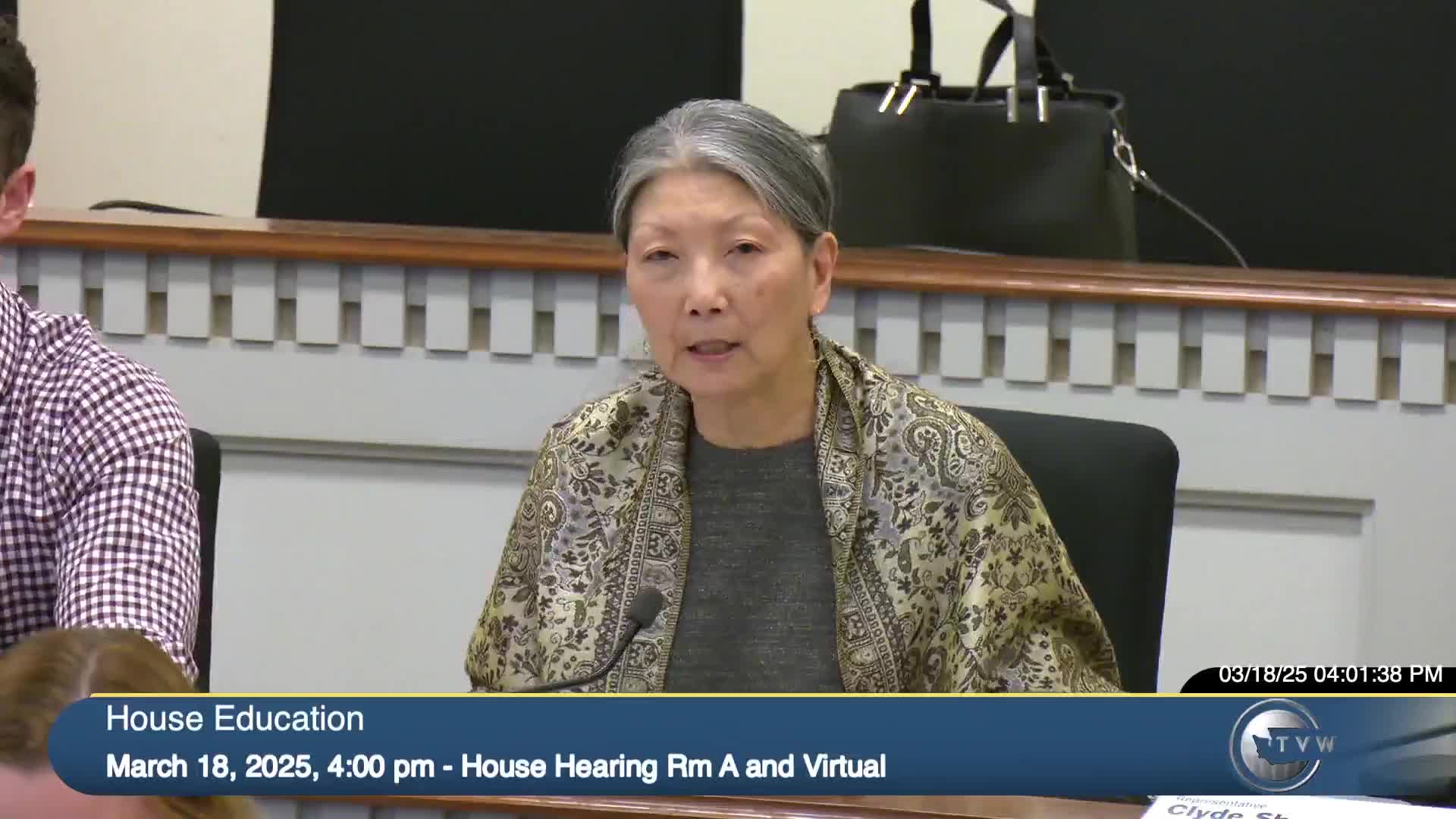
Public commenters who use transition programs and parent advocates described disruption when students age out mid‑school year. Kathy Murahashi of The Arc of Washington called the change "an easy fix" and said forcing students to leave mid‑year is "disruptive and confusing for the student." Kathy McDonald, parent of a student in a transition program, said the bill would allow her son, who turns 22 in October, to complete the school year rather than be removed on his birthday.
The bill also requires the Office of the Superintendent of Public Instruction (OSPI) to work with other agencies by Oct. 30, 2026, to update an implementation plan to improve transition services and coordinate with the Developmental Disabilities Administration so students likely to need post‑school services have a seamless transition.
Committee staff said a fiscal note is available and offered to answer questions; no vote was taken during the hearing. The hearing record shows both state education staff and family advocates in support and at least two witnesses who could not provide live verbal testimony but submitted written comments.
If advanced, the bill would change when districts must consider continued services and prompt OSPI and other agencies to update transition planning documents that guide post‑school service coordination.