Get Full Government Meeting Transcripts, Videos, & Alerts Forever!
Get email alerts on the Stormwater Fees topic
No spam. Unsubscribe anytime.
Public Works seeks countywide stormwater fee, promises road‑fund relief and phased increases to 2029
Summary
Public Works proposed expanding the county’s stormwater utility countywide with a phased fee that would fund culvert repair, ditching and treatment maintenance, offset road‑fund spending and add staff to meet new permit obligations; staff proposed a public hearing and four‑year phased rate increases through 2029.
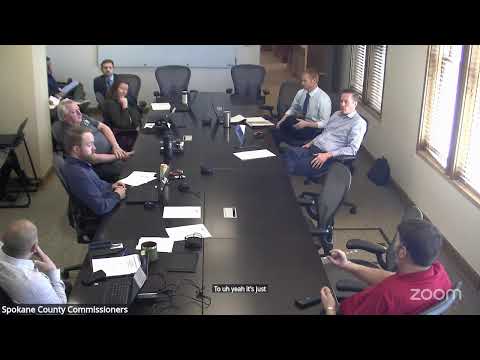
Public Works staff presented a follow‑up briefing on March 18 on a proposed countywide stormwater service area and fee schedule intended to fund maintenance, permit compliance and capital repairs across Spokane County.
Why it matters: Staff said the county faces roughly $1.5 million to $2.0 million in storm damage from a recent runoff event and has historically underfunded routine ditching, culvert maintenance and treatment facilities. The department proposed adopting a predictable fee that would begin countywide in 2026 and increment by $1 per month each year through 2029, with the intent of using revenues to perform short‑term culvert fixes and expand maintenance rather than rely on the road fund.
Staff presented a model showing that an initial countywide program in 2026 could offset roughly $3 million of road‑fund work by expanding sweeping, culvert short‑term repairs and routine maintenance; a four‑year ramp could grow the offset to nearly $6 million by 2029. Staff noted existing fund balance, planned capital spending and timing: 2025 revenues were estimated near $2.5 million while planned spending was higher; built‑up fund balance could be used to address immediate storm damage while the program ramps up.
Staff recommended a minimum countywide level of service, a predictable four‑year rate schedule and a public hearing. They proposed notice for the hearing on April 1 and a public hearing on April 22, with the goal of adopting the service area and rate schedule later in the process.
Staff estimated the stormwater utility would need roughly three to four additional full‑time employees to inspect private stormwater facilities, run permit programs and support project planning. The presentation emphasized programmatic self‑performance (in‑house ditching, culvert work) because those approaches lower per‑dollar costs compared with contracting.
Ending: Commissioners asked for more detail on the fee calculation, staffing needs and the proposed public‑hearing timeline; staff said they would proceed with required notices and return with the drafted ordinance and rate schedule.