Get Full Government Meeting Transcripts, Videos, & Alerts Forever!
Get email alerts on the Initiative 2066 Buildings topic
No spam. Unsubscribe anytime.
County drafts interim policy to implement Initiative 2066 energy‑credit rules for building permits
Summary
Jordan Neal, Spokane County Building Director, told commissioners the county had drafted an interim policy to apply energy‑credit rules under Initiative 2066 until the State Building Code Council issues final administrative guidance.
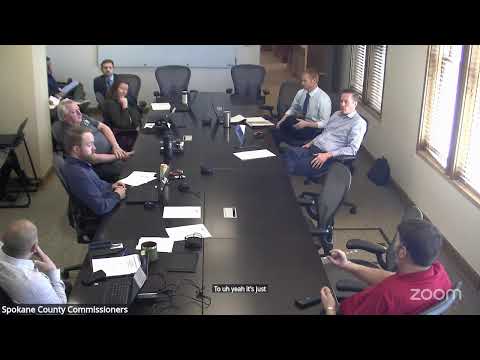
Jordan Neal, Spokane County Building Director, briefed the commissioners on March 18 about an interim county policy designed to reconcile local permitting with Initiative 2066 and changes in the Washington State Energy Code.
Neal explained the problem: the State Building Code Council had not yet issued administrative rules clarifying how counties must apply the citizen initiative’s requirements. “We’re seeking to have a clear path to compliance for applicants,” he said, adding that the county wanted an adaptable interim policy until state guidance arrives.
What the interim policy does: Neal described a set of adjustments to the energy‑credit tables used by applicants to meet code requirements (tables R406.2 and R406.3 in the code). For example, the county proposes modifying the credits for system type 1 (combustion heating) to award 0–1.5 credits and add a half‑credit incentive for a paired credit in table R406.3; system type 2 (heat pump with backup) would receive credit realignment so its credit tally matches system type 4 (heat pump with no backup) when equivalent components are selected; system type 4 language would be amended to allow certain high‑efficiency natural gas backup options in limited circumstances. Neal summarized the goal: to allow applicants to reach required credit totals without “penaliz[ing] or discourag[ing] the use of natural gas” as required by the initiative.
Neal said officials sought a temporary policy rather than permanent code changes because the State Building Code Council could provide direction or the courts could affect the initiative’s application. “As the State Building Code Council has not yet spoken, we did not want to deploy this as a definitive code change,” Neal said.
Commissioners asked about the policy’s duration and relationship to other counties; Neal said the interim policy would remain until the council issues guidance and noted that other jurisdictions have adopted similar interim adjustments focusing on the energy‑credit section.
Ending: Staff plans to place the interim policy on the afternoon consent agenda and asked commissioners to consider it for adoption to give applicants a predictable permitting path while awaiting state rules.