Get Full Government Meeting Transcripts, Videos, & Alerts Forever!
Get email alerts on the State Legislation Olympia topic
No spam. Unsubscribe anytime.
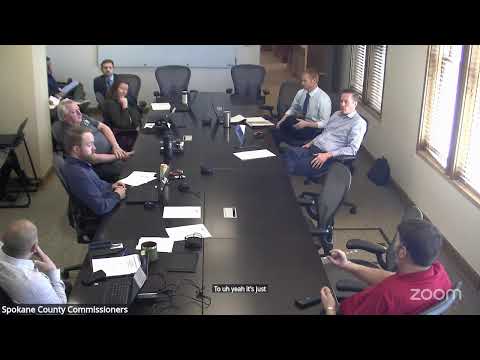
County legislative staff brief commissioners on bills, April cutoffs and 9‑1‑1 excise tax changes
Summary
Mike Burgess and county legislative staff updated Spokane County commissioners on the state legislative calendar, highlighted several bills of local interest and described changes to proposed 9‑1‑1 excise‑tax apportionment that move decision responsibility to the Department of Revenue for an interim period.
Mike Burgess, legislative staff, told Spokane County commissioners on March 18 that the Legislature had reached the committee phase of the 2025 session and that “the next real cutoff we have is April 2,” the opposite‑house policy committee deadline.
The update outlined a short schedule before major fiscal actions: an April 2 policy cutoff, an April 8 fiscal committee cutoff and an expected revenue forecast release that will feed budget negotiations. “At that point…budgets tend to kind of **** all the oxygen out of the room,” Burgess said, noting that the final month of session would focus on revenue and tax proposals.
Why it matters: County staff said these timing milestones will shape whether local priorities can clear policy and fiscal hurdles before the Legislature focuses on budget bills.
Burgess reviewed a set of bills the county is tracking. On the 9‑1‑1 excise tax — a high‑priority item for dispatch funding — Scott (legislative staff) described an amendment adopted on the House floor that changes how the county’s share could be apportioned. The amendment directs the Department of Revenue (DOR) to report how excise taxes are “originated” (for example landline vs. cell) and to apportion taxes based on those origination data once available; an interim apportionment would use sales‑tax origination data. As Scott summarized: “DOR is the 1 is the entity who has to do that…in the interim, until the DOR can come up with the report.”
Scott and Burgess said another amendment would allow jurisdictions that establish their own primary public safety answering point (PSAP) to receive taxes tied to calls that originate in their jurisdiction; if a jurisdiction stays on the regional PSAP the tax would remain with the regional fund.
Burgess also flagged bills of local interest: a local government planning bill that moved out of committee; a competency evaluation bill he described as “harmful” and potentially increasing county costs; a procurement bill the county favors; and environmental‑crimes legislation that had been amended to limit exposure for permitted activities but which staff said contained “a lack of clarity.”
On law‑enforcement funding, Burgess summarized several competing approaches under consideration: a high‑value grant proposal that did not advance, a council‑adopted local option sales tax (0.3 percent) that could be adopted by counties without voter approval through July 2026 and a more complex bill (2015) combining tax authority and a grant program. He said the 2015 proposal would require counties to meet criteria set by the Criminal Justice Training Commission to receive grants and that county governments should consult their sheriff’s offices about the bill’s qualifying criteria.
Burgess repeatedly noted uncertainty: “We’ll just see how it continues to progress through the process,” he said. He also said the county’s legislative delegation had been briefed on the county’s positions.
Ending: Staff advised commissioners to watch the DOR report and to consult with local law enforcement on the grant‑and‑tax bill; Burgess said he would share bill language and follow up as amendments arrive.