Get Full Government Meeting Transcripts, Videos, & Alerts Forever!
Staff briefs planning commission on Norfolk parking ordinance, options for reducing minimums
Summary
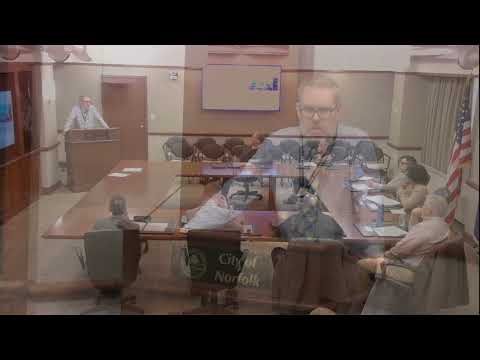
Staff for the Norfolk Planning Department gave the Planning Commission a technical primer on the city's parking ordinance and on alternatives that developers use to reduce minimum parking requirements, a step toward a commission-initiated text amendment to alter or remove parking minimums.
Staff for the Norfolk Planning Department gave the Planning Commission a technical primer on the city's parking ordinance and on alternatives that developers use to reduce minimum parking requirements, a step toward a commission-initiated text amendment to alter or remove parking minimums.
Jeremy, a planning staff member, told commissioners the presentation was intended to "go over our current kind of the history of the parking regulations and what the current regulations allow and permit," and to provide background before any formal code changes.
The ordinance timeline and why it matters
Staff traced parking rules from the city's 1949 ordinance (two pages of parking rules) through a more detailed 1968 code, a broader 1992 rewrite and a dramatic 2014 update that added alternative parking options, bicycle parking and the first caps on maximum parking. The 2018 unified zoning ordinance carried most 2014 changes forward and added adaptive-reuse reductions and stricter landscaping standards.
"That's why we're calling this a kind of a parking ordinance primer first before we make any more changes or propose anything to the commission," Jeremy said.
What the code says now
- Minimums are set by use and by the city's character districts (downtown, traditional, suburban, coastal). For example, multifamily minimums are lower downtown (about 1.5 per unit) and higher in suburban districts (about 1.75 per unit). The measurement unit varies by use (per bedroom, per seat in a restaurant, per 100 or 175 square feet of assembly area, etc.).
- Downtown districts generally have no minimum parking requirement except for Downtown Fort Norfolk, which staff said was excluded because the city has not provided nearby public garages there.
- The ordinance…
Already have an account? Log in
Subscribe to keep reading
Unlock the rest of this article — and every article on Citizen Portal.
- Unlimited articles
- AI-powered breakdowns of topics, speakers, decisions, and budgets
- Instant alerts when your location has a new meeting
- Follow topics and more locations
- 1,000 AI Insights / month, plus AI Chat