Get Full Government Meeting Transcripts, Videos, & Alerts Forever!
Get email alerts on the Zoning Code Rewrite topic
No spam. Unsubscribe anytime.
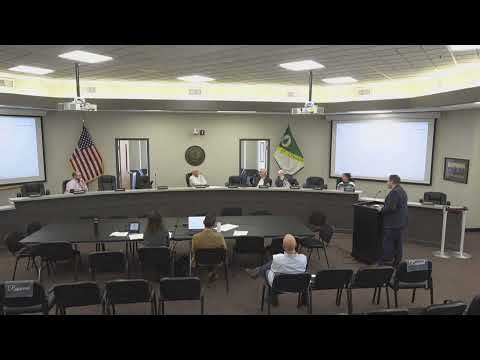
Planning commission discusses zoning-code rewrite: specific plans, expirations and a proposed hybrid SP model
Summary
Staff reviewed proposed changes for the zoning-code rewrite, including splitting the RM-6 district to create a mobile-home-only district, establishing limits and a hybrid model for specific plans (SPs), and revising SP expiration and amendment procedures.
Planning staff led an in-depth discussion of proposed changes to the city’s zoning code, focusing on specific plans (SPs), a new mobile-home district and additional edits to SP amendment procedures.
Staff said the rewrite would split the existing RM-6 district into two distinct districts: a mobile-home park district (largely preserving mobile-home standards) and a multifamily district that would retain multifamily standards without mobile homes. Staff also described a draft mobile-home district text and updated building-type standards.
On specific plans, staff reported the city currently has 36 SP districts and 12 PUDs; seven SPs were identified as idle (no activity for more than 1.5 years) and four SPs were at risk of expiring under a three-year activity rule. Staff noted that when the city added a three-year expiration trigger, older SPs were given that initial date and several will reach that expiration this year.
Staff presented several proposed changes for SPs:
- Allow property owners to request reversion from an SP back to the base RR zoning without a full rezoning process, providing a mechanism if a development deal falls through. - Limit text-only SPs by size (staff proposed a 5-acre maximum) because large, text-only SPs can cover complex, multiuse developments without adequate detail for review. - Create a hybrid SP option that includes a text component plus a master-plan-style map showing subdistricts (commercial, mixed-use, single-family, open space), key connectivity commitments, environmental features and an architectural materials palette. - Adjust amendment triggers so that planning commission review would permit modest changes (staff proposed allowing up to a 25% overall site change to be approved by planning commission; larger changes would still go to city council).
Commissioners discussed the trade-offs. One commissioner said full SPs can be overly restrictive on small sites and text SPs can be too permissive on large sites; several expressed support for a hybrid option and for clearer limits on size and uses within an SP. Commissioners asked staff for draft language that would limit both size and uses in SPs and sought clarity on extension and amendment procedures for projects delayed by environmental reviews. Staff said extensions would follow the same amendment or reapproval process and developers may request additional time rather than allowing an SP to expire and be treated as a new application.
Staff also outlined other code topics to be addressed in the rewrite, including site height, setbacks, density calculations, enforcement provisions, landscape species guidance (specifically avoiding invasive Bradford pear plantings) and potential provisions for new uses such as data centers.
Next steps: staff said it will prepare draft ordinance language for the hybrid SP approach, limits on text SPs, procedures for owner-requested reversion to RR, and revised amendment thresholds for planning commission review; commissioners asked staff to return with more detailed draft language.