Get Full Government Meeting Transcripts, Videos, & Alerts Forever!
Get email alerts on the Labor Contracts topic
No spam. Unsubscribe anytime.
County approves WPPA contract that includes double-time festival pay after months of debate
Summary
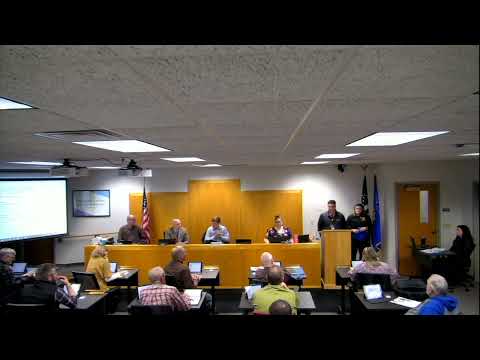
The Chippewa County Board of Supervisors on March 11 approved a collective bargaining agreement with the Wisconsin Professional Police Association, establishing double-time pay for union officers who work large summer festivals.
The Chippewa County Board of Supervisors on March 11 approved a collective bargaining agreement between Chippewa County and the Wisconsin Professional Police Association covering July 1, 2025, through Dec. 31, 2027, that includes double-time pay for union officers assigned to large summer festivals.
Supporters of the contract, including county staff and union representatives, said the pay provision is a recruitment and retention measure after the number and timing of large events in the county increased. Opponents and festival organizers warned the guaranteed double-time requirement will sharply raise event costs unless the board takes separate steps to offset the charge.
County staff and the union negotiated the agreement over multiple sessions and presented it to the board after executive committee review. The board— discussion focused on section four of the contract governing overtime and event pay. County officials said the union asked for additional compensation because more festivals now fall in a compressed summer schedule and because many officers are required to staff those events.
Festival organizers raised their concerns during the public comment period. Wade Asher, general manager of Chippewa Valley Music Festivals, told supervisors he and other promoters already pay the sheriff— department for event staffing and said recent bills were large: he said the promoters paid $180,000 last year for two festivals, about $40,000 more than two years earlier. Asher asked the board to remove the double-time requirement, carve festivals out of the change, or at least table the item to let promoters find alternatives.
Ally Strishinski, administrative assistant for the 501(c)(3) nonprofit 1 Fest, said her festival moved from the fairgrounds to the Chippewa Valley Music Festival grounds in 2024 and now faces significant new county staffing costs. Strishinski asked the board to avoid increasing rates or to allow adjustments to the number of county staff required on site for events.
Chippewa County Chief Deputy Kurt Dutton and other sheriff— office staff told the board the county enforces a large-assembly ordinance requiring on-site law enforcement based on attendance and whether alcohol is served. Dutton explained the ordinance formula: two officers for the first 1,000 attendees, then one officer per additional 800 when alcohol is served (one per 1,600 when it is not). Dutton said the ordinance and current staffing practices are driven by safety, liability and the practical need to have officers on site at peak hours.
Sheriff— office witnesses and a union steward provided estimates of the fiscal effect of the contract language. Mark Hollister, a union steward, compiled figures from schedules and reported roughly $7,963 in additional pay per event for Country Fest and a similar amount for Rock Fest. County staff confirmed the contract language is limited to the union-covered employees and that other county employees (for example, jailers or nonunion staff) are paid under different rules.
Board members asked whether the board could adopt the contract and separately consider a county subsidy or temporary waiver for already-contracted festivals. County staff warned that changing language in the ratified contract would require returning to bargaining with the union; however, they said it would be possible to consider a separate, subsequent board action to help event promoters cover additional costs. Several supervisors suggested tabling broader ordinance revisions (to the large-assembly rules) and working with the sheriff— office to adjust staffing patterns at particular festivals to lower billed hours.
After discussion, the board voted to approve the collective bargaining agreement as presented. Board members and county staff emphasized that approving the contract guarantees the wage and overtime terms for union employees but does not itself direct who pays the bill; any county-funded subsidy would require a separate action.
The contract was forwarded to the board by the executive committee for ratification.