Get Full Government Meeting Transcripts, Videos, & Alerts Forever!
Get email alerts on the Senior Services topic
No spam. Unsubscribe anytime.
Senior LinkAge Line: Pine County residents received meals and services in 2024; providers warn of funding cuts and seek state support
Summary
Senior LinkAge Line representatives told the Pine County Board that Pine County residents received thousands of meals and hundreds of counseling sessions in 2024 but that funding cuts in 2025 will force reductions in services.
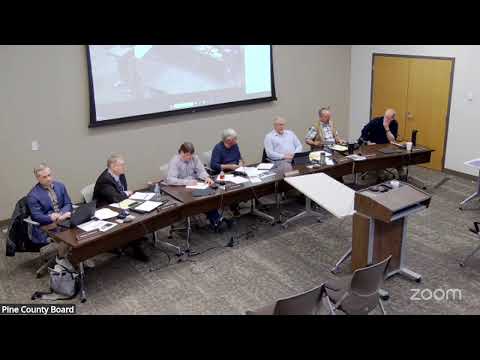
Representatives from Senior LinkAge Line and the Central Minnesota Council on Aging briefed the Pine County Board on services provided to older adults and caregivers and on looming funding reductions that will affect home-delivered and congregate meals and other supports.
LaVonne Sorensen, a Senior LinkAge Line representative, and Lori Bolsom, executive director of Central Minnesota Council on Aging, described the program’s work as a statewide phone and referral service that helps older adults and caregivers navigate Medicare, long-term care options and local services. They highlighted in-person resource coordination in Pine County and said Senior LinkAge Line staff help residents apply for programs and access home-delivered meals and homemaker services.
For Pine County, Bolsom reported that in 2024 Older Americans Act-funded services totaled $284,720 and were delivered to 274 individuals who received more than 30,000 meals (congregate and home delivered combined). The council provided 1,665 long-term care options counseling sessions and 689 individuals in Pine County received long-term care counseling. Homemaker services provided through a contract with Family Pathways served 39 individuals for 1,485 hours in 2024. The Mid-Minnesota Senior Law Project provided limited legal consultations to county residents as well.
Bolsom warned the board of funding reductions in 2025 caused by the end of one-time American Rescue Plan funding and a new interstate funding formula; the council’s overall funding dropped from about $4.6 million to roughly $3.5 million for the 14-county region. She said this will translate into fewer meals — the region expects to serve 80,000 fewer meals in 2025 than in 2024 — and a 45% reduction in homemaker service units for the counties discussed. Bolsom said the region is prioritizing traditional home-delivered meals for people returning from hospital stays and adjustments include seasonal or frozen-meal distribution site closures.
The presenters asked for local support of two funding efforts: a one-time $11 million state appropriation for senior meals and $4 million in state funding for assisted transportation and homemaker services; they also cited a federal proposal, the Volunteer Drivers Appreciation Act, to ease tax reporting burdens on volunteer drivers and help retain that workforce. Bolsom said staff and partners had recently lobbied state representatives about the need for funding.
Commissioners thanked the presenters and acknowledged the county’s ongoing support and the value of local staff who coordinate services. No county funding request or action was taken at the meeting; presenters asked commissioners and community partners to contact legislators in support of the funding proposals.