Get Full Government Meeting Transcripts, Videos, & Alerts Forever!
Get email alerts on the Capital Improvement Programs topic
No spam. Unsubscribe anytime.
Delray Beach public works lays out $251 million five-year capital program, warns revenue gap as 1¢ surtax sunsets
Summary
Public works director presented a sharp growth in the capital improvement program since 2022 and warned the infrastructure surtax (1¢ sales tax) will sunset in 2026, creating funding gaps for major projects including a new water treatment plant and stormwater improvements.
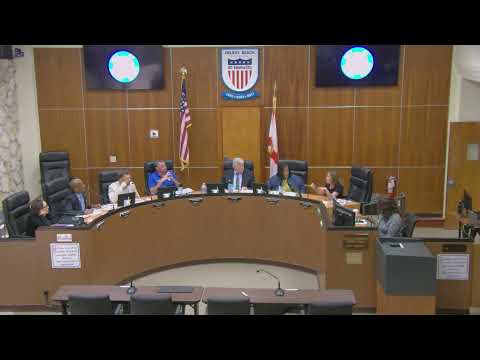
Missy Barletta, director of public works, told the Delray Beach City Commission on March 18 that the city’s capital improvement program (CIP) budget has grown from about $36 million in 2022 to roughly $250.9 million in 2025 and outlined several multi‑year, high-cost projects that will require reimbursement grants, bonds or other funding strategies.
Barletta cited projects moving from design into construction — the new water treatment plant, Marine Way and Thomas Street stormwater pump stations, Pompey Park construction, beach renourishment and a multi‑phase Northwest neighborhood infrastructure program — and said many grants are reimbursements, so the city must front the cost and await reimbursement.
“Those grants are reimbursable, so that money comes to us on the tail end,” Barletta said. She noted the county beach fund and interlocal agreements will help with beach renourishment but are dependent on county, state and federal allocations. Barletta said the city will bring a new interlocal agreement with the county in the weeks ahead to support the summer renourishment project.
Barletta warned that the infrastructure surtax (the city’s 1¢ sales tax) sunsets in 2026 and has historically supported bond issuances and match funding for capital work. “We’ve used it all,” she said, and added that the annual receipts now largely cover debt service with limited surplus. She and CFO Henry Dacolis said staff are discussing borrowing options for the water plant and possible rate adjustments for utilities tied to revenue bond financings.
Barletta described several process changes: (1) joint reviews with finance when departments submit CIP forms to avoid duplication between operational and capital budgets; (2) a plan to present the CIP draft at workshops on June 13 and July 15, with final planning board review in August and adoption hearings in September; and (3) a move toward a five‑year capital plan that would budget multiyear projects stepwise for better strategic planning.
Commissioners asked about the surtax gap and how much the city will lose when the 1¢ sunsets; Barletta said the upfront bond proceeds taken early in the surtax’s life have already been spent and current annual receipts primarily cover debt service with perhaps $1 million to $2 million of discretionary funds in a good year, meaning replacing the surtax will leave a funding deficit for neighborhood-scale multi‑year projects.
Barletta and Dacolis said staff are exploring revenue bonds, grants, stormwater assessment adjustments and other options to close the gap; the commission will see more detailed funding recommendations, including a presentation on the water treatment plant financing, during the budget and CIP workshops this spring and summer.