Get Full Government Meeting Transcripts, Videos, & Alerts Forever!
Get email alerts on the Municipal Budget topic
No spam. Unsubscribe anytime.
West Warwick council debates reserves, revenues and staffing during budget workshop
Summary
At a March 17 budget workshop the West Warwick Town Council and staff reviewed the manager's proposed FY26 budget, discussed fund balance and reserve targets, recommended revenue adjustments and flagged potential staffing changes and capital needs.
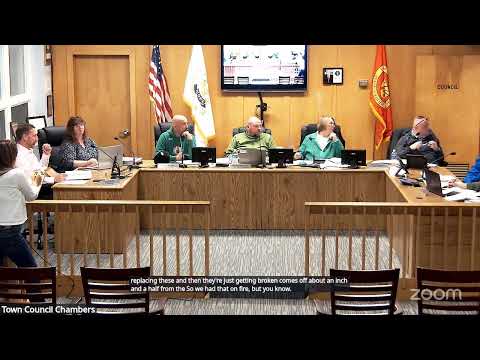
West Warwick Town Council held a budget workshop March 17 at the West Warwick Civic Center to review the town manager's proposed Fiscal Year 2026 budget, discuss reserves and non‑tax revenue projections, and identify possible staffing changes and capital priorities.
The discussion centered on how much of the town's fund balance to hold in reserve, how conservative the revenue assumptions should be and whether to reduce or reassign staff positions. Town Manager (unnamed) and Kristen (Finance director) presented revenue adjustments including increases to several non‑tax lines and said they had raised overall non‑tax revenue projections by about $367,000 based on recent trends in fees and reimbursements.
Council members and staff debated the appropriate reserve level. Council members noted the charter minimum reserve requirement of 5% and cited a common best practice target of about 17% for financial stability and bond rating purposes. Councilors also discussed a roughly $1.1 million year‑end surplus the town held and whether some of those funds should be used for one‑time capital needs instead of siting entirely in fund balance.
Staff described specific revenue line changes: increased recycling revenues by about $20,000, higher fire and rescue fee receipts (+$200,000), and a pilot payment figure of about $84,000. The town also reported higher sewer administrative fees because those fees are assessed proportionally to salary lines, and noted debt service adjustments tied to the wind turbine project and related lease payments.
Councilors stressed they will treat personnel discussions as part of the budget process and reminded colleagues that changes to department budgets require votes by the council (three of five members to alter department budgets, and a four‑of‑five supermajority to adopt the final budget). Several councilors said possible job consolidations or reassignments could be considered to reduce costs while trying to avoid outright layoffs.
Councilors and staff noted operational savings tied to the town's investment in wind turbines, saying electricity credits reduced or eliminated some recent utility bills. They also flagged looming capital needs such as replacement of aging street‑lighting poles in neighborhoods including Tanglewood and Juniper, and said some infrastructure work might be eligible for CDBG or other grant funding but that eligibility would require further review.
The workshop ended without final votes on the budget. The council later moved to adjourn the meeting; a motion to adjourn passed by voice vote.