Get Full Government Meeting Transcripts, Videos, & Alerts Forever!
Get email alerts on the School Finance topic
No spam. Unsubscribe anytime.
Senate panel approves bill letting some school systems lower millage cap from 14 to 10
Summary
The Senate Education Committee voted to give local school systems the option to reduce a state-imposed 14-mill floor to as low as 10 mills without losing equalization, lawmakers said; the bill passed the committee on a do-pass motion.
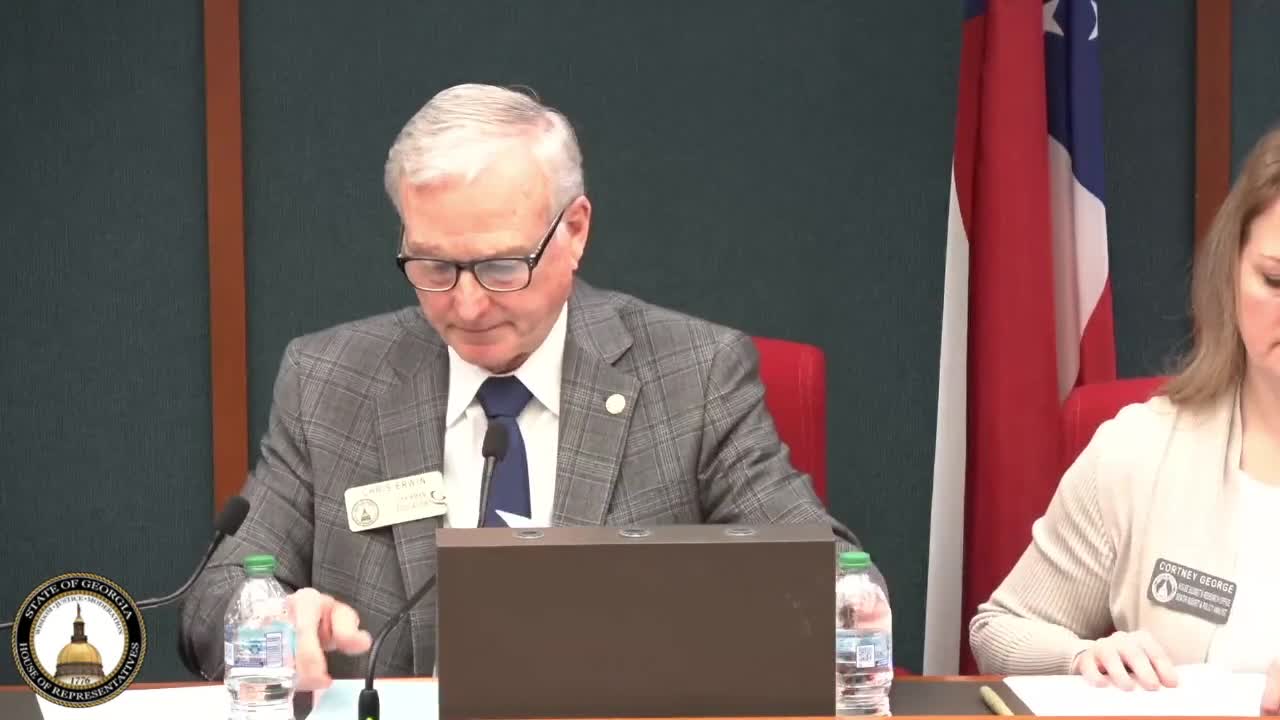
The Georgia Senate Education Committee approved Senate Bill 44 on a do-pass motion after a discussion about how the change would affect equalization for low-wealth school systems.
Senator Watson, who presented the bill, said the measure would allow school systems that choose to do so to roll back their millage rate below the current 14-mill floor — down to 10 mills — and still receive equalization payments. "All we're doing in this bill is allowing those systems that want to go below the 14 mil lower to 10 mils if they want to," Watson said in his presentation to the committee.
The issue drew detailed questions from committee members about how equalization and local fair-share calculations interact with the millage rate. Representative Todd and others pressed whether a district receiving equalization would reduce its own local revenue by rolling back the millage rate. Watson and other members explained that, under the current formula, rising property tax digests can allow districts to raise local revenue without increasing the millage rate; the bill would let districts pass some of that increase back to taxpayers by lowering the millage instead of holding the 14-mill cap.
Committee members noted the policy distinction between equalization (state aid to lower-wealth systems) and local fair-share formulas; witnesses and members said local fair-share calculations are handled separately and would not be directly altered by allowing the lower millage floor. Several members urged additional education for counties and school systems about how the formulas operate.
Representative Cox moved that the bill be given a do-pass recommendation; the motion received a second and the committee voted in favor. The transcript records the motion and the chair’s announcement that the bill passed the committee and that Representative Chaz Cannon will carry it in the House.
Why it matters: The bill changes a long-standing state limit on a component of local school property tax rates. Lawmakers said the change is intended to allow school systems to return tax relief to homeowners in districts where the digest has increased, while preserving a minimum millage floor of 10 mills.
What's next: The committee approved the do-pass motion and named a House sponsor; the bill will advance to further consideration per the legislative process.