Get Full Government Meeting Transcripts, Videos, & Alerts Forever!
Get email alerts on the Ethics Lobbying Revolving Door topic
No spam. Unsubscribe anytime.
Hearing on repealing Montana's —ive-year? two-year? revolving door— lobby ban draws divergent views on constitutionality and citizen initiative
Summary
Senate Bill 222 would repeal Montana—s two-year restriction on former public officials registering as paid lobbyists. Supporters argued the ban is unconstitutional and harms workers; opponents pointed to Initiative 153 (2006) and nationwide precedent for cooling-off periods and urged the committee to preserve the law.
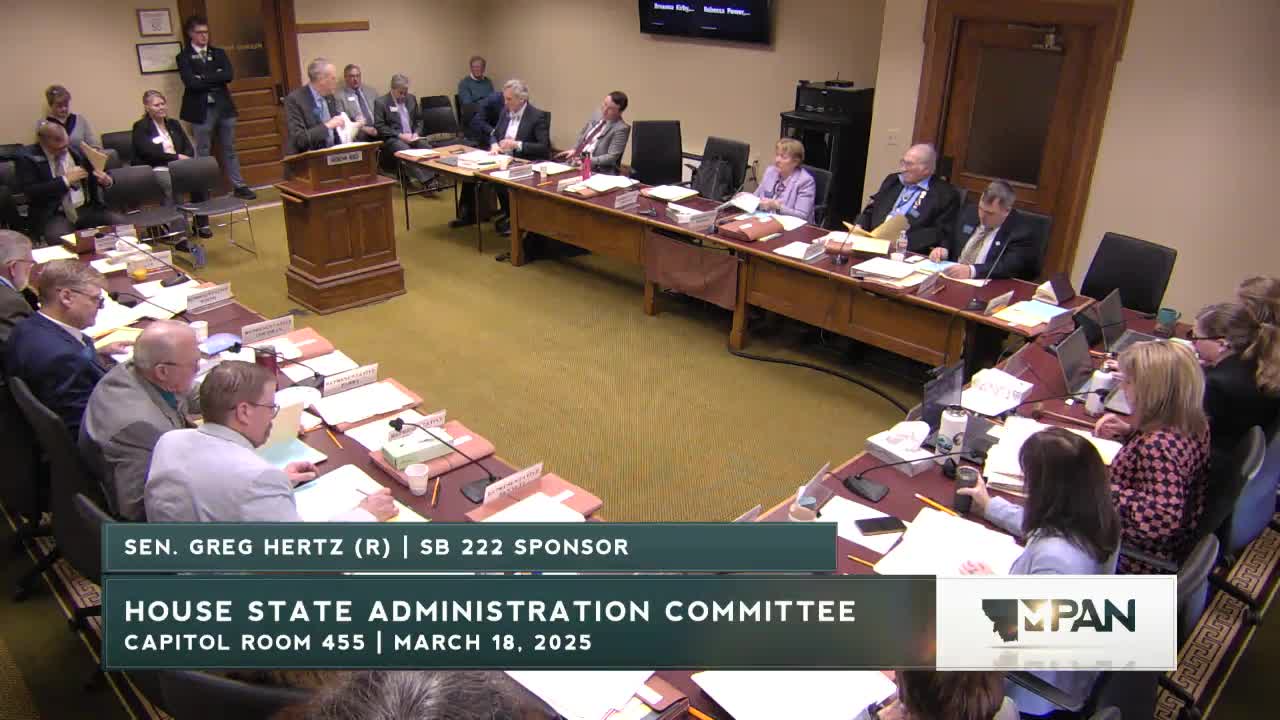
Sen. Greg Hertz presented Senate Bill 222 to the House State Administration Committee, arguing the statute that restricts former public officials from registering as paid lobbyists within 24 months of service is unconstitutional and harms individuals seeking work after public service. "This law is unconstitutional," Sen. Hertz said during the hearing, and he cited federal court decisions discussing First Amendment protections and the need for disclosure and ethics enforcement instead of a blanket ban.
Several proponents, testifying on their own behalf, said the current law inhibits experienced employees from taking private-sector work after a term of public service. Frank Cote, who identified himself as a former deputy insurance commissioner, described a situation in which a predecessor who had been a classified employee could lobby immediately after leaving, while an appointed employee in the same job could not. "That to me is a situation where there are other people who are not going into government and not helping because then they're prohibited from earning a living," Cote said.
Lobbyist Bill Warden (testifying personally) and others said the restriction is unnecessary and has been treated as ripe for legal challenge. Supporters pointed to a U.S. Eighth Circuit decision in Miller v. Ziegler (Missouri) as part of the constitutional discussion.
Opponents included former Commissioner of Political Practices Jonathan Modell and public-interest witnesses who noted Initiative 153 established the ban in Montana in 2006 with strong voter support. Modell said "43 of the 50 states in the United States have revolving door laws" and argued the Montana restriction is a "reasonable" cooling-off period that targets those with policy-making contacts. He also emphasized the law only limits licensure as a paid lobbyist and does not restrict political speech.
Other opponents — including local civic activists and a former lobbyist who testified about Montana's history of anti-corruption reforms — urged the committee not to overturn the voters' initiative. The committee asked clarifying questions about which categories of state employees the law covers and about the effect of appointment status versus classified employment on the ban.
No committee vote is recorded in the transcript excerpt provided.