Get Full Government Meeting Transcripts, Videos, & Alerts Forever!
Legislative hearing on House Bill 231 sparks sharp debate over property‑tax shifts, short‑term rentals and charter cities
Summary
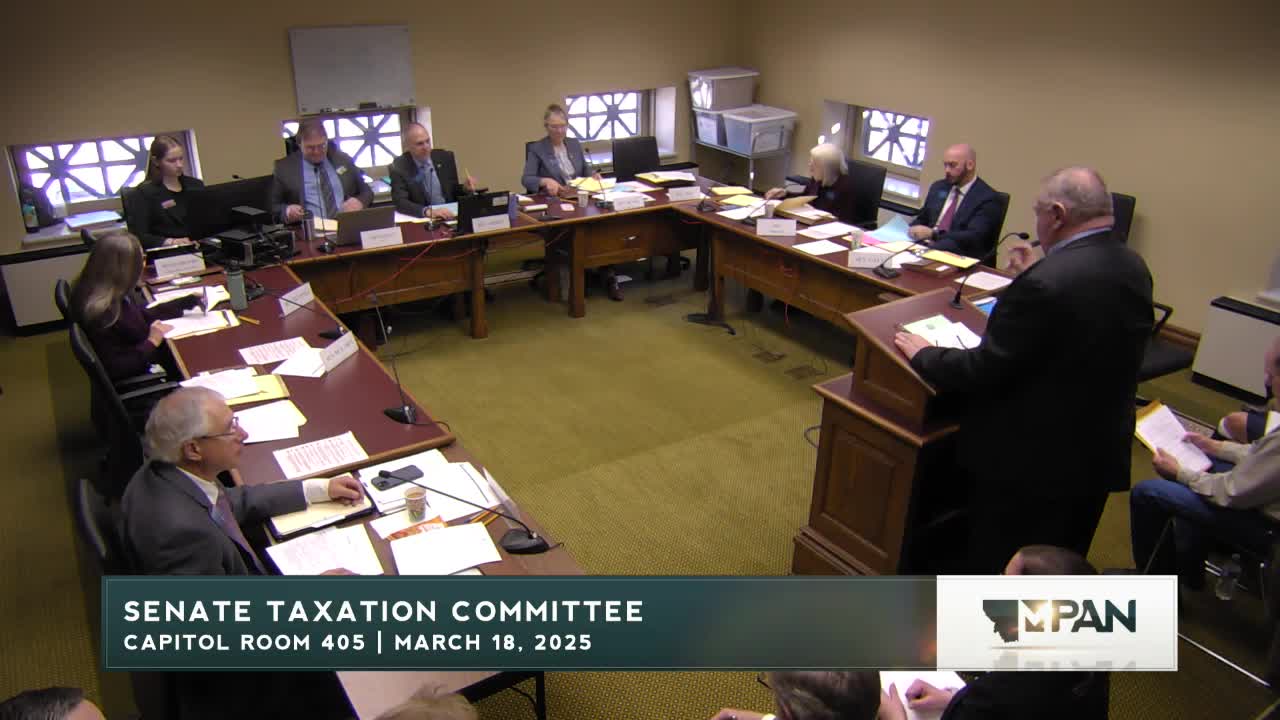
HELENA — Representative Lou Jones, R., House District 18, introduced House Bill 231 to the Senate Taxation Committee, proposing a multi‑tiered restructuring of Montana’s property tax rates intended to reduce bills for many owner‑occupied homes while shifting more tax burden to nonresident owners and certain commercial properties.
HELENA — Representative Lou Jones, R., House District 18, introduced House Bill 231 to the Senate Taxation Committee, proposing a multi‑tiered restructuring of Montana’s property tax rates intended to reduce bills for many owner‑occupied homes while shifting more tax burden to nonresident owners and certain commercial properties.
The bill’s sponsor said the measure targets owner‑occupied residences, long‑term rentals and small businesses with a dynamic, median‑based rate structure. Supporters, including the Montana Quality Education Coalition and the governor’s budget office, told the committee the bill balances property‑tax relief with continued revenue for K‑12 schools. Opponents — led by the city of Billings, the Billings Chamber and several municipal leaders — warned the bill would sharply reduce local tax bases in some charter or mill‑capped cities and would force steep cuts to public safety funding.
Jones told the committee HB 231 arose from the governor’s property‑tax task force and state modeling that show a growing share of residential taxable value is held by out‑of‑state addresses. He said 22.7 percent of all residential taxable value in Montana is mailed to an out‑of‑state address and that tourist pressure and short‑term rentals have driven sharp increases in residential market value in parts of the state. “Property tax is an incredibly complicated subject,” Jones said, adding that the bill attempts to be dynamic by tying thresholds to county medians.
What the bill would do
Under the version Jones described, residential property would be taxed under a tiered schedule tied to multiples of the county median value: an owner‑occupied or qualifying long‑term rental would receive lower rates for lower tiers (for example, roughly 0.9 percent up to 2 times the median and 1.1 percent up to 4 times the median), with the top residential rate remaining about 1.89 percent above the highest tier.…
Already have an account? Log in
Subscribe to keep reading
Unlock the rest of this article — and every article on Citizen Portal.
- Unlimited articles
- AI-powered breakdowns of topics, speakers, decisions, and budgets
- Instant alerts when your location has a new meeting
- Follow topics and more locations
- 1,000 AI Insights / month, plus AI Chat