Get Full Government Meeting Transcripts, Videos, & Alerts Forever!
Get email alerts on the Heritage Commission Governance topic
No spam. Unsubscribe anytime.
Department of Commerce opposes Senate bill to shrink Montana Heritage Commission board and an added amendment
Summary
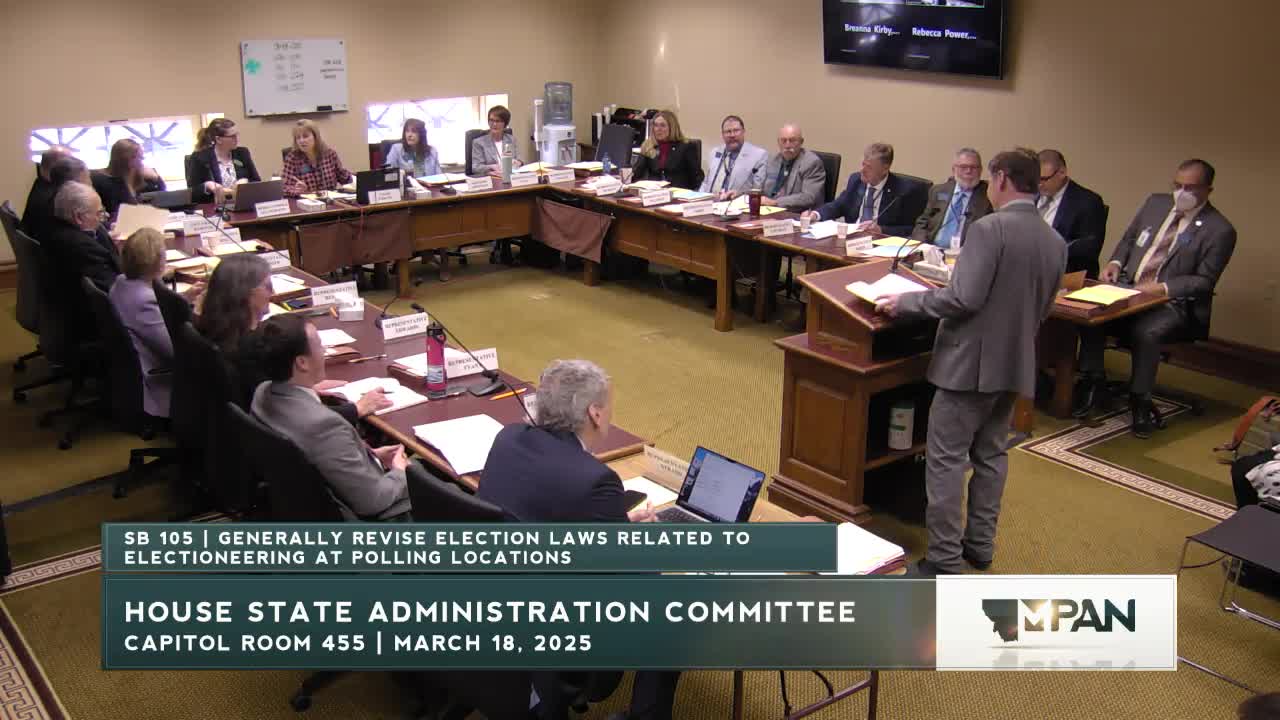
Sen. Tony Tzczak told the House State Administration Committee Senate Bill 116 would reduce the Montana Heritage Commission from 14 to nine members and change reporting language intended to provide clearer oversight.
Sen. Tony Tzczak, sponsor of Senate Bill 116, told the House State Administration Committee the bill would reduce the size of the Montana Heritage Commission from 14 members to nine and "clarify some language regarding the agency and the reporting" to strengthen checks on the executive director.
Mandy Rambo, deputy director and acting director at the Montana Department of Commerce, testified in opposition to a Senate-added amendment and explained the department would support the bill in its original form. Rambo described recent criminal charges against the commission's prior executive director for alleged embezzlement and money laundering and said the bill's original language "gives us that clarity within the language, to help us better, ensure that nothing like this ever happens again."
Rambo outlined the commission's current membership and appointment process. Under the committee discussion, three ex officio members include the director of the Department of Commerce, the director of Fish, Wildlife & Parks, and the director of the Montana Historical Society. The original draft left four gubernatorial appointees and one each from legislative leaders; the Senate amendment would have increased legislative appointment slots, creating a pattern Rambo said could lead to loss of continuity by allowing up to seven of nine commission members to roll off in a gubernatorial transition.
"That would mean we would be at least one meeting where we could be down up to 4 members," Rambo said, noting the commission meets quarterly and that staggered terms under the original language help preserve continuity.
Committee members questioned specifics about appointments and voting status. Rambo clarified the nine members would be voting members and described the commission's oversight role for about 250 historical assets in Virginia City and Nevada City. The bill drew no recorded roll-call vote in the provided transcript; Sen. Tzczak thanked the department for uncovering past irregularities and asked members to consider the original bill text.
No final committee action was recorded in the transcript excerpt provided.