Get Full Government Meeting Transcripts, Videos, & Alerts Forever!
Get email alerts on the Apportionment Defense topic
No spam. Unsubscribe anytime.
Apportionment bill would broaden defenses, sponsor says; opponents call it an 'empty‑chair' loophole that could shield bad actors
Summary
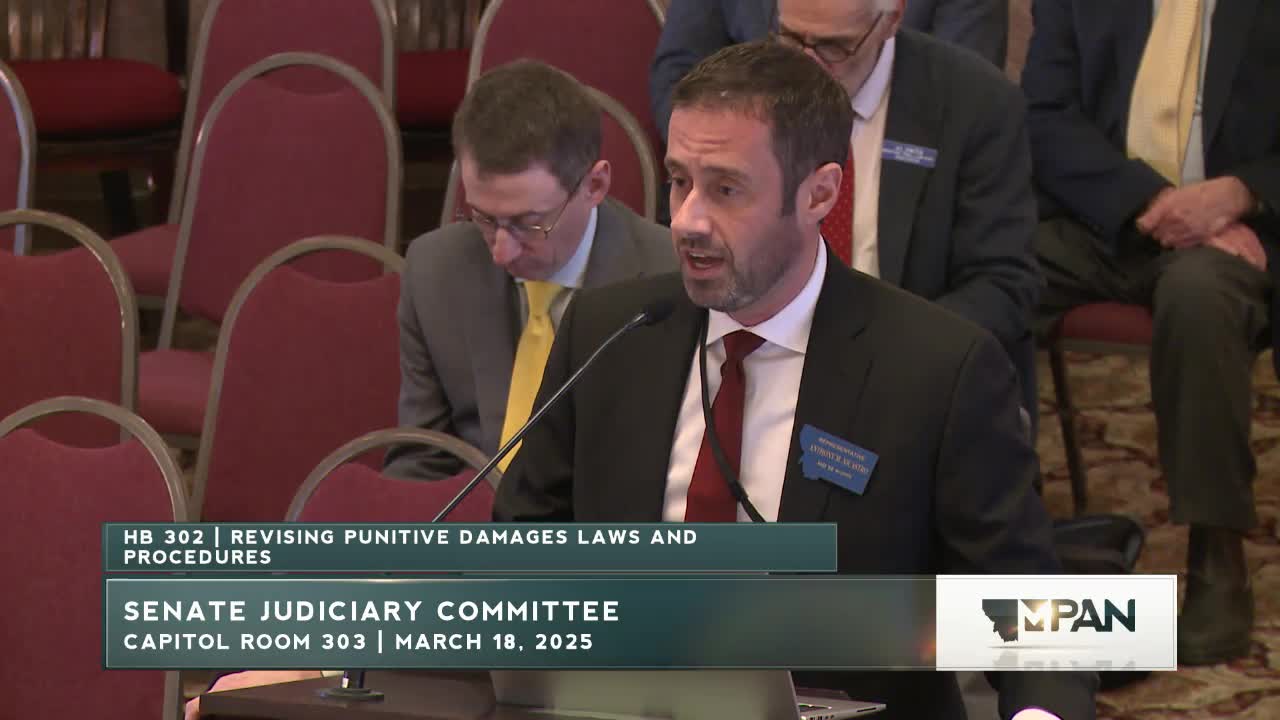
Representative Anthony Nicastro presented House Bill 303 to expand Montana’s apportionment statute and to clarify that a defendant may argue a nonparty was the sole cause of the plaintiff’s injury.
Representative Anthony Nicastro told the committee HB 303 would broaden Montana’s apportionment statute to apply uniformly to strict‑liability claims and would clarify that a defendant may assert that a nonparty was the sole cause of the plaintiff’s injury.
Why it matters: the sponsor said the change resolves inconsistent trial‑court treatment and protects defendants’ due‑process rights to have a jury hear all relevant evidence about causation and fault. Nicastro said the amendment would also avoid constitutional challenges that arise where the statute treats similar strict‑liability claims differently.
Proponents: Charles Robinson of the Montana Chamber of Commerce and the Montana Defense Trial Lawyers urged support, saying juries should be able to hear evidence about alternative causes.
Opponents: Multiple opponents, including Roger Sullivan (attorney for Libby claimants), Curtis Haferman and Steve Gunderson (Libby residents), and Wagner Harmon (rancher), argued the bill enables an “empty‑chair” defense that lets defendants blame absent or immune nonparties and avoid accountability. Opponents said defendants already can join other parties and that the bill would allow defendants to point to an absent party without that party being subject to trial, which opponents said would be unfair and could undermine strict‑liability principles used in contamination cases.
Questions and disposition: committee members asked about scenarios in which a defendant seeks to present evidence that another party was the sole cause; the sponsor said the bill clarifies the difference between apportionment and sole‑cause defenses and would let juries decide when evidence supports those defenses. The committee did not take a final vote on HB 303 during the hearing.
Ending: opponents framed HB 303 as the most consequential of a suite of liability bills (HB 301–303), saying together they would reduce plaintiffs’ abilities to obtain remedies; proponents said the bill provides clear guidance to trial courts and protects defendants’ due‑process rights.