Get Full Government Meeting Transcripts, Videos, & Alerts Forever!
Get email alerts on the Electioneering And Early Voting topic
No spam. Unsubscribe anytime.
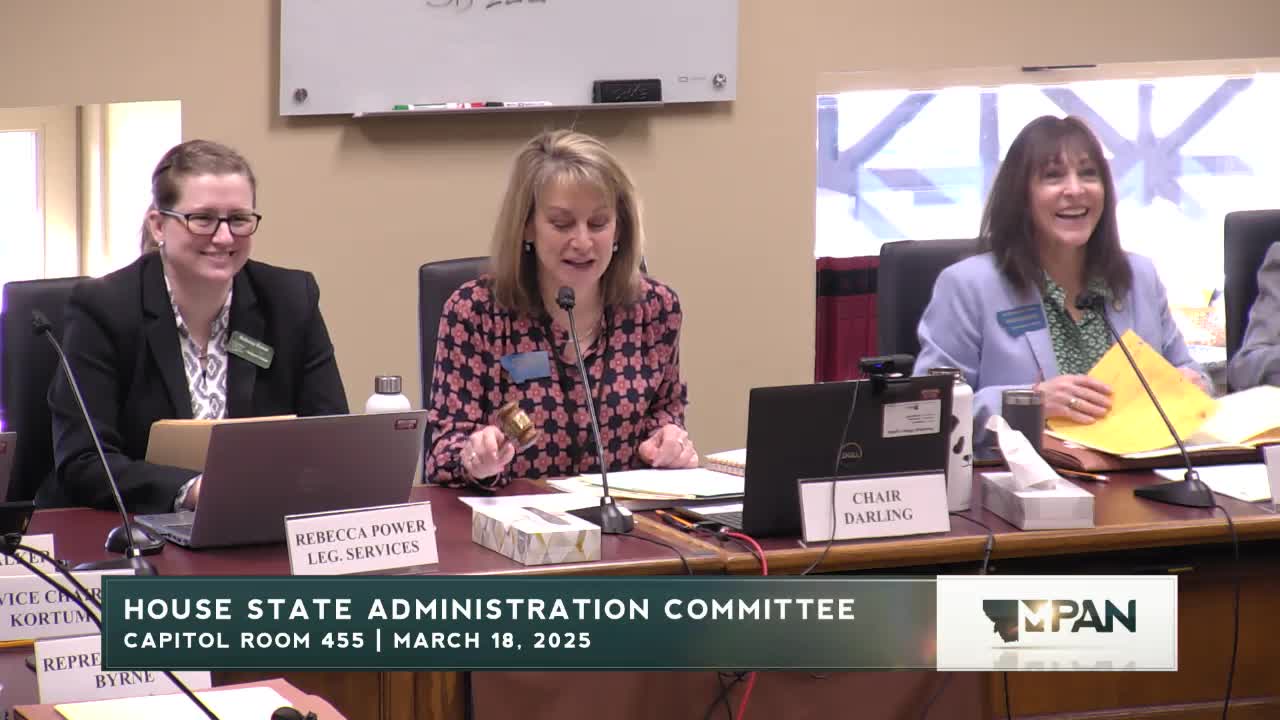
Montana committee hears bill to bar electioneering during early in-person absentee and satellite voting
Summary
A bill to extend Montana—s electioneering ban beyond Election Day to periods when ballots may be obtained or voted in person drew support from tribal and voting-rights groups and raised questions about how to draft exemptions for community events and multiuse public facilities.
Sen. Windy Boyd, sponsor of Senate Bill 105, told the House State Administration Committee she introduced the bill after encountering campaign literature handed out near an early in-person voting site on Oct. 9, a date she said preceded Election Day.
"Electioneering. I don't know if any of you experienced it, but I did," Sen. Boyd said during the hearing, adding she wanted to "keep the cheaters out. Keep them honest." The bill would clarify when and where electioneering is prohibited amid the rise of satellite and in-person absentee voting.
The measure drew proponent testimony from tribal and voting-rights advocates who said the law should cover satellite polling places that open weeks before Election Day. Keaton Sunchild of Western Native Voice said, "We're in strong support of Senate Bill 105." Patrick Yawake, representing Blackfeet, Fort Belknap and Rocky Boy communities, told the panel the bill "does clear up a lot of the headaches" about where campaigning can occur near satellite locations that open as early as 45 days before Election Day.
Shelley Hendrickson Scott of the Commissioner of Political Practices (COPP) appeared as an informational witness and proposed drafting language intended to tie the ban to the activity of voting rather than to fixed notions of "polling place." Scott explained, "If you can obtain or vote a ballot ... during the hours that you can obtain or vote a ballot, then electioneering would be prohibited," a formulation she said would avoid unintended consequences for community centers that host nonvoting activities throughout the early-voting period.
Committee members questioned how the amendment interacts with other proposed changes and whether community events held near voting sites could be interpreted as illegal electioneering. Scott acknowledged the drafting challenges and said the agency had prepared an alternative amendment for the committee's consideration.
Sen. Boyd said she planned to bring a Senate-drafted amendment to the House when the bill is received there and invited the committee to consider COPP's language. The committee did not take a final vote on the bill during the hearing.
The hearing record includes discussion of the 10-year-old Wandering Medicine court case, which observers said shaped early voting satellite rules on reservations; that case figure was raised by the sponsor to explain the growth of satellite voting and the need for clearer statutory language.
The committee scheduled no further action in the transcript excerpt provided.