Get Full Government Meeting Transcripts, Videos, & Alerts Forever!
Get email alerts on the Judiciary Government Claims Court topic
No spam. Unsubscribe anytime.
Senate hearing examines fiscal note and logistics for proposed government claims court
Summary
Senators on the Finance and Claims Committee heard testimony on Senate Bill 385, a proposal to create a Helena-based government claims court with three judges, amid debate over the bill’s fiscal note, a proposed 20% judge pay premium, and other startup costs.
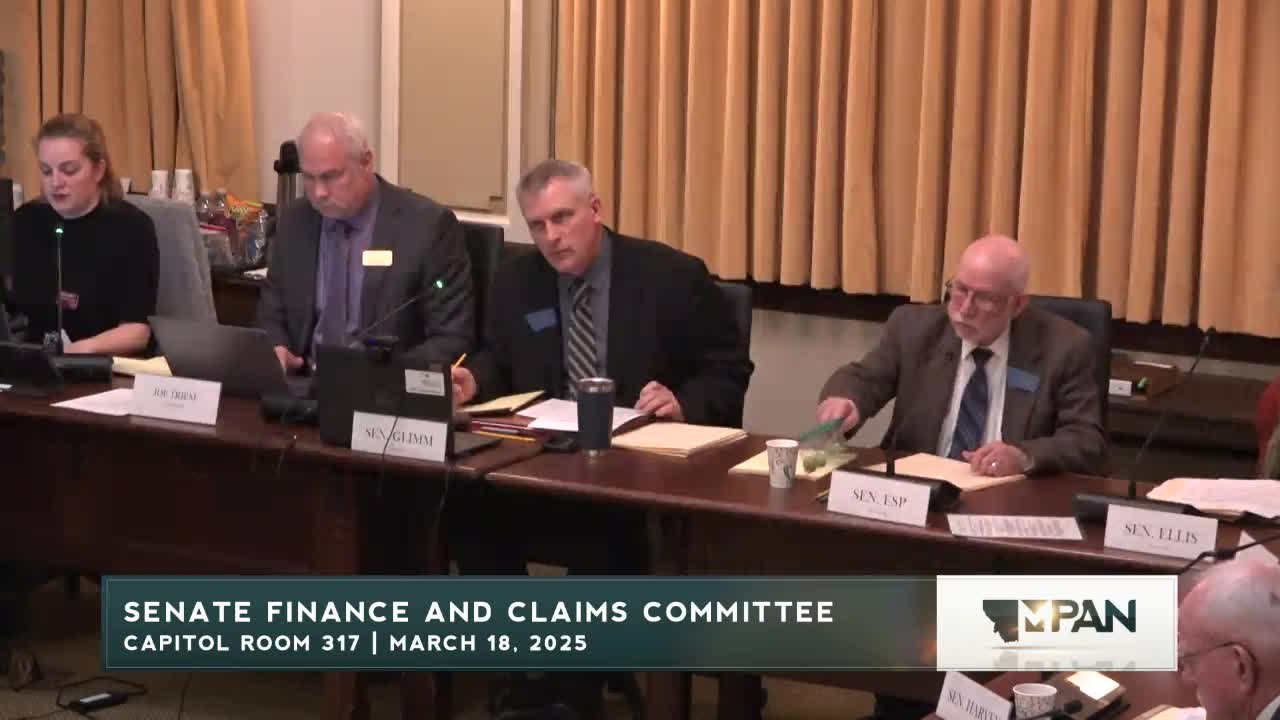
Senators on the Senate Finance and Claims Committee heard testimony and questions on Senate Bill 385, which would create a three-judge government claims court based in Helena and provide a new path for certain constitutional and government-claims litigation.
Sponsor Senator Tom McGillivray (Senate District 26) told the committee, “Senate bill 3 85 sets up a government claims court.” He said the court would have three judges who would sit individually on cases and sit en banc as a three-judge panel if an appeal from one of those judges occurs before possible further appeal to the Montana Supreme Court. McGillivray said judges would be based in Helena and that some trials moved into the court would still be heard in the county where the case originated.
Supporters said the court could reduce pressure on overworked district courts. Derek Oestreicher, chief legal counsel for the Montana Family Foundation, argued the new court would “take that burden off of our already overworked district court judges. It frees them up to take care of the cases that our communities are asking them to take care of first.” He also said the sponsor had identified savings elsewhere in the budget to cover costs.
Opponents focused on the fiscal note and constitutional questions. Anne Sherwood of Friends of the Third Branch said the fiscal note understates costs and criticized pay and technology assumptions, saying, “These judges are going to be some of the most highly paid employees in state government.” Heather O’Loughlin of the Montana Budget and Policy Center said there are likely additional costs not reflected in the fiscal note, including travel and litigation expenses, and urged caution.
Witnesses raised several technical and cost concerns: the fiscal note applies a 1.5% out-year inflation factor; the bill proposes pay for the new judges at about 20% above Montana Supreme Court associate justice pay; the court would require separate e-filing and case‑management software; and jury-trial logistics in the old Supreme Court chambers could add uncounted expense. Malcolm Gilbert, an attorney who represents Libby residents, also objected to including the existing Libby asbestos claims docket in the new court.
Dave McAlpin, court administrator for the Montana judicial branch, characterized caseload and cost estimates as inherently uncertain for a new court, saying it is “very difficult for us to estimate that” and that the fiscal note staff used best available benchmarks. Senators pressed staff and proponents on caseload assumptions, the basis for the 20% salary premium and how many additional staff positions and FTEs the fiscal note includes.
No committee action or vote took place during the hearing. Several senators said parts of the bill—most notably the asbestos-claims provision—may be revised before further consideration. The sponsor said he intends to advance certain amendments in the House and reiterated that he and the committee should review the fiscal assumptions in light of section D of the budget where he said offsets were identified.
The hearing closed without a formal committee decision; the matter will proceed through the legislative process with further opportunity for amendment and fiscal review.