Get Full Government Meeting Transcripts, Videos, & Alerts Forever!
Get email alerts on the Workers Compensation Cleanup topic
No spam. Unsubscribe anytime.
Bill to clarify employer definitions, reporting and medical-privacy rules in workers' compensation wins department support
Summary
House Bill 428 would (1) clarify which employer is responsible for workers' compensation when one employer furnishes a worker to another, (2) change insurers' quarterly reporting requirement to annual reporting, and (3) remove certain personal health information from medical status forms provided to employers.
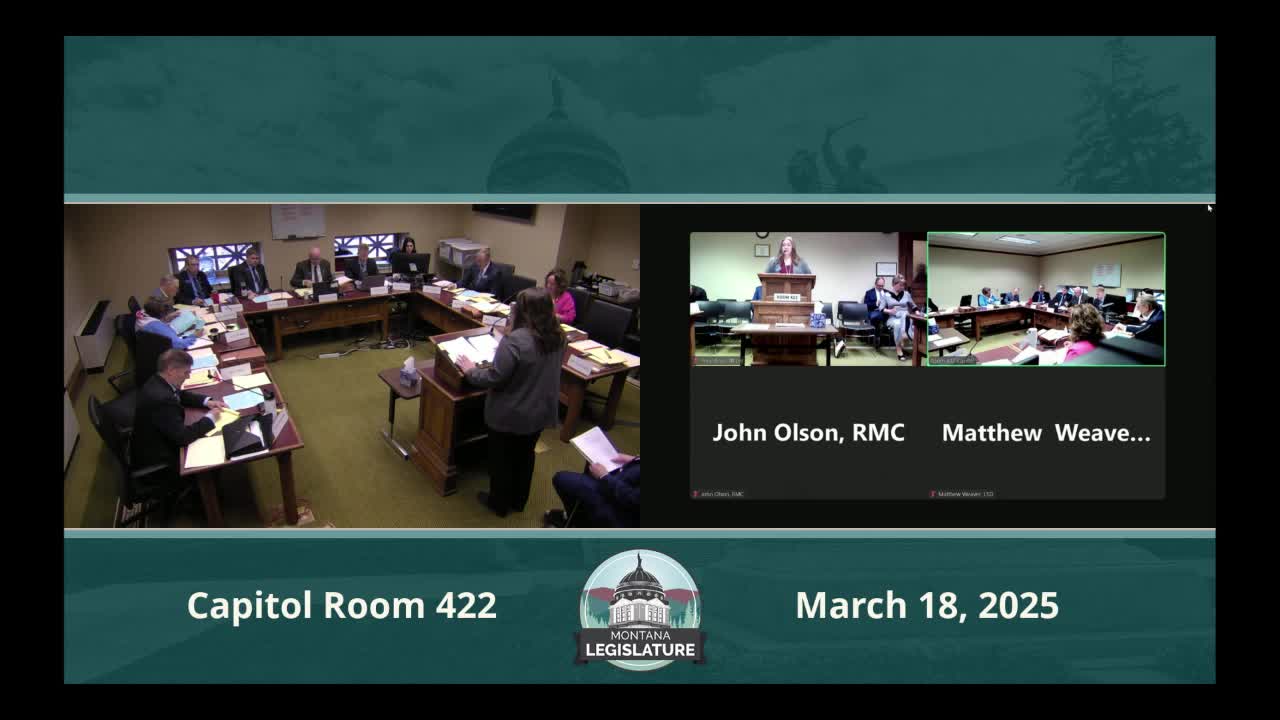
Representative Morgan Thiel opened House Bill 428 as a cleanup measure for multiple parts of Montana's workers' compensation code: employer determination when one employer furnishes a worker to another, changing insurers' quarterly reporting requirement to annual reporting, and removing unnecessary personal health information from the medical status form.
Department perspective: Wyndham O'Connor, chief legal counsel for the Department of Labor and Industry, described three technical cleanups. He said section 1 clarifies liability so that the party controlling the work is liable for workers' compensation; section 3 changes insurer quarterly reports to annual reports to align with the department's input work; and section 4 reduces the personal health information included on medical status forms that an employer receives.
Industry response: Representatives of Montana State Fund, the Montana Self Insurers Association, and MSGIA (the Montana School Group) testified in support, saying the changes reduce administrative burdens while preserving claims examiners' access to medical records they need to adjust claims.
Ending: The committee did not record a vote during the hearing; proponents asked the committee to give the bill a favorable report and the department offered to answer follow-up questions.