Get Full Government Meeting Transcripts, Videos, & Alerts Forever!
Get email alerts on the Healthcare Licensure Compact topic
No spam. Unsubscribe anytime.
Committee hears bill to join interstate compact for respiratory-care licensure
Summary
House Bill 447 would enact the respiratory care interstate compact to allow respiratory therapists licensed in other member states to practice in Montana under compact rules; the law would take effect only after at least seven states adopt the compact.
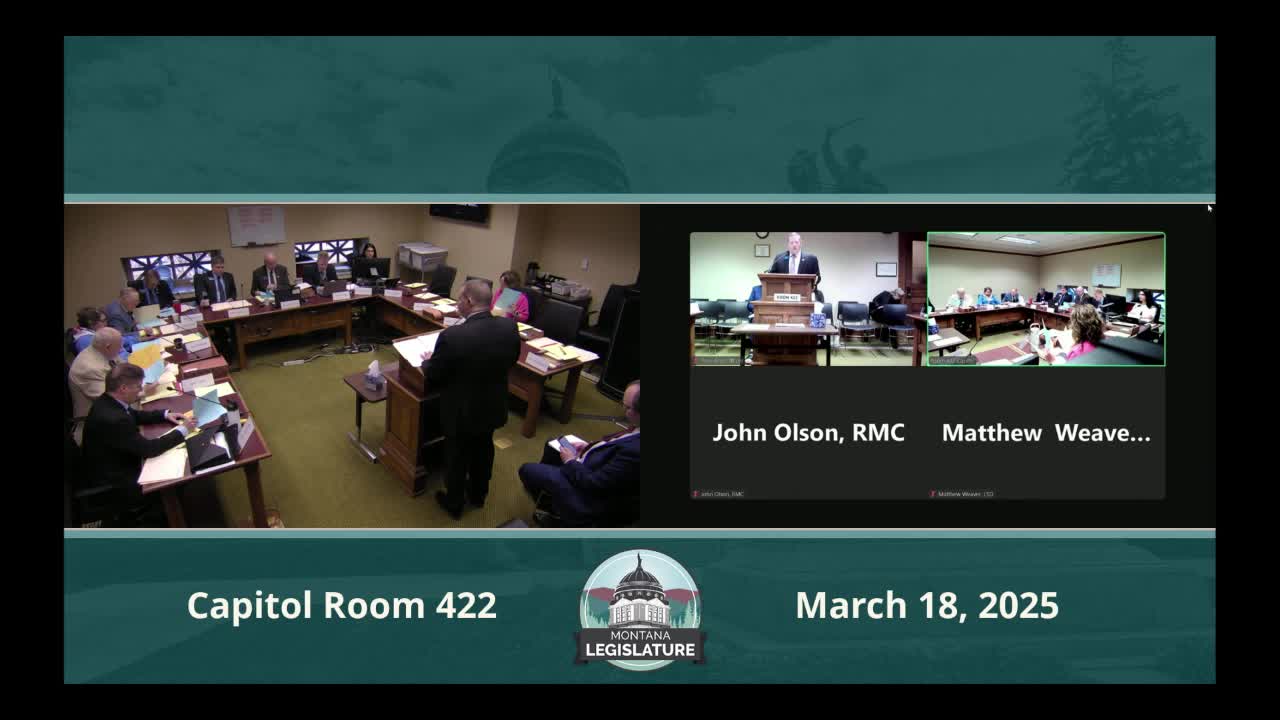
Representative Ed Buttrey introduced House Bill 447 and told the Senate Business and Labor Committee the bill would enact a respiratory care interstate compact in Montana to increase license mobility for respiratory care practitioners.
Heather O'Hara, vice president and registered nurse with the Montana Hospital Association, testified the association supports the bill because it would increase access to respiratory-care providers and reduce regulatory friction when practitioners trained and licensed elsewhere want to work in Montana.
Maddie Tyson of Billings Clinic (Logan Health) likewise testified that interstate compacts expedite credentialing across state lines and help hospitals recruit licensed staff.
Implementation and timing: O'Connor, chief legal counsel for the Department of Labor and Industry, told the committee the compact is recent and will not take effect until the compact has seven member states; the bill therefore includes a contingent effective date. The department also noted a one-time, non‑general fund technology cost of $13,000.80 for licensing-implementation work identified in the fiscal note.
Public-safety and discipline: O'Connor said compacts contain reciprocal-discipline provisions so states retain the ability to discipline licenses and protect public safety even where a practitioner’s home-state licensure is the primary credential.
Ending: Proponents asked the committee to give the bill a favorable report. Committee members asked procedural questions about timing and membership; no opponents appeared and the committee took no recorded vote during the hearing.