Get Full Government Meeting Transcripts, Videos, & Alerts Forever!
Get email alerts on the Veteran Transition Services Database topic
No spam. Unsubscribe anytime.
Sponsor outlines proposal for interagency veteran transition database; fiscal note estimated at $5 million
Summary
Senate Bill 1814 would create an interagency database to collect contact information for service members transitioning to civilian life so state veteran agencies can provide casework and outreach; the sponsor said the proposal had a $5 million fiscal note and the committee said it would work on that estimate.
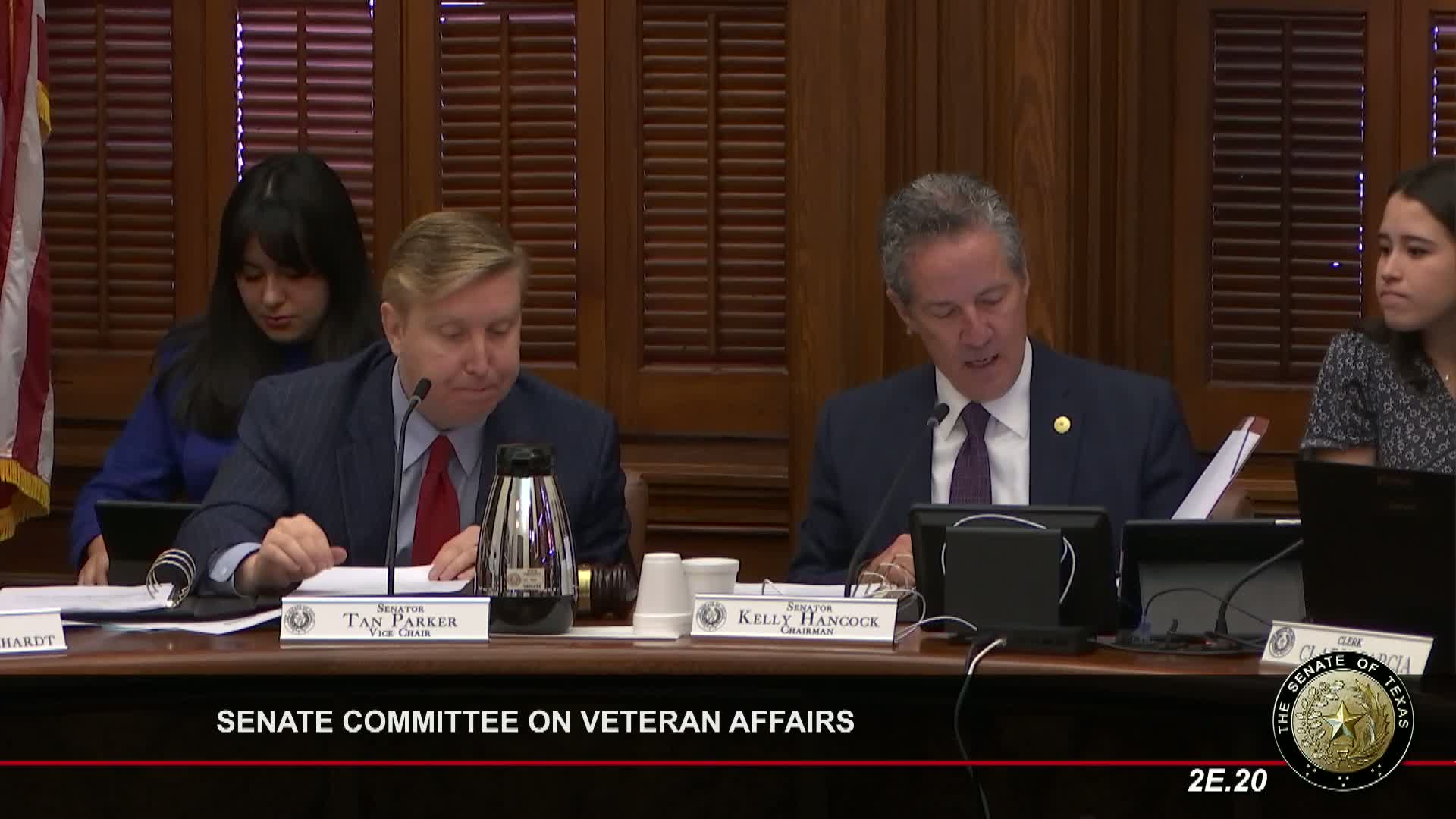
Senator Hancock described Senate Bill 1814 as a response to an interim committee recommendation to create an interagency database that would let state veteran agencies collect voluntarily provided contact information for service members leaving the military and provide coordinated casework. "The service database would act as a casework management system, much like your staff uses, today, where the agency can track who is reaching out to the individual, where they are located in Texas, and what services they are seeking," Hancock said. He emphasized the system would be voluntary and used only for veterans who choose to share contact information.
A committee member who identified himself as a trucking-company owner and who spoke about employer hiring told the committee a searchable contact system would help connect veterans to employers for in-demand positions such as truck driving. "I own a trucking company...we have a 7 50 tractor trailer driver. There's a national shortage...but I know in the military, you can get the DOT will let you qualify a military veteran...Yet, we still have trouble connecting, to to get ahold of veterans," the senator said during discussion.
Hancock told the committee the bill returned with a roughly $5,000,000 fiscal note and the committee indicated it would work on that fiscal estimate before advancing the measure. Public testimony was limited to resource witnesses and the bill was left pending for further fiscal review and follow-up.