Get Full Government Meeting Transcripts, Videos, & Alerts Forever!
Get email alerts on the Staff And Resident Wellbeing topic
No spam. Unsubscribe anytime.
Correctional officers and residents describe trauma response, peer support and resident crisis teams
Summary
Sergeant Skyler Larson, peer support specialists and members of the resident crisis support team described on-the-job trauma, peer-driven recovery supports and a resident-staff crisis intervention program that provides supervision for people placed in observation. Speakers tied incentives and earned time to program participation.
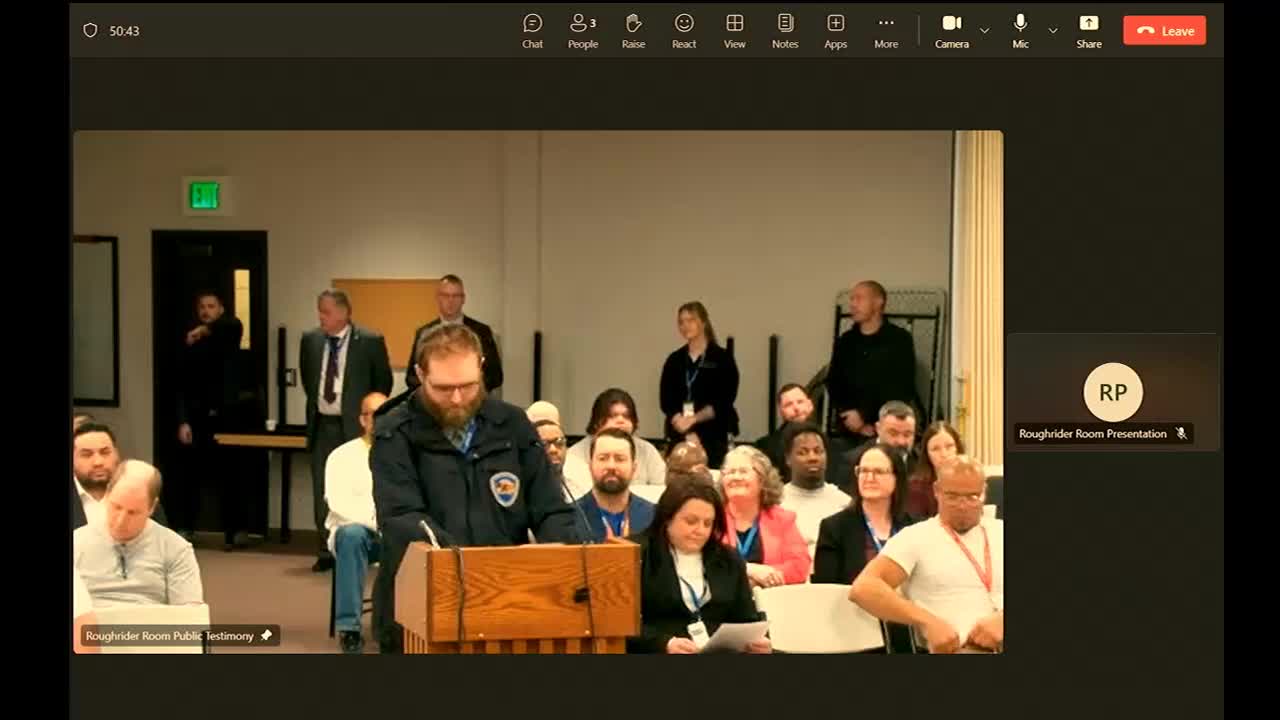
At the appropriations panel’s site visit to the North Dakota State Penitentiary, staff and resident representatives described the psychological and operational realities behind safety and wellness programs for both staff and residents.
Sergeant Skyler Larson of the Department of Corrections described responding to suicides, assaults and threats while on patrol and the lasting effects of those events. “That night was a tough night. There was a lot of emotion,” Larson said, describing an earlier cell suicide and a separate attempted suicide his team later prevented. Larson said violent incidents and threats have led to vivid dreams and physical symptoms among officers and that the work contributes to shortened average officer lifespans cited in his remarks.
The committee heard about formal peer support and resident crisis initiatives. Lorraine Skachenko Reinbold, a human relations counselor who oversees peer support, summarized the unit’s approach: peer specialists receive state training and offer voluntary, recovery-oriented support; since June 2019 the facility trained more than 60 peer support specialists and has 11 currently active in-house serving about 55 residents. Peer specialists said they provide weekly check-ins, coping strategies and help with short- and long-term goals.
Nathan Teavey described the Resident Crisis Support Team (RCST) — a volunteer resident program that provides staffed observation coverage for residents at risk of self-harm or harming others. Teavey said RCST members work shifts monitoring people in observation and, as an incentive, members receive additional meritorious good time credited to their sentences. He warned the committee that proposed mandatory-minimum legislation (Senate Bill 2128) would “nullify the effect of this earned good time” and that removing incentives would reduce program participation and harm safety outcomes.
Why it matters: officers and resident volunteers said trauma response, peer supports and resident-run observation coverage reduce the need for additional salaried staff and provide supervision and humane care in crisis. Speakers urged lawmakers to consider the operational consequences of statutory changes that remove earned-time incentives.
What legislators heard: committee members were urged to preserve incentives and funding for peer support, crisis response and staff wellbeing as part of a broader approach to public safety.