Get Full Government Meeting Transcripts, Videos, & Alerts Forever!
Get email alerts on the Mental Health Crisis 988 topic
No spam. Unsubscribe anytime.
Committee hears bill to fund 988 crisis hotline as lawmakers weigh phone-fee option
Summary
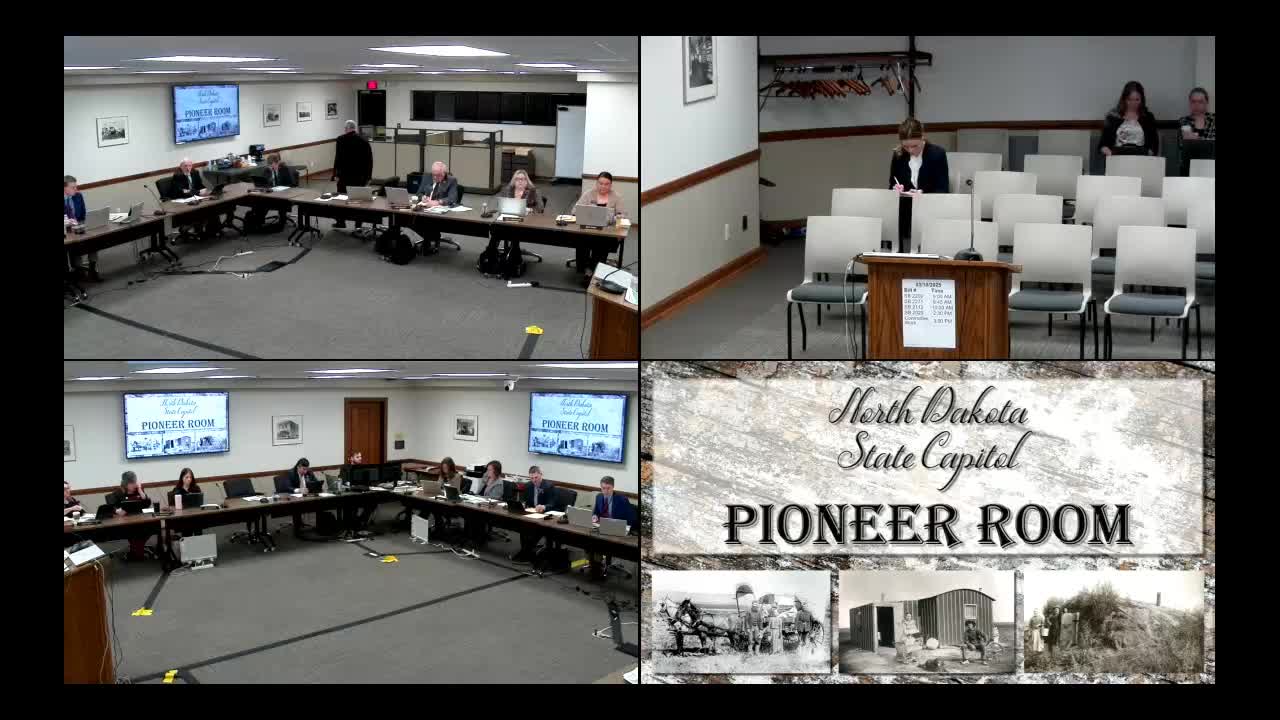
The House Human Services Committee heard testimony on Senate Bill 2200, which would create a 988 crisis hotline program and a 988 crisis stabilization fund.
The House Human Services Committee heard testimony on Senate Bill 2200, which would create a 988 crisis hotline program and a 988 crisis stabilization fund, at a committee hearing. Senator Kathy Hogan, sponsor of the bill, told the committee that federal designation of the 988 dialing code in February 2020 brought new standards and requirements but not ongoing funding.
Why it matters: Advocates and the bill sponsor said 988 is a central part of crisis response that connects people in acute behavioral-health emergencies to trained staff and mobile crisis resources. Supporters told the committee that without a stable funding source the answering point and the broader crisis continuum risk understaffing and service gaps that can leave callers without timely help.
Senator Kathy Hogan, who represents District 21, said many states are using a small phone surcharge to pay for 988 services and that North Dakota’s bill began as a similar fee proposal. “With this new federal designation and standards came many new requirements and regretfully no funding,” Hogan said. She told lawmakers the bill’s original phone-fee option was removed in committee, and the current proposal would fund the 988 answering point, First Link, through a direct appropriation in the Department of Health and Human Services (DHHS) budget. The House appropriations recommendation lowered an original $700,000 allocation to $500,000.
Advocates urged more investment than the current appropriation. Madison Hansen, policy advocate for the National Alliance on Mental Illness (NAMI), called the fund “a lifeline” and said 988 must be backed by trained staff, mobile crisis teams and stabilization units. “A number alone cannot do the work,” Hansen told the committee.
Testimony and details: Hogan said First Link — the statewide answering point that handles 988 calls, texts and chats — responded to more than 14,000 suicide-related contacts in 2024. Committee and sponsor testimony said roughly 90 percent of the costs of answering services go to staffing; Hogan said First Link currently pays many bachelor-level staff less than $20 an hour and faces high turnover. Witnesses described First Link as the central triage and coordination point that maintains a statewide provider registry and bed-management contacts for emergency responders.
Committee members asked about operational details. Representative Hawley asked whether calls are answered in the United States and whether automated systems or AI could be used; Hogan and witnesses said the system is primarily local, staffed by trained, bachelor-level responders and uses a national backup only when local capacity is exceeded. Representative Dobrevitch asked whether the $200,000 reduction from $700,000 to $500,000 would materially harm First Link’s ability to meet demand; Hogan replied the provider would “still struggle” even with $700,000 and that staffing and turnover are core problems.
Funding options discussed: Senators and members debated the longer-term funding approach. Hogan and others said many states have adopted small per-line surcharges similar to 9-1-1 fees. One estimate cited in committee testimony suggested a 30-cent-per-line fee would generate roughly $4.4 million annually; sponsors discussed alternatives such as a 15- or 20-cent surcharge to reduce the revenue target while creating a more stable, permanent funding stream than periodic appropriations.
What the bill would and would not do: The draft bill would create a 988 crisis program and stabilization fund and includes reporting and appropriation language. Committee discussion focused on whether to pursue a permanent fee model or rely on appropriations; no vote on final passage was recorded at the hearing.
Next steps: The committee closed the hearing on Senate Bill 2200 and moved to other items on the calendar. Supporters urged members to review written testimony from First Link and other providers submitted for the record.
Speakers quoted or referenced in this article: Senator Kathy Hogan, sponsor; Madison Hansen, policy advocate, National Alliance on Mental Illness (NAMI); Chairman Ruby, House Human Services Committee; Representative Hawley; Representative Dobrevitch.
Clarifying details: {"requested_appropriation_initial":"$700,000 (committee request)","appropriation_after_action":"$500,000 (appropriations recommendation)","FirstLink_2024_calls":">14,000 suicide-related calls/texts (reported)","staffing_share":"~90% of operating costs are staffing (testimony)","current_staff_pay":"less than $20/hour for many bachelor-level staff (testimony)","phone_fee_estimate":"30¢/line estimated to raise ≈$4.4M/year (committee estimate)"}
Proper names: First Link; Department of Health and Human Services (DHHS); National Alliance on Mental Illness (NAMI).
Community relevance: Statewide; affects callers in urban and rural areas, law enforcement and emergency medical services who receive referrals from 988.