Get Full Government Meeting Transcripts, Videos, & Alerts Forever!
Get email alerts on the Prison Programs And Reentry topic
No spam. Unsubscribe anytime.
Lawmakers visit North Dakota State Penitentiary to review rehabilitation, education and reentry programs
Summary
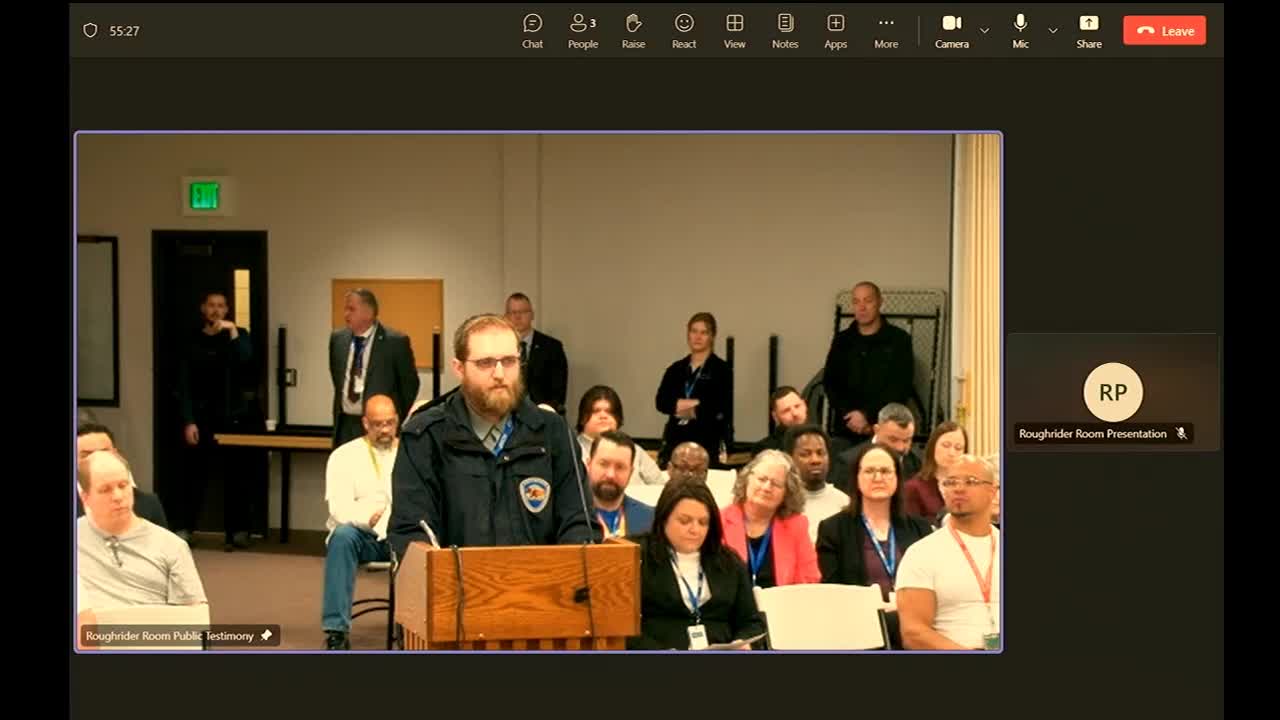
Members of the House Appropriations — Human Resources Division held a field hearing at the North Dakota State Penitentiary to hear staff, residents and community partners describe security, education, peer support and reentry services and to explain how those services fit into efforts to reduce recidivism.
Members of the House Appropriations — Human Resources Division met at the North Dakota State Penitentiary on a legislative site visit to hear how security and in-prison programming aim to support rehabilitation and reentry.
The committee heard from corrections staff, residents and outside partners about orientation, education, peer-support and community reentry work. Committee chair Chairman Nelson opened the session and thanked penitentiary staff for hosting the delegation.
The hearing combined operational briefings with personal testimony. Todd Flanagan, chief of security at the penitentiary, outlined “static security” measures — walls, gates and surveillance — and said the committee would also hear about “other methods” that improve safety for residents and staff. Several residents and staff then described “dynamic security” and programs meant to make daily life more normal and prosocial, including orientation, peer mentors, education and faith- and community-based programming.
Joshua Hewson, the prison’s orientation case manager, described the five-week intake program that gathers residents’ histories and connects them with classification, housing and treatment plans. Hewson said orientation helps avoid snap decisions based solely on an individual’s index offense by creating individualized plans and early peer mentoring.
Michelle Pfaff, the superintendent of correctional education, summarized education outcomes: last school year the department served 567 adults and 78 youth, awarded 82 diplomas and reported historically high GED passing rates. Pfaff described partnerships with Bismarck State College, Valley City State University, The Last Mile coding program and vocational training, and said 16 residents have earned CDLs and 15 had crane/rigging certifications.
Multiple residents described the day-to-day impact of programming. Christian Tolbert, a permanent orientation worker and peer-support specialist, said orientation and resident-led programs helped change his outlook, noting a participant’s six-page letter about how orientation “changed his whole mindset and his trajectory.” Antonio Stadaro, a resident mentor, told the committee that restoring normal interactions — “it’s normal for a resident to shake the hand of a sergeant” — and offering jobs, education and podcasts creates hope and motivation.
Community groups described continuing partnerships that extend programming beyond the walls. Adam Martin, founder and CEO of the FI Project, and representatives of Evangel Church and Ministry on the Margins described transitional housing, mentoring, faith-based supports and reentry casework that link residents to services on release. Prison Fellowship and other national partners described program models that run inside the facility and provide volunteer and volunteer-management support.
Why it matters: committee members said the site visit was intended to show how in-prison programs connect with community services to reduce recidivism and improve public safety by giving residents skills and supports for returning to their communities.
What’s next: legislators on the appropriation panel said they would carry what they learned back to budget deliberations and hearings. Several speakers urged continued legislative investment in education, peer support and reentry partnerships so gains made inside the facility can be sustained after release.