Get Full Government Meeting Transcripts, Videos, & Alerts Forever!
Get email alerts on the Workforce Apprenticeships topic
No spam. Unsubscribe anytime.
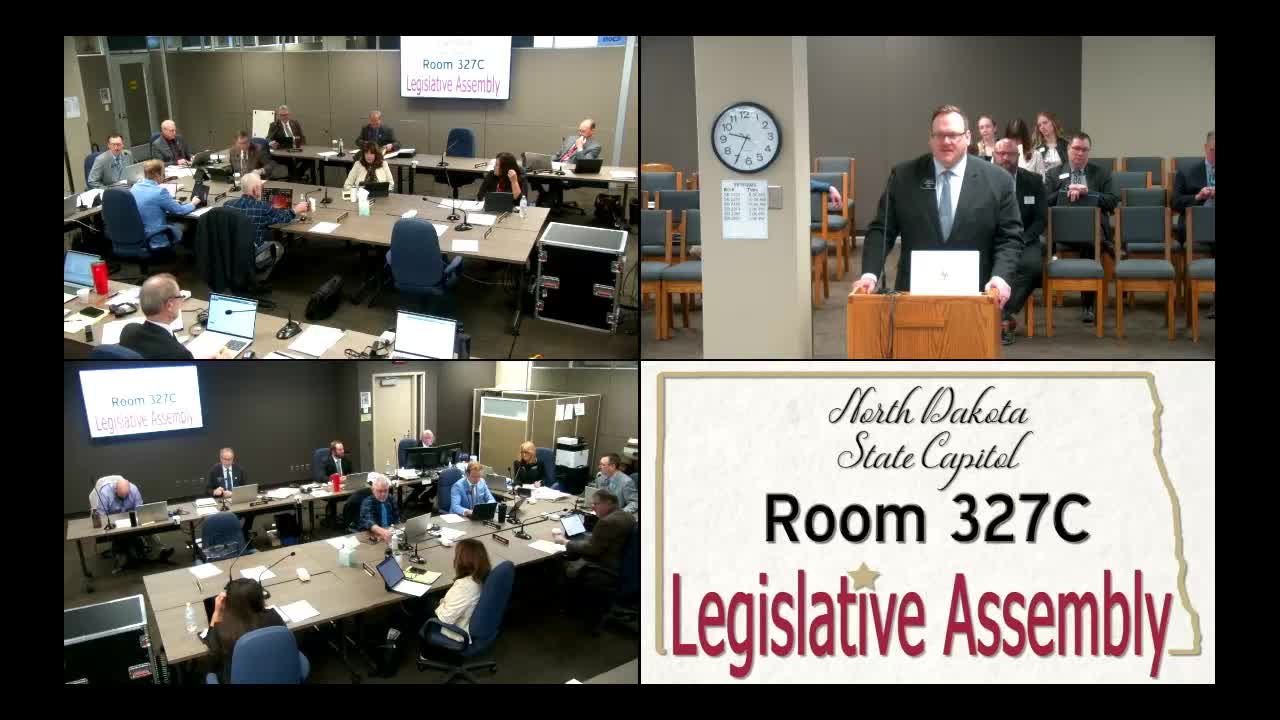
House panel hears bill to create statewide apprenticeship grant program
Summary
Senate Bill 2,239, introduced by Sen. Josh Baucher, would create a state grant program to help North Dakotans pay startup costs for registered apprenticeships.
Senate Bill 2,239, introduced by Sen. Josh Baucher, would create a state grant program to help North Dakotans pay startup costs for registered apprenticeships.
Senator Josh Baucher, sponsor of the bill, told the House Industry, Business and Labor Committee the program is intended to complement a recent expansion of the North Dakota scholarship by helping people who do not qualify for that scholarship access apprenticeships. “As the newly enacted statute was implemented, it was realized that many of the students who wished to access the North Dakota scholarship for their registered apprenticeship did not qualify for the scholarship,” Baucher said. He cited the 3.0 GPA requirement as a barrier for some students and described the proposed grant as a separate tool to grow apprenticeship opportunities statewide.
The bill would appropriate $1.1 million from the general fund for the program and set a $3,000 maximum award per recipient within a three‑year period. Baucher said the $1.1 million as drafted is intended for grants to participants; administrative funding was contemplated with the creation of an Office of Apprenticeship that did not materialize after House Bill 1036 failed to pass.
Supporters at the hearing said apprenticeships help address workforce shortages. Laura Mayer, government affairs specialist for the Greater North Dakota Chamber, said businesses large and small view apprenticeships as a workforce tool and the chamber “stands in support of Senate Bill 22‑39.”
The committee also heard concerns about which agency should administer the program. Zachary Greenberg, interim commissioner of the North Dakota Department of Labor and Human Rights, urged the committee not to place the program in his department. Greenberg described the department as “a regulatory and compliance agency” focused on enforcing state labor laws, investigating discrimination claims and ensuring wage‑and‑hour compliance. He told the committee the department lacks workforce‑development infrastructure and staff to administer a grant program and said placing the grant program there could create a conflict of interest if the department both awarded grants and later investigated employer complaints related to those grants.
Baucher and committee members discussed alternatives. Baucher listed state agencies that had been contacted — Job Service North Dakota, the Department of Commerce, and the Department of Career and Technical Education — but said each has competing session priorities and no final decision had been reached. He asked the committee for time to continue discussions with those agencies and indicated he would report back within a week.
Committee members asked how awards would be structured and whether recipients would be required to remain employed in North Dakota. Baucher said the bill directs the host agency to adopt rules and that the agency could include conditions such as clawbacks or minimum work commitments modeled on existing program rules if the committee wished. He said apprenticeships are paid positions with graduated pay as participants advance.
No formal committee vote was taken on Senate Bill 2,239 during the hearing. The sponsor and department officials indicated follow‑up discussions on host agency placement and administrative details would continue before any final committee action.
Questions and answers at the hearing also produced these clarifying points: the $1.1 million in the draft is primarily for participant grants (the bill does not earmark a separate administrative line unless the committee amends it); the proposed $3,000 cap is a total per recipient within three years (to be applied flexibly by rule); and the North Dakota scholarship’s 3.0 GPA requirement had excluded some apprenticeship candidates from the scholarship this bill aims to serve.
The committee left the record open for additional agency coordination; Baucher said he would report back after further conversations with potential host agencies.