Get Full Government Meeting Transcripts, Videos, & Alerts Forever!
Get email alerts on the Research Funding Medicaid topic
No spam. Unsubscribe anytime.
Healy: Proposed NIH and Medicaid cuts threaten Boston Children’s research and care
Summary
During a visit to Boston Children’s Hospital, Governor Healy and hospital leaders warned that proposed federal cuts to NIH and Medicaid are disrupting research, halting some clinical trials and could cost the hospital hundreds of millions in funding and jobs.
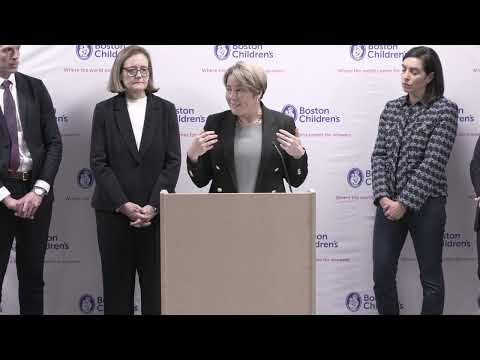
Governor Healy, joined by First Lady Joanna Lydgate, warned during a visit to Boston Children’s Hospital that proposed federal cuts to National Institutes of Health funding and Medicaid could disrupt pediatric research, clinical trials and patient care.
Dr. Churchwell, a Boston Children’s Hospital official, opened remarks by describing the hospital’s mission and research role. “At Boston Children’s, our mission is clear to improve and transform the lives of children through groundbreaking compassionate care, research, and unwavering commitment to every child and their family,” Dr. Churchwell said.
Healy said the hospital receives about $230,000,000 a year from NIH and that the facility “could lose more than half of that funding” under the proposed cuts. “The NIH cuts are already disrupting medical research and clinical trials,” Healy said. “These cuts are going to cost jobs. They’re gonna cost lives.”
The governor said 46 percent of Boston Children’s patients are enrolled in Medicaid (MassHealth in Massachusetts), and expressed concern that an overall GOP budget plan that includes deep tax cuts would be offset in part by reductions to Medicaid. He said attorneys general successfully sued to block an NIH cut in court but that some expected funding still has not been delivered to institutions in Massachusetts.
Hospital and state health officials described visible effects. Dr. Robbie Goldstein, commissioner for the Department of Public Health, and Secretary of Health and Human Services Kate Walsh said the funding uncertainty has led some programs to pause postdoctoral positions and other research commitments. Dr. Churchwell said vaccine-related work has seen “the most engagement or stoppage around” and that the hospital has worked with the Centers for Disease Control and Prevention and the Food and Drug Administration on those programs.
Healy also said researchers have been approached by institutions outside the United States offering labs, staff and resources, and characterized that outreach as a risk to the state’s research ecosystem. “There’s a reason Massachusetts is number 1 in the country in education, innovation, and health care,” Healy said. “But when you literally turn off the lights, you shut down the research.”
When asked about specifics of foreign recruitment, Healy cited reports of outreach on university campuses and said he had been told recruiting efforts involved parties from China, Europe and the Middle East. He encouraged public engagement with members of Congress to push for restored funding.
No formal state or hospital action was announced at the event; participants framed the visit as an opportunity to underscore the potential effects of federal budget decisions and to urge federal officials and members of Congress to preserve research and health-care funding.
The visit concluded with a short question-and-answer session with media. Hospital leaders thanked staff and families and reiterated the hospital’s role as a leading pediatric research center that treats children with rare and complex conditions.